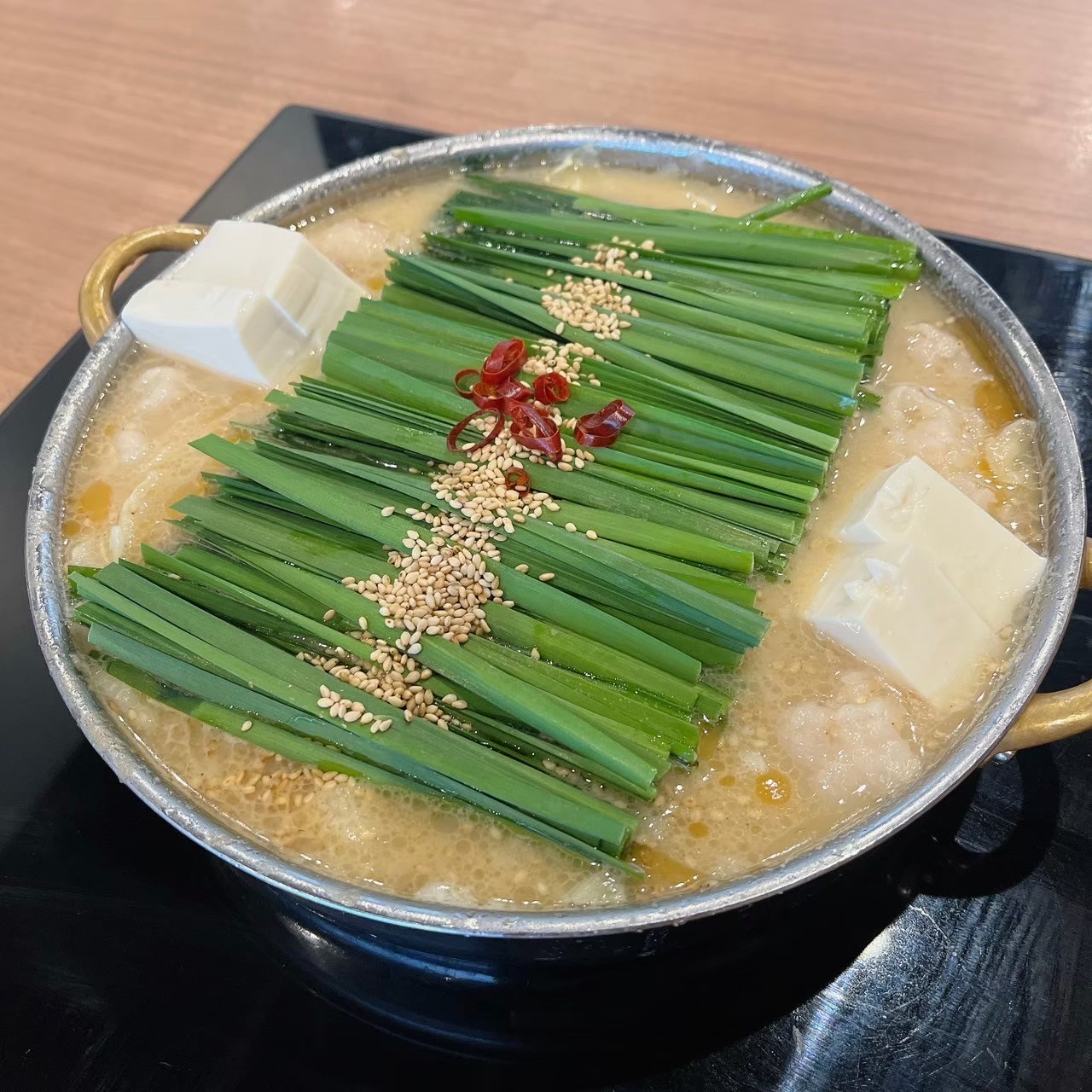
• Motsu Nabe Ichifuji Hakata – Traditional Fukuoka “Motsu Nabe” in Hakata!

    Must know Info:

    Motsu Nabe Ichifuji Hakata – もつ鍋 一藤 博多店 *Cash or Card*

    2 Chome-4-16 Hakata Ekimae, Hakata Ward, Fukuoka, 812-0011, Japan

    3 minute walk from Hakata Station

    Hours (as of 2026/02): Sunday – Thursday 5-11pm, Friday and Saturday 5-11:30pm

    Order system: Menu/Set Course Booked Online

    Probably one of my favorite all time dishes in Japan, or at least in the top 10 for sure. 

    Motsu Nabe is probably the 2nd most recognizable dish in Fukuoka besides Tonkotsu Ramen, and it 100% exceeded the hype. 

    Nabe is essentially Japanese hotpot, and motsunabe specifically is a soy sauce or miso soup base packed with beef or pork intestines, tofu, cabbage, and topped with chives that slowly get submerged into the soup. 

    Motsu Nabe Ichifuji is I think the most famous for this dish, though there are quite a few that one may consider more “local” but in terms of access and convenience this was the one I went with in the end. 

    Aside from it being close to the biggest station in Fukuoka (Hakata), they have a really easy reservation system you can book on their website (which they also have in English). 

    Because of this, I was able to book it in advance and secure one of their many course menus which I personally think is the best option if you want to try a bunch of their different dishes (just be warned that it is a lot of food and the motsunabe comes out last). 

    If you don’t care about waiting, then the restaurant has 3 floors and seating for 140 people, so there is a chance you might be able to get in and then just order off of the menu normally too. 

    For the course, I was with another person so we were able to share the soup, but with one person it might not be possible (unless you eat a ton, but even then I would tread on the passive side here). 

    The course I recall going with was the Taka course which has 7 dishes consisting of sashimi, a stew of some sort (served in a little bowl), basashi (horse meat sashimi), the motsunabe, and a dessert. 

    So yeah, you don’t have to worry about not getting enough food, nor about the quality of it, and this is all for only 4500 yen, so I feel it is an incredible deal. 

    The seafood was great, and so was the horse sashimi, which I know some of you may be thinking “there’s no way I’m eating that”, but trust me don’t knock it until you try it, because if I had the option to, I would be ordering it over most seafood sashimi. 

    There is no off taste to it, and it is very meaty and tender, maybe a little chewy? I don’t know how to describe it, but I highly recommend you try it. 

    Then, it was time for the main event, the motsunabe, and wow, I was absolutely blown away. 

    Usually when I go to different prefectures in Japan I almost always try the dishes they are most famous for, but sometimes they are just ok. 

    But this was different, the broth was creamy, the intestines were tender and packed with umami, and the vegetables and tofu soaked up the soup excellently. This was actually the dish that got me hooked on nabe and led me to buying my own hotplate in Japan too. 

    But by far, I just cannot forget the soup. It was like nothing I had ever had before, and if I could drink it everyday I would.

    Then, when I had finished all the ingredients in it thinking I would have to waste the rest of the soup, the staff brought over these thick udon-like noodles as a part of the course. I couldn’t have been happier at that moment. 

    My stomach on the other hand felt like it was going to explode, but I knew this wasn’t going to be a dish I would be able to have very often going forward, so I enjoyed every last bite. 

    My recommendation for finding a place is look on the Japanese food website “tabelog” and look for places that are a 3.5 rating or higher, because in the eyes of the Japanese, there is no perfect 5 restaurant, so even the best ones in Japan will be around a 4 ish a lot of the time. 

    If you come to Fukuoka then you must have this dish. But I do warn you, because if you have it at the beginning of your trip you may be disappointed with the rest of the food you have, but if you have it at the end, you will likely regret your decision not having it earlier, so pick your poison. 

    Oh, and there are shops that make it across Japan including Tokyo as well, but Fukuoka definitely is on a different level. 

    Thanks for reading – if you’d like to support and follow along: 

    More about me

    Different types of ordering systems in Japan explained

    Purchasing an onigiri to keep me fuelled throughout my journey 🍙

    Planning a trip to Japan? These may help: 

    🗺 Find a food tour near this restaurant — Viator

    🏨 Find a hotel in the area — Booking.com

  • Cafe Accueil Ebisu – Cozy Cafe With Great Food In Ebisu!

    Must know Info:

    Cafe Accueil Ebisu – カフェ アクイーユ 恵比寿店 *Cash or Card*

    Japan, 〒150-0021 Tokyo, Shibuya, Ebisunishi, 2 Chome−10−10 エレガンテヴィータ 1F

    5 minute walk from ebisu station 

    Hours (as of 2026/02): 11am-10pm everyday

    Order system: Menu

    Located in the rather classy area right between Daikanyama and Ebisu is this very popular cafe. 

    It seems that the general consensus for getting in here is making reservations, and this is because it is super popular among females. 

    But for me, I was able to get in without any wait, and on the weekend at that!

    I think one of the main reasons for this was that It was in the heat of the summer in July so maybe people weren’t wanting to leave their house as much, but I don’t know. 

    Regardless, the cafe was huge, with outdoor seating, seating inside on the first floor, and a whole huge second floor as well which was divided into two sections. 

    There were staff on both floors, and as with most restaurants in Japan, also very attentive. 

    Because of this I was able to order very quickly, and while most of the customers around me were ordering little slices of cake or something, I went all out and ordered the omurice and a big pancake. 

    Omurice is essentially the Japanese version of an egg omelet, and it is served on a lump of rice, which you then proceed to cut down the middle of the egg and it folds over said rice beautifully. 

    It is a simple dish, but extremely hard to make perfect, and this one was perfect. 

    It had the perfect amount of runny egg in the middle that I quite so often desire due to my lacking egg cooking abilities, and to top it off, they threw a bunch of demi-glace sauce on it. 

    Omurice you will see served at traditional mom and pop shops generally just have a bit of ketchup, but this one pairing the creamy egg with the rich sauce was a bite made in heaven. 

    As for the pancake, it was also delicious. 

    It was thick to say the least, and I would go as far as to say it had more of a cake consistency to it, but all while maintaining the softness of a pancake. 

    They gave two decently sized pieces of butter which is something I only just realised recently is a must on pancakes, and a thing of syrup on the side (unfortunately they portioned it out unlike going to ihop or something, but it was good quality nonetheless!)

    I think what sets Accueil apart from a lot of the cafes that have become popular in the Shibuya and Daikanyama area is that the food is genuinely the focus.

    A lot of places in this part of Tokyo are beautiful to look at and photograph but leave you feeling a bit underwhelmed when the bill comes. Accueil is the opposite — the interior is nice without being overdone, the service is attentive without being intrusive, and the omurice alone is worth making a trip across the city for.

    It is also just a really comfortable place to sit for an hour, which in a neighbourhood as busy as this is rarer than you would think.

    If you are coming from Ebisu station and turn the wrong way out of the exit, you could easily spend an entire afternoon in this pocket of Tokyo without realising how much time has passed.

    While I wanted to try a few more of the items, my stomach could only handle so much, so I will have to wait until next time. 

    Overall, a really good place to stop by and relax for some good food. 

    While you might be recommended to make reservations, If you don’t care about where you sit, or if you have the patience to potentially wait then there are no issues with just showing up. 

    I would highly recommend coming here as while it is close to Shibuya, it is just far enough away to escape the hustle and bustle. 

    Thanks for reading – if you’d like to support and follow along: 

    More about me

    Different types of ordering systems in Japan explained

    Purchasing an onigiri to keep me fuelled throughout my journey 🍙

    Planning a trip to Japan? These may help: 

    🗺 Find a food tour near this restaurant — Viator

    🏨 Find a hotel in the area — Booking.com

  • Yobocho – Incredible Quality And flavourful Teishoku Restaurant In Takadanobaba!

    Must know Info:

    Yobocho Takadanobaba – 洋庖丁 高田馬場店 *Cash Only*

    〒169-0075 Tokyo, Shinjuku City, Takadanobaba, 3 Chome−1−4 1階

    2 minute walk from Takadanobaba station

    Hours (as of 2026/02): 11am-3:30pm, 5-10pm everyday except Sunday

    Order system: Ticket Machine

    Located extremely close to Takadanobaba station on the Yamanote Line, Yobocho is the true definition of a HIDDEN gem, literally speaking. 

    While their first and only other location (their main shop I guess you could say) is in Ikebukuro, this is the only one I have been to because of how easy it is to get to from places like Shinjuku station (only 2 stations over). 

    Now, I struggled a lot actually finding where this place was at first, and I realized later that it is because google maps has the wrong location being displayed. So to find it, you need to start by walking down this road called さかえ通り (Sakae Doori) with restaurants left and right. If you are coming from the station (which I assume most of you will be), then the restaurant will be on your right, sort of down a little alley way. The biggest identifiers of it being here is that there is a massage place right next to it, and they will either have pictures of people getting a massage or their windows open where you can see – walk in a bit deeper in the alley-type building and on your right you will find Yobocho! 

    It is a small shop, with generally only the head chef and maybe his wife working, that or a part time worker. There are only counter seats and there are about 10, all kind of like an old retro diner style. 

    Outside of the restaurant is a ticket machine, and there are a lot of different menu items, a lot of which are under 1000 yen. Each dish also has the option of normal or large rice (the large option located right underneath the normal one), so once you have put your money in and gotten your ticket, head in, find a seat anywhere and hand it to the chef. 

    Regardless of what you order it is going to be amazing, and every dish comes with a separate plate of rice as well as miso soup.

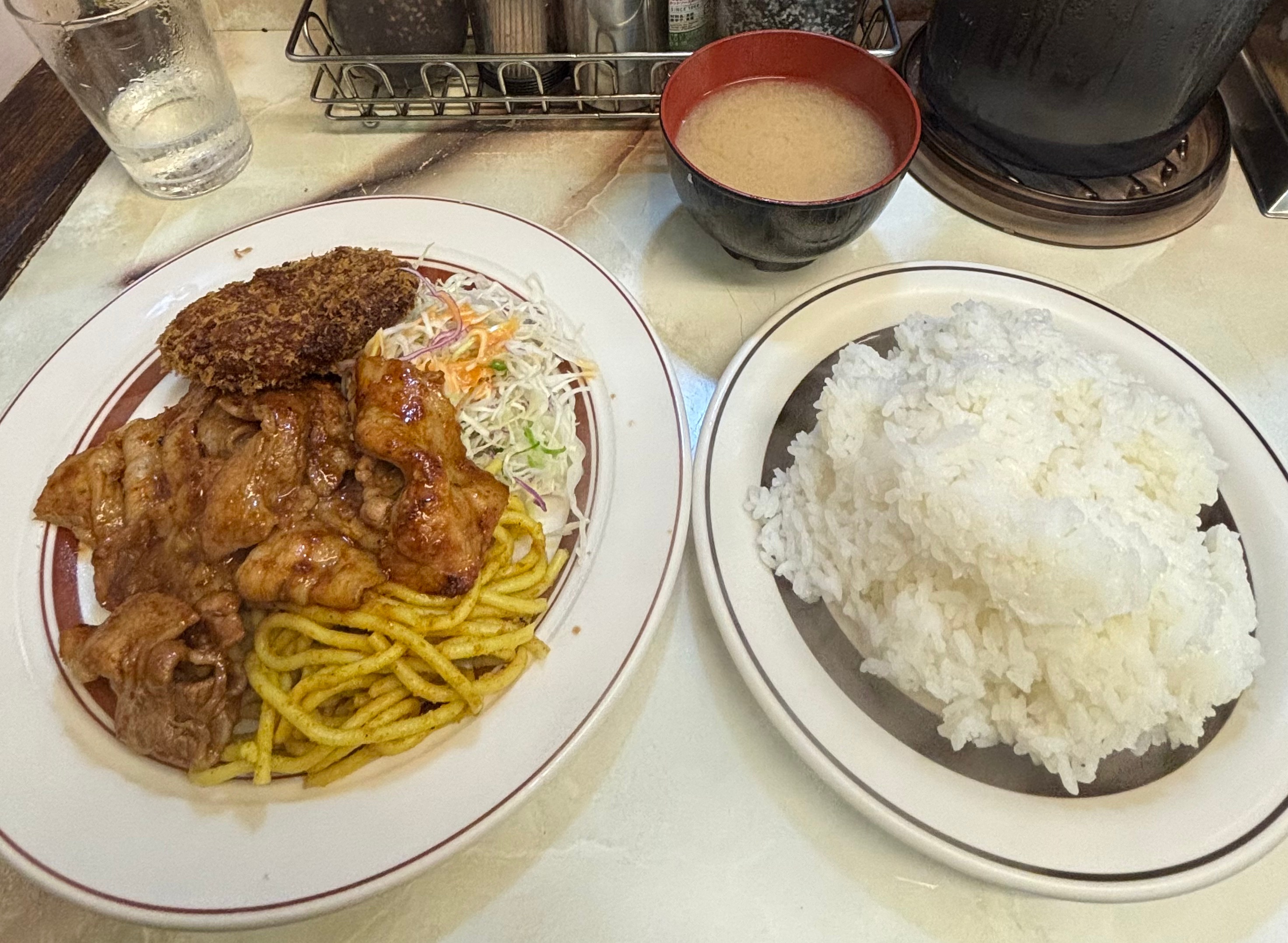
    My personal favourite to get here is the ”スタミナ焼き&メチカツランチ” which is what I have pictured here, but it included deeply seasoned sliced pork, and menchi katsu which is a breaded, deep fried meat patty essentially. 

    The pork specifically is actually called “stamina yaki” because high calorie, nutritious foods like pork or eggs are said to reduce fatigue and give you energy, so it can be a pretty common trope seeing this in Japan. 

    I thought it was a bit random at first, but as you actually eat the food you kind of start to get where they’re coming from I feel. 

    The pork, as I mentioned, is seasoned to the gills and this with rice is a match made in heaven. 

    The menchi katsu is perfectly breaded and loaded with meat, and they even give you some cabbage and oddly thick pasta noodles, which I guess add to the “stamina” portion of the meal? At least the carbs from the pasta would – either that or put you over the edge for a food coma. 

    But honestly, you can really tell the chef has mastered his craft here, and while he is a man of few words, you can tell he takes passion in what he does. – it is highly reflective in the food. 

    This is the perfect quick, cheap, and highly flavourful lunch that often is never too busy because a lot of people don’t know it, let alone where to find it!

    Thanks for reading – if you’d like to support and follow along: 

    More about me

    Different types of ordering systems in Japan explained

    Purchasing an onigiri to keep me fuelled throughout my journey 🍙

    Planning a trip to Japan? These may help: 

    🗺 Find a food tour near this restaurant — Viator

    🏨 Find a hotel in the area — Booking.com

  • Yamasan Sushi Honten- The Best Kaisen-Don In Kanazawa!

    Must know Info:

    Yamasan Sushi Honten – 山さん寿司 本店 *Cash or Card*

    68 Shimoomicho, Kanazawa, Ishikawa 920-0904, Japan

    15 minute walk from Kanazawa station 

    Hours (as of 2026/02): 9am – 4pm everyday 

    Order system: Menu

    Yamasan is located in a great location just a short walk from Kanazawa station, and in the middle of one of Kanazawa’s popular tourist destinations – Omicho Market. 

    Omicho Market is a smaller version of the uber popular fish markets in Tokyo (like Toyosu) but has just as good, if not better seafood quality and at a significantly cheaper price.
    One of the reasons for this is that Kanazawa’s central fish market opens the earliest out of any other one in Japan at only 3:30 in the morning!

    Because of this they have caught the fish the night before and already are selling it to markets and restaurants such as Yamasan. 

    The taste of the fish was more than reflective of this.

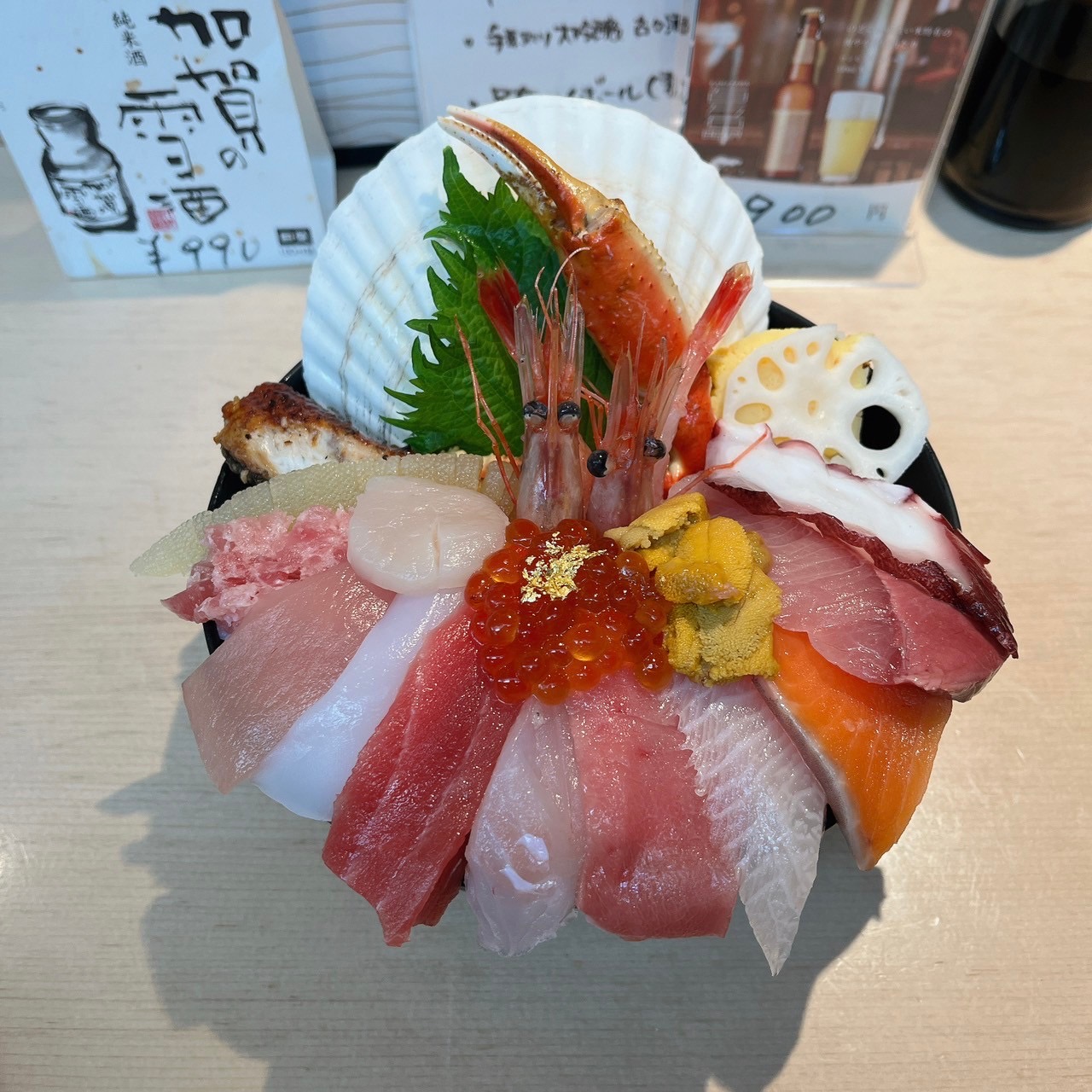
    Yamasan has everything ranging from nigiri to kaisen-don (seafood rice bowl) which is what I ended up getting. 

    While the Nigiri I am sure is amazing, and is what I saw a lot of people eating actually, I knew that it is more common to find good Nigiri than it is an incredible kaisen-don. 

    They had a few options, one of which was the classic which has what seems like every single type of seafood that exists on planet earth all arranged beautifully underneath a bed of piping hot rice. This is by far their most popular menu item. 

    But the one that stood out to me the post (and was what I eventually ordered) was their Ikura-Uni don which is heaps of fresh cor roe and uni served over you guessed it, rice. 

    While it would have been cool to try all the different types of seafood on the classic bowl, I felt that I might have regretted my decision if I didn’t like a certain seafood as much as I liked another one or vice-versa. 

    I knew what I liked, and so I stuck to it and didn’t regret my decision one bit. 

    Both cod roe and uni can be very hit or miss, especially if you are eating it abroad and to a lot of people, they might also just not like the overly fishy taste. 

    I was the same before, but as I ate more high quality versions of it I began to come to really like it and this bowl here cemented that quality is everything when it comes to the taste. 

    The cod roe was the perfect balance of saltiness and slightly crunchy texture that bursts in your mouth when you eat it. 

    The uni, contrary to other cheaper equivalents I have had, had no smell and definitely not any overly-fishy taste to it. It was the perfect rich, melt in your mouth bite that I started longing for again after leaving the restaurant. 

    The bowl I had was about $40 cad, which honestly? It was completely worth it to me and had a lot of food as well. 

    If you want to go here I recommend going either a little bit before lunch time (12-1), or a little bit after because it can get really busy (sometimes even an hour long wait times). 

    I think this is the perfect place to taste Kanazawa’s amazingly fresh sushi at a reasonable price in a restaurant with a nice interior to it as well.

    If you are going to Kanazawa for the first time I think this should be your first priority!

    Thanks for reading – if you’d like to support and follow along: 

    More about me

    Different types of ordering systems in Japan explained

    Purchasing an onigiri to keep me fuelled throughout my journey 🍙

    Planning a trip to Japan? These may help: 

    🗺 Find a food tour near this restaurant — Viator

    🏨 Find a hotel in the area — Booking.com

  • Ramen Hikari – Delicious Jiro-Kei Ramen Shop Run By Just One Person in Kanazawa!

    Must know Info:

    Ramen Hikari らーめん ひかり *Cash Only*

    3 Chome-10-1 Izuminodemachi, Kanazawa, Ishikawa 921-8116, Japan

    23 minute bus from Kanazawa station including walking 

    Hours (as of 2026/02): Everyday 11am-2pm, 5-9pm

    Order system: Ticket Machine

    Located in a residential area relatively close to Kanazawa station is Ramen Hikari. 

    They serve Jiro-Kei ramen which is a popular ramen in Japan with a cult following known for its ridiculous portion sizes and highly customizable toppings. If you want to read more I recommend checking out this blog I wrote: Buta-Yama

    I go into depth about the ordering process and the intricacies of this ramen! 

    While it may seem really daunting, Ramen Hikari actually makes it a lot simpler to order than how it usually is with other restaurants, because instead of calling out your order you will write it on a piece of paper and hand it to the chef. 

    When you walk in, there will be a ticket machine on your right hand side, and it is there that you will order your ramen. It is a classic ticket machine with the buttons all in Japanese, but there are pictures so it isn’t too hard to order! 

    The place is a local favourite so depending on the day and time it can get busy. Because of this it is rare that you will be immediately able to sit down and may be asked to line up with your back to the wall behind the people eating or, if really busy outside. If the lineup is out the door, then you will wait until you have room to enter and wait in the restaurant to buy your ticket. 

    The most unique part of this restaurant perhaps is the fact that the shop’s owner is the only one working. Everyday. 

    It is quite crazy to believe with the amount of time you have to devote to running a restaurant, or ramen restaurant at that, as well as managing the huge amount of customers and staying open 7 days a week. It is truly admirable. 

    But because it is only a one man operation, it is one of the main reasons why the turnover of customers can be a bit slower than other restaurants may be. So if you go make sure to just stay patient and your turn to eat will come around. 

    This also plays into the aforementioned food ticket that you circle your preferences on as opposed to yelling them out – it makes it easier for the chef. 

    With this as well, the garlic is freshly cut and it self-serve. So is the water! So you will be able to attempt to offset your garlic breath with water to your hearts content! 

    But no seriously, this is honestly a great system and doesn’t feel like you have to limit yourself to the amount of water you are likely going to need to drink from all the sodium. 

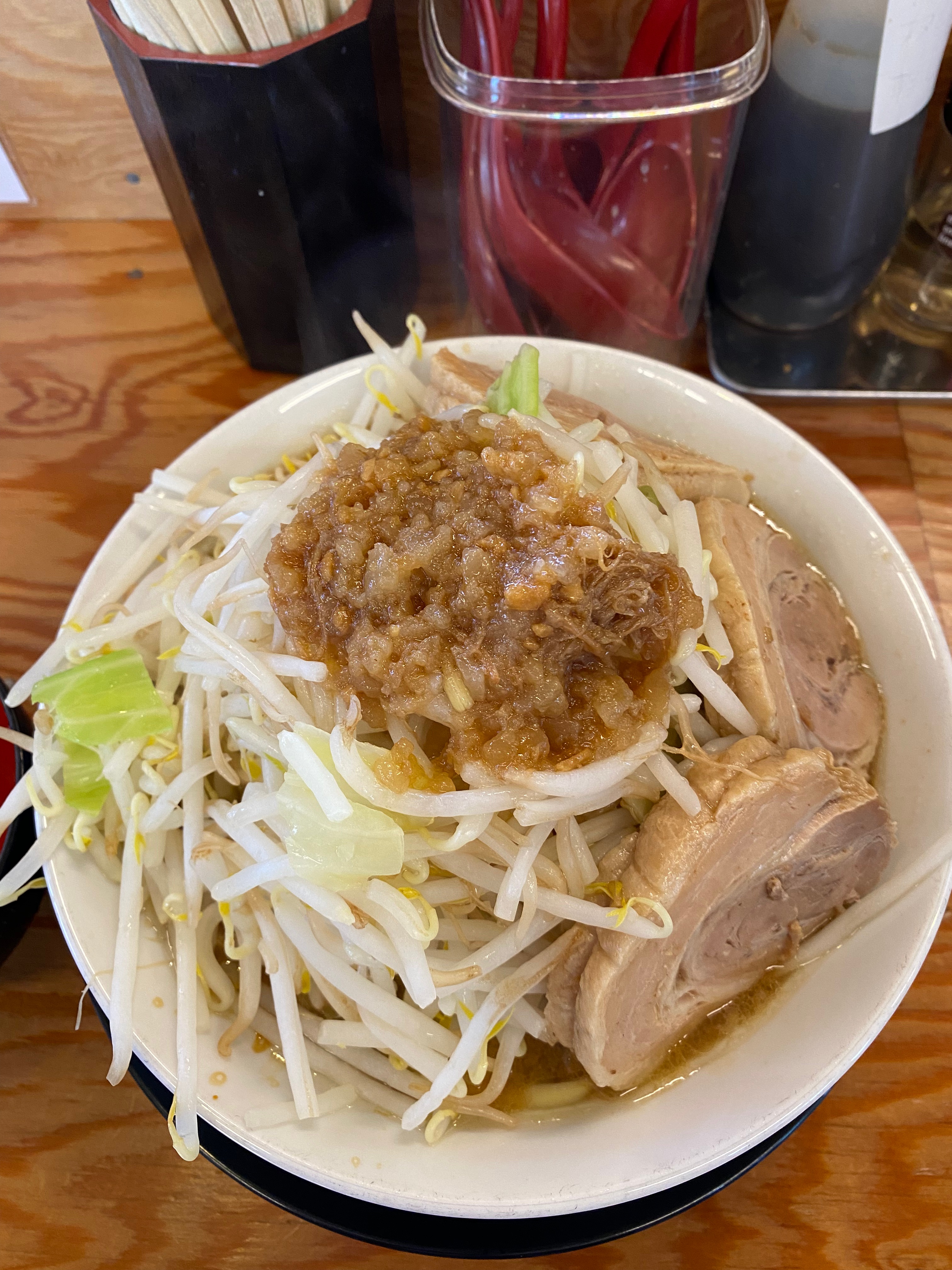
    The bowl of ramen itself was great. The Shoyu (soy-sauce) based soup was the one recommended, and it is the most common soup base for jiro-kei ramen. 

    The soup had a strong umami punch to it, and it was balanced well with the bean sprouts and soaked into the thick, al-dante noodles really well. 

    The chashu pork was also very tender tender and a had a nice meat feeling to it which helps offset the amalgamus portion of noodles. 

    Everything is topped off with perhaps Jiro-Kei ramen’s most identifiable feature which is heaps of se-abura or back fat and the amount of flavor (and calories) is incredible. It is very addicting. 

    Even for those of you that have confidence in how much you can eat, Jiro-Kei has ridiculous portion sizes. Especially here. 

    That is why the owner recommends you get the mini size instead of the normal if it is your first time. 

    Even for me who had eaten Jiro-Kei previously, I still struggled with the normal size a bit so do be warned! 

    This is a really solid spot, and while exploring Kanazawa why not walk or bus down and take the trip! It is also located next to Kanazawa prefecture’s number 1 ranked high-school too, so I guess that’s cool!

    Thanks for reading – if you’d like to support and follow along: 

    More about me

    Different types of ordering systems in Japan explained

    Purchasing an onigiri to keep me fuelled throughout my journey 🍙

    Planning a trip to Japan? These may help: 
    🗺 Find a food tour near this restaurant — Viator

    🏨 Find a hotel in the area — Booking.com

  • 無限ハンバーグ 力 – Juicy All You Can Eat Hamburgers In Kanazawa!

    *Note* As of April 11, 2026, this restaurant appears to have permanently closed. The post remains up as a record of what made it special.

    Must know Info:

    無限ハンバーグ 力 *Cash or Card*

    7 Chome-283-701 Kubo, Kanazawa, Ishikawa 921-8151, Japan

    25 minute bus ride from Kanazawa Station or a 30 minute walk from Nonoichi-Kōdaimae Station

    Hours (as of 2026/02): Sunday 11-2:30pm or until ingredients run out

    Order system: Menu

    For whatever reason I cannot find the english name for this, so for those of you that cannot read Japanese just copy this into your search bar and it should show up! 

    I mean, the literal translation is “Infinite hamburger power” but that does not have any info show up when you search for it so I wouldn’t waste your time lol. 

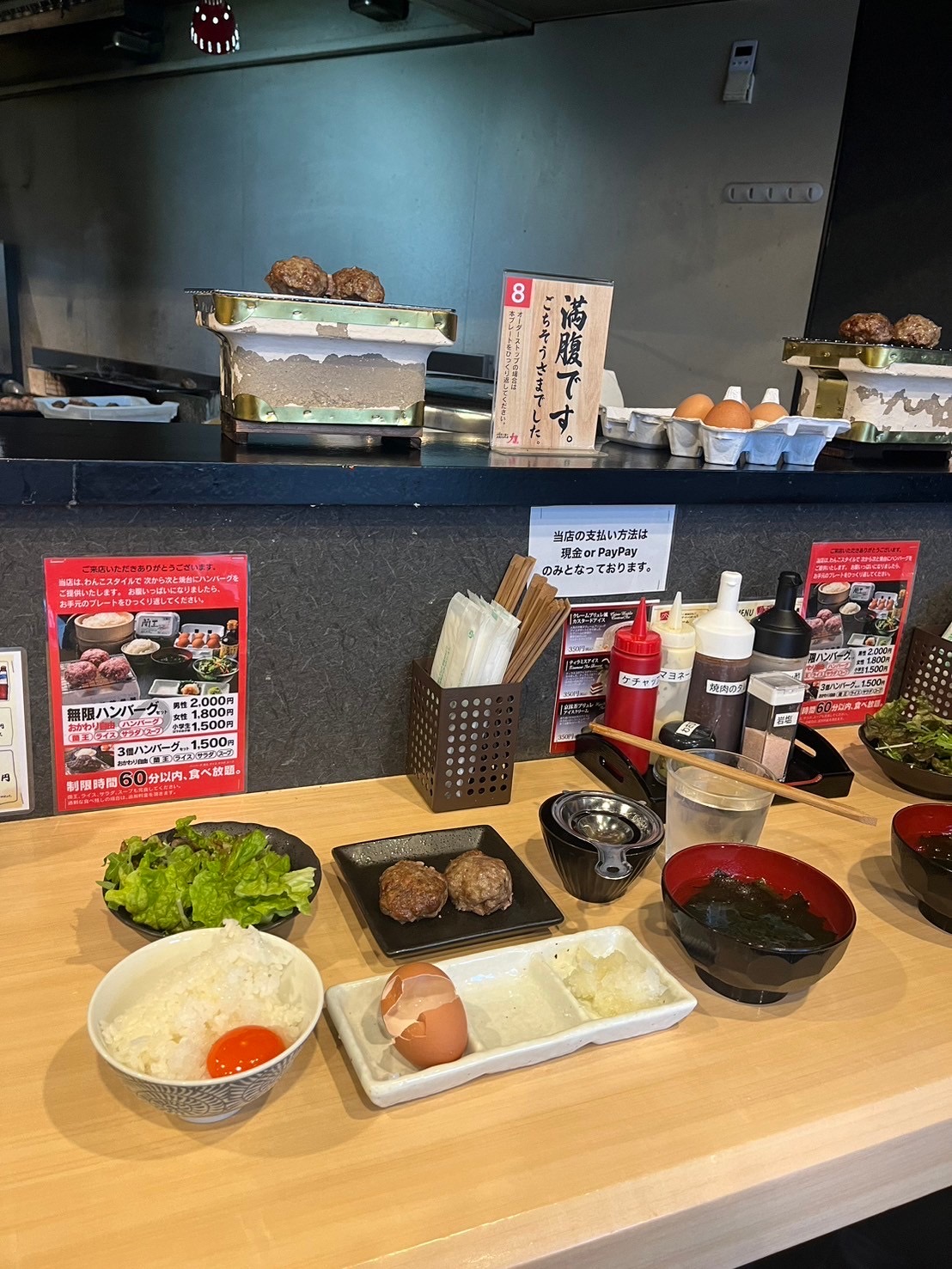
    But, similar to the English translation suggested, this shop serves all-you-can-eat hamburger steaks that will continue to be served in pairs of 2 until you say you’re done. 

    Well actually there is a little sign that says “stop” or “continue” and it is on top of the counter facing the chefs so they will know whether to continue serving you or not. But it is written in Japanese so take a minute to confirm which one you have it on or you may have yourself wondering why you just ate 100 little hamburgers. 

    No, but speaking from experience, I actually managed to eat 23 and this was because I consider it my lucky number so that also had to do with it, but it was a struggle (but enjoyable one) to say the least. 

    The actual time limit you have to eat is only 1 hour, and it is honestly pretty short. But, it is all you can eat and at least for me I am wanting to challenge myself to get back the money I paid for it so it wasn’t too much of an issue. 

    I would even go as far as to say that it was the perfect amount of time, because I had finished the 23 at just about the 50 minute mark and had an easy 10 minutes after to digest and reflect on why I willingly chose to eat over a kilogram of beef. 

    But honestly speaking, the hamburgers were really good quality. I was actually shocked.

    I forget the actual weight of them, but they were a bit bigger than say the size of one that you would see in a slider at a restaurant. 

    They were juicy, and perfectly cooked on the inside, so it wasn’t like you were eating tough or dry beef and this is why I was able to eat 23, because they actually tasted good. 

    And keep in mind at the time of me going in 2024, this was only 2000 yen (now 2200)! I cannot fathom how these businesses are staying open… This is especially the case because at the time of me going the record for hamburgers was over 50. Yeah, my ego did take a bit of a hit honestly speaking. 

    For the hamburgers they had a few different sauces like a sweeter yakiniku style one as well as ketchup and mayonnaise (of course). 

    But it isn’t just hamburgers you can eat here! You can also eat unlimited rice, raw eggs, a light seaweed soup, and even some salad!

    The rice is a no-brainer, as is the salad and soup, but you may be wondering about the raw egg. 

    Hear me out though, think of the most orange beautiful looking egg yolk you have ever seen. Then would you consider it? They also have a separator for the yolk and whites.
    It may sound odd, but the simplicity of a raw egg yolk and beef patties eaten over piping hot rice is one of life’s gifts I think. At least I uphold it to that pedestal. 

    So yeah, it is ridiculously cheap, you get to eat amazing quality ingredients and enjoy them as is, all while sitting at a bar style seating area getting fed hamburgers until you’re stuffed. I must say it was amazing as it sounds, and therefore I want all of you guys to be able to go as well. 

    But, with that it is a little long if you are coming from Kanazawa station (about a 25 minute bus ride) or a 30 minute walk from Nonoichi-Kōdaimae Station Though this is well worth it in my opinion. 

    Also, please note this: this all you can eat offer is only available on Sunday at lunch time! Other than that it is just a normal Yakiniku restaurant. 

    I was not able to make reservations when I went, and there is a limited amount of seats as well as quantity, so if you are going to go, I recommend lining up before it opens to guarantee a spot! 

    If you have the chance to go make it worth it and eat to your heart’s content!

    Thanks for reading – if you’d like to support and follow along: 

    More about me

    Different types of ordering systems in Japan explained

    Purchasing an onigiri to keep me fuelled throughout my journey 🍙

    Planning a trip to Japan? These may help: 

    🗺 Find a food tour near this restaurant — Viator

    🏨 Find a hotel in the area — Booking.com

  • Goechan Ramen – High Quality Fresh Ramen In Kanazawa!

    Must know Info:

    Goechan Ramen – ごえちゃんらーめん *Cash Only*

    2 Chome-4 Arimatsu, Kanazawa, Ishikawa 921-8161, Japan

    Hours (as of 2026/01): Everyday except Thursday and Sunday 11am-3pm

    Order system: Ticket Machine

    Goechan ramen is a local favourite in Kanazawa, but the only detriment to it is that the location is not the best… 

    If you have a car it is really easy to get to, and they even have a few parking spots in front of the place, but otherwise you are left with a bus or an hour walk from Kanazawa station… 

    But regardless of your means of transportation I think that Goechan is worth coming to! 

    They have a really simple menu, serving only soy sauce ramen, soy sauce ramen with raw ginger, tan-tan noodles (Japan’s version of dan-dan noodles but way less spicy) and ramen with just broth and noodles, no toppings. 

    They also have a raw egg topping, extra chashu pork, and a bowl of rice you can order. 

    When you enter they have a tiny little ticket machine with a picture next to each type of ramen so it makes it easy to order and you can choose your size from normal to large (they also have the amount of noodles for each size on the ticket machine as well). 

    The picture I have included is from the beginning of 2024 so the prices may have gone up, but at the time, a normal bowl was only 600-650 yen and a large bowl only 800 yen. Yeah, it’s just insane thinking about it. 

    But as for the restaurant’s interior, there were two counter like areas, with one more bar type seating on the left, and the other to the right which was a lower, longer type counter kind of thing. 

    Regardless, it was surprisingly spacious inside, but there were no tables, so try to be as  courteous as you can if going in with a party of more than 2. 

    The ramen itself was extremely good. I ordered both the soy sauce ramen and tan-tan ramen in a small order and I found it quite easy to eat by myself (both of them combined are large I assume). 

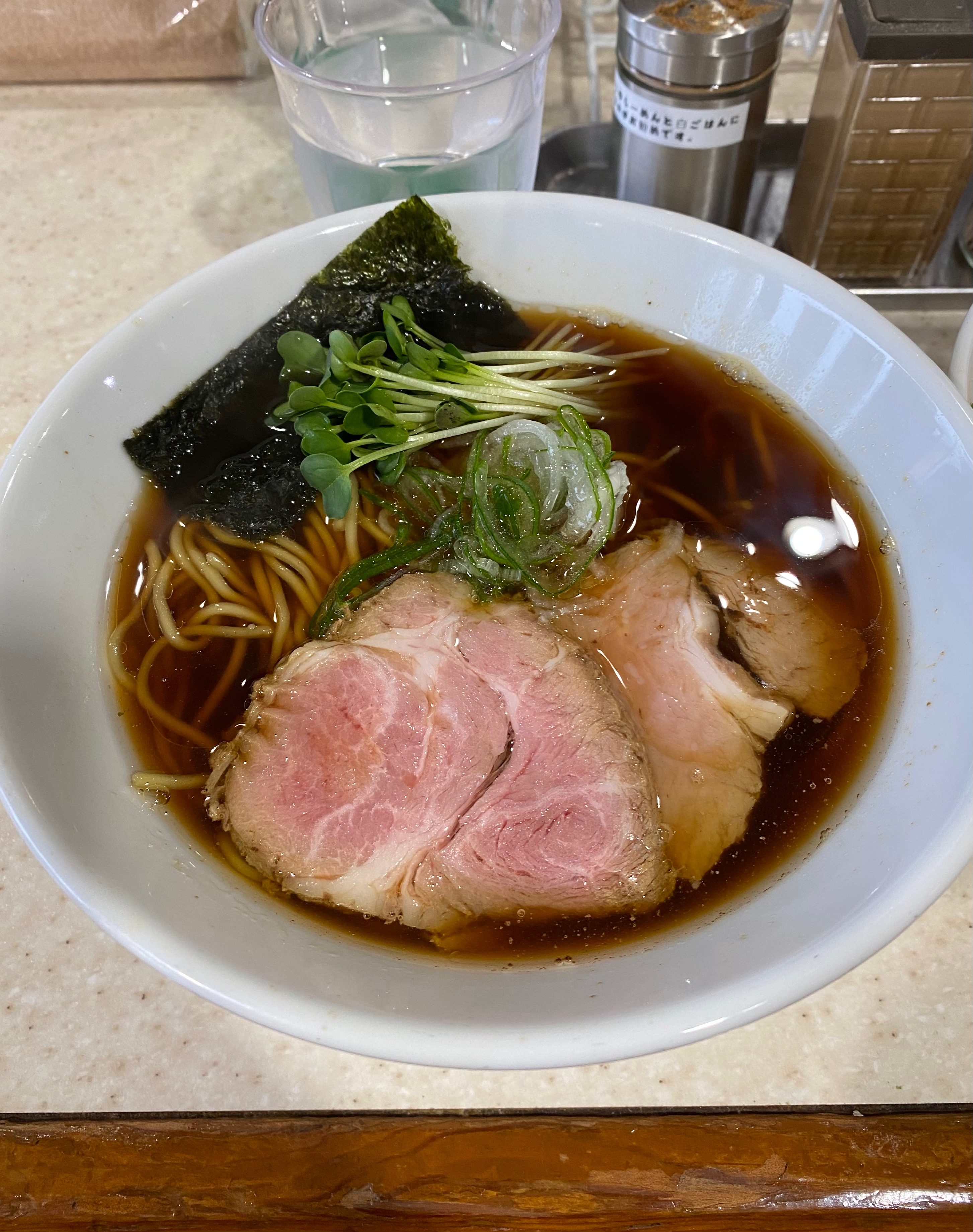
    The soy sauce broth was super rich and filled with umami. I am not the biggest fan of soy sauce ramen usually, but this was very good. What is unique is that they put fresh radish sprouts in it. These are likely bought fresh every day, and while they don’t have a ton of taste, it was nice with a bit of a crunchy sensation while eating a generally non-crunchy dish.

    The chashu was also excellent and had no fatty parts to it – completely tender. 

    As for the tan-tan noodles, it was the perfect balance of a little bit of spice and a creamy broth. 

    I heard before that the Japanese don’t handle spice very well and this is why when they make their own versions of traditional Chinese dishes they tone it down a bit, and this is an example of that (assuming it’s true). 

    The noodles stayed the same, but they took out the chashu and instead replaced it with bits of ground beef. 

    They also added in what I think is salad greens? Lol, I don’t know but again, it was nice to have a bit of a flavour contrast in the strong soup and light taste of vegetables. 

    It was also for this bowl of ramen that I ordered a bowl of rice to have with it, because instead of just scooping out the beef and eating it as it, I thought having it paired with rice would be much more enjoyable (which it was). 

    Overall, Goechan is a really good ramen shop and loved by ramen fanatics nation-wide. If you have the chance to go I would highly recommend it.

    Thanks for reading – if you’d like to support and follow along: 

    More about me

    Different types of ordering systems in Japan explained

    Purchasing an onigiri to keep me fuelled throughout my journey 🍙

    Planning a trip to Japan? These may help: 

    🗺 Find a food tour near this restaurant — Viator

    🏨 Find a hotel in the area — Booking.com

  • Jojoen – The Best Quality Yakiniku Chain In Japan!

    Must know Info:

    Jojoen – 叙々苑 *Cash or Card*

    Multiple locations nation-wide

    Hours (as of 2026/01): Check the specific shops page on google maps

    Order system: Menu

    Jojoen is probably the most famous and recognizable yakiniku place across Japan for being high end. 

    Yakiniku is in plain terms where you are given raw meat to cook at a small grill in front of you at your table – one of my favorite foods in Japan. 

    I am sure some of you may have heard of places like Gyu-kaku or Yakiniku king, but they are mainly known for their all you can eat options on the menu. 

    Jojoen on the other hand, does not have all you can eat, and is instead to be ordered off the menu per individual dish, or eaten via means of a set course menu (generally dinner). 

    The price difference is vast compared to other yakiniku spots, as Jojoen can get pretty pricey.

    But this is why it is generally treated as a restaurant people will go to for special occasions and it isn’t just because of the quality of the food or notoriety of the name either, but a lot of the times jojoen has really nice locations at the higher floors of some buildings so you are also paying for the view. 

    Another reason they are famous is because they sell bento-boxes and they are generally eaten on movie or TV sets, hence why they have a lot of notoriety among celebrities. They even mention it in the tv show “Tokyo Swindlers” (also highly recommended) so it is safe to say it is well known. 

    I myself have been to Jojoen once, and it was for my birthday. 

    It was a course meal that I had, though you also have the flexibility to order additional dishes of your choosing (which I did). 

    But, I would caution you regarding this because though it was a course meal, it had a LOT of food, and even coming from a big eater myself I was surprised. But this is also a good thing because you know you are getting a good bang for your buck. 

    Jojoen (like most yakiniku places in Japan) has a Korean themed menu, and it was no different from what was served with my course too. 

    There were various Korean dishes timed to be brought out in between the meat as a means to cleanse the pallet or at least not have your tastebuds conflict with the different cuts I assume. 

    Everything was really high quality, and I felt very satisfied with the taste of it all, but the cuts of meat definitely were the star of the show. 

    Yakinniku places (including Jojoen) will have beef, pork, and chicken as the three meat options you can order and grill, but Beef is without a doubt the best in my opinion, but also the most expensive lol. 

    Beef is typical for yakiniku, and I would say that the big three are Kalbi (boneless short ribs), Kata-Rosu (Chuck Eye Roll), and tongue (beef tongue). 

    Kalbi I think is the unanimous winner in most peoples books because of the excellent marbling and tenderness of it – also why this is the most expensive. 

    Specifically, the kalbi at Jojoen is incredible, and if you want to splurge, get their top of the line 上カルビ (Jou-kalbi), it is some of the best meat I have ever eaten. 

    Rosu also has some great marbling, but has a more deep meat flavor to it, so I sometimes prefer this over kalbi. If you want to feel “I am eating meat” then maybe Rosu would be better for you. 

    Beef tongue is one that when I tell people about it they get a bit turned off, but it is honestly so good, and also the meat with the fastest cooking time too (probably). It depends on the restaurant, but it can be either cut thin or thick, so adjust your cooking time relative to this. But regardless, it is usually eaten with fresh squeezed lemon afterwards, and though a little chewy it has an excellent flavor profile – I highly recommend it.

    If you want guaranteed quality, then I really do think Jojoen is a good place to go. While I am sure there are places all across Japan that are cheaper and have equivalently, if not better quality food/meat, unless I knew of one off the top of my head I would save yourself the trouble and go here. Also to preface, it is about the experience as well. 

    So while you are travelling in Japan, why not experience local cuisine at a very nice restaurant? When in Rome, right?

    Thanks for reading – if you’d like to support and follow along: 

    More about me

    Different types of ordering systems in Japan explained

    Purchasing an onigiri to keep me fuelled throughout my journey 🍙

    Planning a trip to Japan? This may help: 

    🏨 Find a hotel in the area — Booking.com

  • Ramen Shinsen – Rich Flavour Pork-Based Ramen In Kanzawa!

    Must know Info:

    Ramen Shinsen – 金澤濃厚中華そば 神仙 *Cash Only*

    〒920-0024 Ishikawa, Kanazawa, Sainen, 4 Chome−7−1 中央卸売市場前飲食通り

    27 minute walk from Kanazawa Station, 12 minutes including walking via bus  

    Hours (as of 2026/01): Mon-Fri 11am-3pm, 5:30-11pm, Sat-Sun 11am-10pm

    Order System: Menu

    Kanazawa has gradually been getting popular over the last year or so, and for good reason. 

    While there isn’t necessarily a ton to do or see, it is that in and of itself that makes it appealing for me. They also have great food! 

    One of my first stops was Ramen Shinsen for an evening bowl of ramen, and the food, nor the atmosphere didn’t disappoint. 

    Note that I was in a car here, so access was quite easy, but even if you walked it is under 30 minutes so very feasible I feel. 

    Because it is in the so-called “country-side”, or at least isn’t in a city, it allows for a lot bigger plots of land to build a shop on, and this is another reason why I really enjoy getting outside of the super populated places in Japan because the restaurants are almost always great quality and are super easy to enter. 

    Ramen Shinsen had both bar seats (as ramen shops usually do), but they also had an area where you would take your shoes off and actually sit down on a little cushion to eat your ramen (it doesn’t get more traditional than this I feel). 

    At the tables (and counter), they had various toppings including black pepper and doubanjiang (豆板醤)which is a Chinese chili bean paste and Japan has specific ones used just for ramen. If you like spice then I recommend it, but always try the soup before you put anything in it!

    Shinsen’s menu was quite large, but they specialize in one type of soup base which is tonkotsu (pork bones). 

    Tonkotsu ramen has its origins in Fukuoka, and so they have traditional ramen that they would have there, with a few different variations like extra cha-shu or a spicy version etc. 

    But what really sets them apart from other shops is their 中華そば (Chuuka Soba) which is essentially just the Japanese traditional name for ramen, but Shinsen keeps the tonkotsu base heavy, with an addition of soy sauce which actually makes the soup super dark. 

    As the visual of the ramen suggests, the soup is also super rich. But also super addictive.

    There is another form of ramen called “iekei” (my personal favourite) that also uses pork and soy sauce, but they also have a few things they add in so the soup looks (and tastes) a lot different. 

    From what I am aware, Shinsen was the first shop to make this variation of ramen, and they have about 5 variations of it as well. If you want to go for the flavor of the soup, then I suggest the normal one, but if you want to go all in then their 特性 (tokusei) or special ramen has the addition of really high quality seaweed which takes the umami to another level as it balances out the strong soup with almost a hint of sweetness.

    Regardless of what ramen you order, I think that rice is a must not just to balance out the flavour and give your taste buds a break, but there is something about the simple pleasure of great quality Japanese rice soaking up a good quality soup – I long for this everyday… for better or for worse. 

    Also, they have really good side dishes which a lot of ramen shops don’t usually have (but I think that this is because a lot of them are small and don’t have the time/cooking space to make them in a timely manner). 

    The obvious ones being Gyoza and Karaage, but the variations of rice were great, and the one I have pictured above is buta-meshi which is well-sauced and seasoned pork slices with a raw egg yolk. It is simple but so good. 

    Regardless of what you eat here it will be good, though you may need to rehydrate with a 2 litre water bottle from the convenience store afterwards (this is also why I think walking is a good idea, because it will force you to walk back to where you want to go and digest). 

    Also, when I went (last year) a staff member told me when I was paying that he was just about to go to Toronto for a work-holiday so I thought that was cool too! I am unsure if he is back at the restaurant now though lol…

    Thanks for reading – if you’d like to support and follow along: 

    More about me

    Different types of ordering systems in Japan explained

    Purchasing an onigiri to keep me fuelled throughout my journey 🍙

    Planning a trip to Japan? These may help: 

    🗺 Find a food tour near this restaurant — Viator

    🏨 Find a hotel in the area — Booking.com

  • Okinawa Soba Eibun – The Best Soba Noodles In Japan!

    Must know Info:

    Okinawa Soba Eibun – 浅草 つる次郎 HANARE *Cash or Card*

    Japan, 〒902-0065 Okinawa, Naha, Tsuboya, 1 Chome−5−14 ボーボー屋ビル

    7 minute walk from Naha Kokusai Dori Shopping Street 

    Hours (as of 2026/01): 11am-7:30pm everyday

    Order System: Menu

    I went there back on my first visit to Japan in 2023, and it still stands as one of my favourite meals I have had to date. 

    While the unfortunate reality is that Okinawa isn’t a place many people will be able to get to on a short trip, it is somewhere that people visiting Japan should try to get to at least once.

    It is often referred to as the Hawaii of Japan, and I would have to agree, and even going as far as to say it one-ups it in some areas as well. 

    One being that there are a lot less tourists in some parts, making it a lot less busy, and the second being that you can find incredible food (like Eibun) and at a quarter of the price of some places in Hawaii. 

    Eibun’s located just outside of “Kokusai Dori” which is Okinawa Prefectures main shopping district and likely the place with the most hustle and bustle out of any of the varying islands Okinawa has to offer (I know this sounds hypocritical with me saying there aren’t many tourists, but it is still significantly less than Hawaii so rest assured!). 

    Why this is such a good location is because I imagine a lot of you will be going to kokusai dori to begin with, so why not stop into a local restaurant serving traditional Okinawan food? 

    Also, Eibun has a system where instead of having to line up, you can write your name and how many people you have in your party and go do what you please in the meantime.

    This would be the perfect opportunity to go explore the shopping street, but do be aware that there is no way for them to contact you if your spot is approaching, so be conservative with how long you decide to separate yourself from the restaurant relative to how many names were before you. 

    I myself had maybe 10 names in front of me but still just stayed in front of the shop to be safe. 

    The food is actually soba, and I am sure that doesn’t pique a lot of your guys’ interests because it is probably something you have heard of before, but what makes it special is what it is topped with. 

    Generally speaking, soba is often eaten just on its own, or has the odd exception of tempura on it as well, but “Okinawa Soba” throws big pieces of Okinawa style braised pork belly which is cooked in soy sauce and brown sugar. 

    Additionally, and this is a big part of the dish too, but traditional soba is usually made with buckwheat which gives it that darker black/brown colour, but Okinawa “soba” noodles are made with wheat flour which is why is looks (and tastes) similar to udon or ramen noodles. 

    In terms of visuals alone, this is by far the best picture of food I have ever taken, and the reason why I put it on the home page of my blog. 

    But the flavour matches, or maybe even exceeds how it looks. The hand-pulled noodles’ elasticity, the various cuts of tender, braised pork, and the light warming soup that made me drink it all even though it was 30 degrees celsius and sunny outside. 

    The combination of these finely-crafter portions of the soup paired so well together that I have been craving it ever since. When I go back to Okinawa I know I will be heading straight for this bowl. 

    Additionally to this, while potentially off putting to some of you, I ordered a raw egg which can be eaten in whichever way you’d like really, but I mix it up and dip my pork or noodles in it. 

    As they still have some soup dripping off of them, it makes for a super creamy delicious bite with the egg. If you are in Japan, the quality of their eggs are incredible, so you do not have to worry about getting sick. 

    Obviously the rice looks a bit different from its standard white equivalent, but this is because it is “takikomi gohan” which is a Japanese form of cooking where the rice is cooked with various vegetables and seasoned with dashi and soy sauce. It was so flavorful and really opened up my eyes to what potential rice had as a cooking ingredient. 

    If (and when) I come back here I will be sure to order exactly what I did in this picture above and relive the nostalgia as well as deliciousness that Eibun’s food brings. 

    Thanks for reading – if you’d like to support and follow along: 

    More about me

    Different types of ordering systems in Japan explained

    Purchasing an onigiri to keep me fuelled throughout my journey 🍙

    Planning a trip to Japan? This may help: 

    🏨 Find a hotel in the area — Booking.com