• Aangan – Authentic Nepalese Food Located in Japan’s Korean Town, Shin-Okubo!

    Aangan – アーガン *Cash or Card*

     〒169-0072 Tokyo, Shinjuku City, Okubo, 2 Chome−32−3 リスボンビル 4F

    3 minute walk from Shin-Ōkubo Station

    Hours (as of 2026/04): 11am-11:30pm everyday

    Order system: Menu

    Yes, you are not in the wrong place. This is “localeatsJAPAN”. So then why am I introducing a Nepalese restaurant? Well, that is because this restaurant is still local, and it is in Japan, so technically speaking it’s fine right? 

    All jokes aside, Aangan is an extremely highly rated Nepalese restaurant located a few minutes walk away from Shin-Okubo station and no more than a 15 minute walk away from Kabukicho. 

    When I lived in Japan for an extended period of time, while rare, there were times where I craved food other than Japanese. This was one of them, and it wasn’t only great, but it also proved to me yet again that Japan is really the home to every cuisine at very high quality. The famous Anthony Bourdain quote on Tokyo was indeed true. 

    One nice thing about Aangan as well, is that you can actually make reservations on both tabelog and hot pepper gourmet (another popular food site) making it seamless to get in and out instead of potentially having to wait. 

    Aangan does a great job of making it feel like you have been transported to Nepal, with the music, decor, and just overall atmosphere of the restaurant. It was a cool experience despite being in the middle of Tokyo. 

    The customers were a mix of Nepalese and Japanese, and on the night I went every table was full which I thought was quite impressive for a rather niche genre of food. 

    I had actually never had Nepalese food up until this point, but heard a lot about it from my father who had hiked in Nepal for a few months when I was really young. So it is safe to say that I had high expectations. 

    The menu was quite large and everything looked very good, so once the staff had come over I had to ask them about what they recommended. 

    They listed a few things that were staples in the cuisine, and so I trusted their word and ordered all of it. The staff was from Nepal too, so I knew I could put my trust into them. 

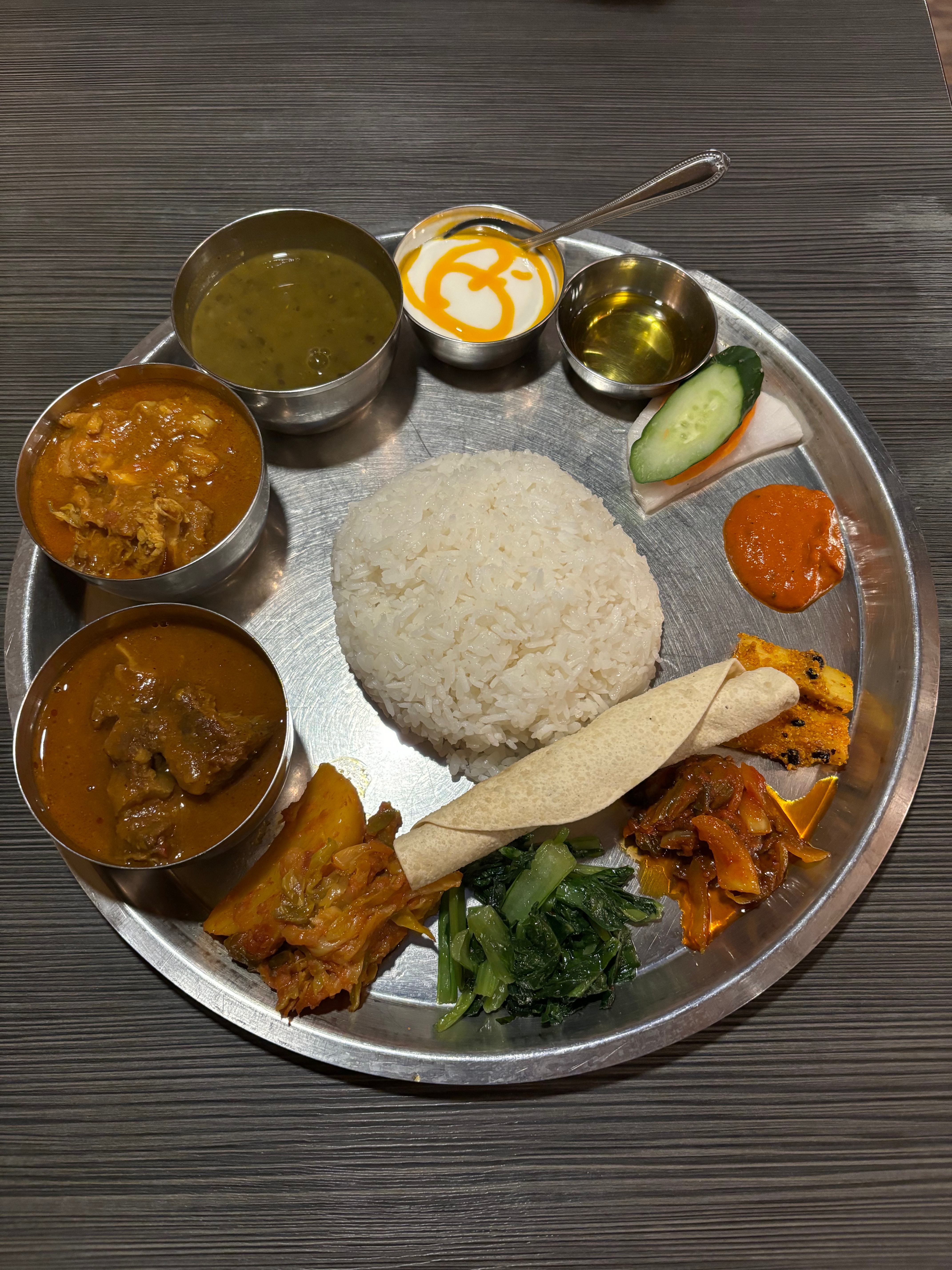
    What I actually ordered was the Aangan Special Thali Set, fried momo, and (don’t come after me) a cheese naan kind of thing. 

    I got the gist that Thali is kind of the staple dish in Nepal (correct me if I am wrong) and it was very good. 

    Being completely honest I wasn’t sure if there was a particular order of how you eat everything/how you are supposed to eat it so there is a high chance I was doing it wrong but everything on the plate went very well together. 

    Both of the curries were very flavorful and I think one had mutton and the other chicken? Regardless they were some of the best flavoured curry I have ever had and were not oily or anything in the slightest. 

    As for the momo, it was something similar to a dumpling I guess, and it was also very good. I believe the fried one is just pan-fried, but it gave a nice crisp on the outside. I loved the texture of the outside of it and the spices and meat inside were equally as good. 

    Lastly was the cheese-naan and to be honest I couldn’t even find it on their menu when I just looked so I don’t know if they have it, but this is a staple in Indian food (and I guess Nepalese food) in Japan. 

    It isn’t something I have ever seen over here in the west (which is ironic because I think it would be really popular), but it is really just mounds of cheese stuffed into naan bread – there isn’t anything to not like about it I don’t think…

    Anyways, if you see Japanese people at a restaurant serving curry and have it on the menu then you can best be sure they are ordering it, so I recommend you to try it as well. 

    Aangan is a good break from Japanese food, and might even let you experience a whole new cuisine like it did for me. For those of you that were in the same boat as me or just simply want to try something new, this is a good place for it! 

    Thanks for reading – if you’d like to support and follow along: 

    More about me

    Different types of ordering systems in Japan explained

    Purchasing an onigiri to keep me fuelled throughout my journey 🍙
  • Onaka Ippai – Steak Restaurant Known For Their High Quality Meat And Great Service In Higashi-Nakano!

    Onaka Ippai – おなかいっぱい *Cash or Card*

     4 Chome-9-1 102 Higashinakano, Nakano City, Tokyo 164-0003

    1 minute walk from Higashi-Nakano Station

    Hours (as of 2026/04): Wednesday 12-2:30, 5-10pm, Thursday and Friday 5-11pm, Saturday and Sunday 12-3pm, 5-10pm

    Order system: Menu

    Onaka Ippai (literally meaning “my stomach is full”, or “I am full”) is a popular steak restaurant located in Higashi-Nakano – 2 stations over from Shinjuku via the chuo sobu line. 

    I came across this place by chance when I was walking around the area, but it turned out that it was loved by not just people living in the area, but also celebrities. If you look at the shop they have a few posters up of people that have come to visit, and if you are familiar with Japanese TV, then the comedy duo “banana man” may ring a bell, but they have visited as well as the shop having been featured on TV multiple times it seems. 

    While I think it is great that some good restaurants can get publicity through the means of Japanese TV (because it is actually really common), my only caveat is that as a result of this, the shops can get quite busy. 

    This restaurant I could tell also was a subject of this, because even though I had gone right around when it opened at 5 on a weekday, the shop was full and there were some people lining up outside too. Now don’t get me wrong it isn’t a big shop, but steak isn’t always a fast cooking meal either, so I think this contributed to the longer wait time to get in – not something I am not used to in Japan though!

    Once you get close enough to being seated you can sit in a few of the seats they have inside the restaurant near the door, and they have various magazines and comic books you can enjoy while you wait (all in Japanese of course). 

    They have both tables and a counter that wraps around and that was where I was seated, but the chairs were comfortable and the space I had to eat was also generous so it was quite pleasant. 

    Immediately after being seated the owner had come over to take our order or see if we had any questions and she was very kind with a super open personality – something you don’t see often in Japan (especially Tokyo), so it was really refreshing. 

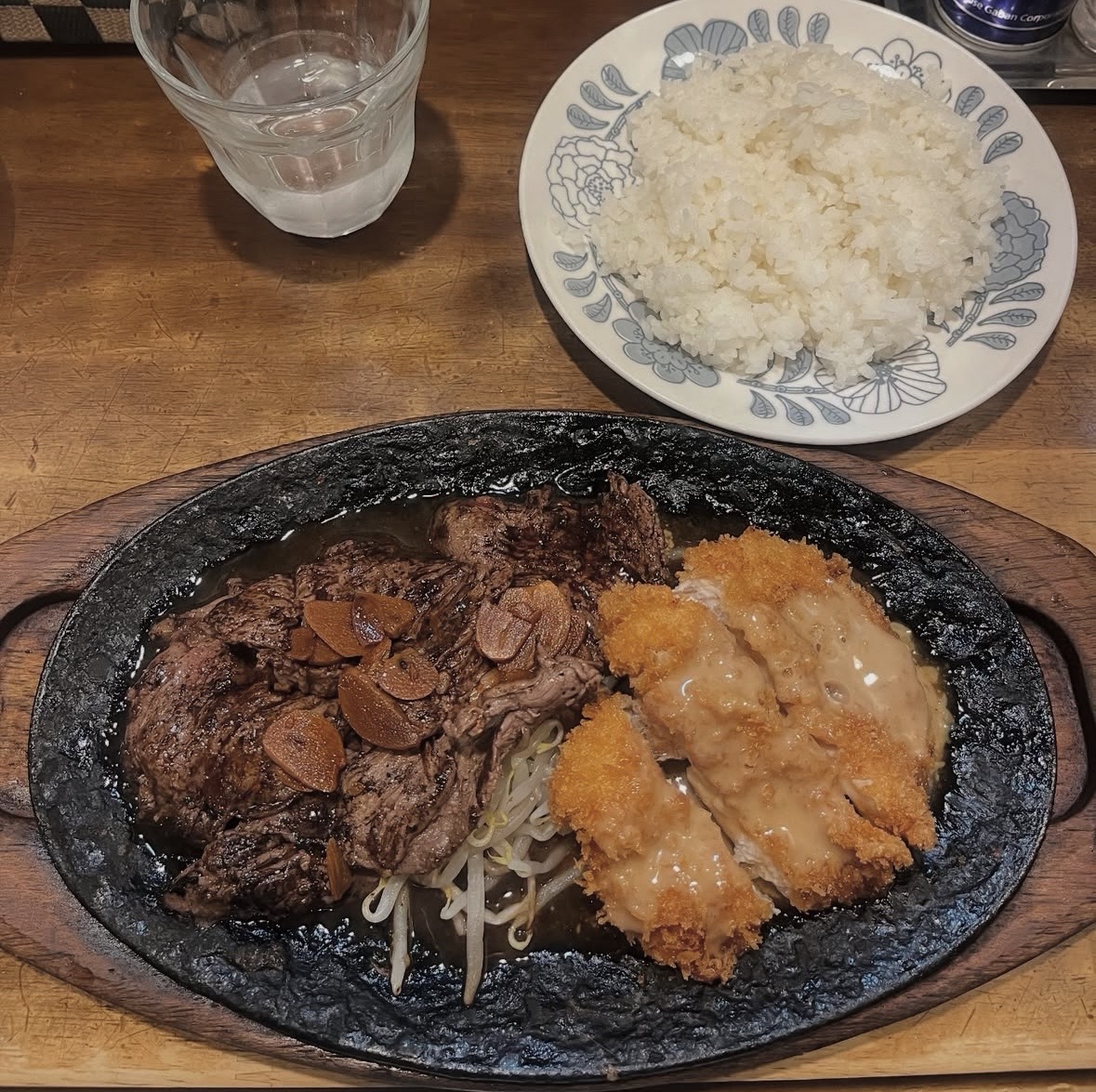
    She gave us what was popular, and I ended up going with the steak and chicken katsu set with corn soup on the side. 

    The corn soup was great (as it usually is in Japan) with a creamy broth made from combining butter and milk with corn – how could you go wrong! 

    As for the steak, it was very tender and had a good garlic taste to it due to the garlic chips they put on top. It wasn’t so much one I would want just on its own, but paired with rice? It was perfect. The chicken katsu was also cooked very well and it was topped with what I recall to be a sesame sauce – an interesting choice, but it actually paired very well as well. Both the meat’s quality was excellent and the serving was generous – befitting of the name “I’m full”!

    While they do have just plain steak meals, I find a lot of the steaks in Japan to be cooked with a sweeter steak-sauce, and while the quality of the meat is often amazing, for me being born in Canada, I like a good old plain cooked steak with just salt and pepper. Therefore I opted out of getting it, though they did have a one pound steak for about 3900 yen, which I thought was not too bad of a deal. 

    Their menu is honestly huge, and even though they are a steak restaurant I have heard that their curry is amazing as well, easily topping the likes of coco ichiban. 

    I definitely want to go back and try some of their other menu items if I have the chance.

    If you are craving meat and don’t want to break the bank, this is a perfect local spot.

    Thanks for reading – if you’d like to support and follow along: 

    More about me

    Different types of ordering systems in Japan explained

    Purchasing an onigiri to keep me fuelled throughout my journey 🍙

  • めし処ビレン – Super Hidden, Cheap Family Diner Serving Amazing Food Near Waseda!

    めし処ビレン *Cash Only*

     538 Wasedatsurumakicho, Shinjuku City, Tokyo 162-0041, Japan

    5 minute walk from Waseda Station

    Hours (as of 2026/04): 11:30am – 4pm Mon-Fri

    Order system: Menu

    Yet another restaurant that has no official English name it seems, but the exact translation into English with romaji (Japanese printed in the roman lettering system) is “Meshi Dokoro Biren” so I will refer to it as Biren just to keep it consistent. 

    This is another restaurant that is extremely close to Waseda’s main campus in Shinjuku, except differing from the other restaurants I have covered on my blog such as: Sanpin Shokudo and Merci, this one really isn’t all that popular and I think that it is solely because people don’t know about it. 

    Despite having similar if not better (in my opinion) food than most of Waseda University’s surrounding restaurants, the shop does not seem like the type to speak to any form of media or market themselves in any way. It is a complete “if you know, you know” type of place. 

    This is exactly how I found it out too – by a friend who happened to just find the place by randomly one day he said. 

    The shop is just a small staircase down from the sidewalk on a side-road, and it is pretty easy to miss if you aren’t paying attention. 

    Inside there are multiple tables, with the biggest consisting of 4 seats (though I am sure the owners would accommodate you if more than this) and the place you pay at the very back of the restaurant near the kitchen. 

    I have been there multiple times and I have only seen the husband (the chef) and wife (the one who does literally everything else) who own it, so I think it’s safe to assume that it is a strict two man operation – a true “mom and pop shop” if you will. 

    If you go at peak lunch time hours it may be filled with people, but it is rare, and the reason it may seem slow to get in is because there are only 2 people serving over 20, so it is for good reason. 

    Because of this, the wife doesn’t have time to be looking at each table and also letting people in, so if you see people leave and a table open up, just walk right in over to that. The table will get cleaned up soon after, if not already done so. 

    Their menu is both posted outside and on the table, but I recommend deciding beforehand what you will order just to make it easier on the owners as well as allow you to get your order across faster. 

    Their menu is rather simple, and I have tried most of it. Everything is incredible, and not to mention CHEAP. Everything is under 600 yen or less for their normal size (it costs an extra 200 yen for extra rice). 

    My personal favourites out of what I have tried are definitely the mix-don, and the yakiniku-don. Anything with a “don” prefix at the end of it is always going to  be served in a bowl over rice. 

    Berin has a few dons on their menu, and the mix mashes them together. It comes with half curry rice, and half with yakiniku meat, and also a fried egg in the middle of the two. The pairing works great, and despite both of the 2 parts of it being strong on their own, they blend together for an even better dish, one surpassing both of them individually I feel. 

    The curry is a bit on the thicker side which I like, and there is a generous amount of vegetables inside of it which tastes just like someone made it at home for you. 

    As for the meat, it is seasoned very generously, and it is just something you want some plain rice with to chow down on. This is why I also like plain yakiniku-don as well. 

    All of the dishes here come with a complimentary miso soup as well, which is also great. 

    This place is uber cheap, and really no one knows about it even though they have such great quality food. If you are in the area or even want to make the trip out I really recommend you come!

    Thanks for reading – if you’d like to support and follow along: 

    More about me

    Different types of ordering systems in Japan explained

    Purchasing an onigiri to keep me fuelled throughout my journey 🍙

  • Oroji Tonkatsu – Hidden Gem Tonkatsu Place Open Since 1927 In Shinjuku!

    Oroji Tonkatsu – とんかつ 王ろじ *Cash Only*

     3 Chome-17-21 Shinjuku, Shinjuku City, Tokyo 160-0022, Japan

    4 minute walk from Shinjuku Station

    Hours (as of 2026/04): 11:15-2pm Mon, Tue, Thur, Sun and 11:15-2pm, 6-7pm Fri, Sat

    Order system: Menu

    Located in super central Shinjuku, Oroji still manages to be located just a little bit off the beat and path. 

    Though it is probably in a similar proximity to most shops and restaurants located near the station, it is on this little side road which manages to (for whatever reason) be actually pretty quiet, which is nice in such a big city. 

    It truly is prime real-estate, and a great hidden gem. It speaks to how they have been open since 1927!

    Their hours are quite odd if I am being honest, but if you go in right around when they open or slightly before you should be able to get in no problem. 

    It is a smaller shop but they have both counter and table seats, so bigger groups (around 4) also don’t have to worry. 

    As in the name, Oroji specializes in Tonkatsu and they have only 5 menu items, a tonkatsu set, tonkatsu curry (their most popular dish and also what I ordered), tonkatsu sandwich, indian curry, and the only non-pork item which is ebi-fry (fried shrimp with tartar sauce). 

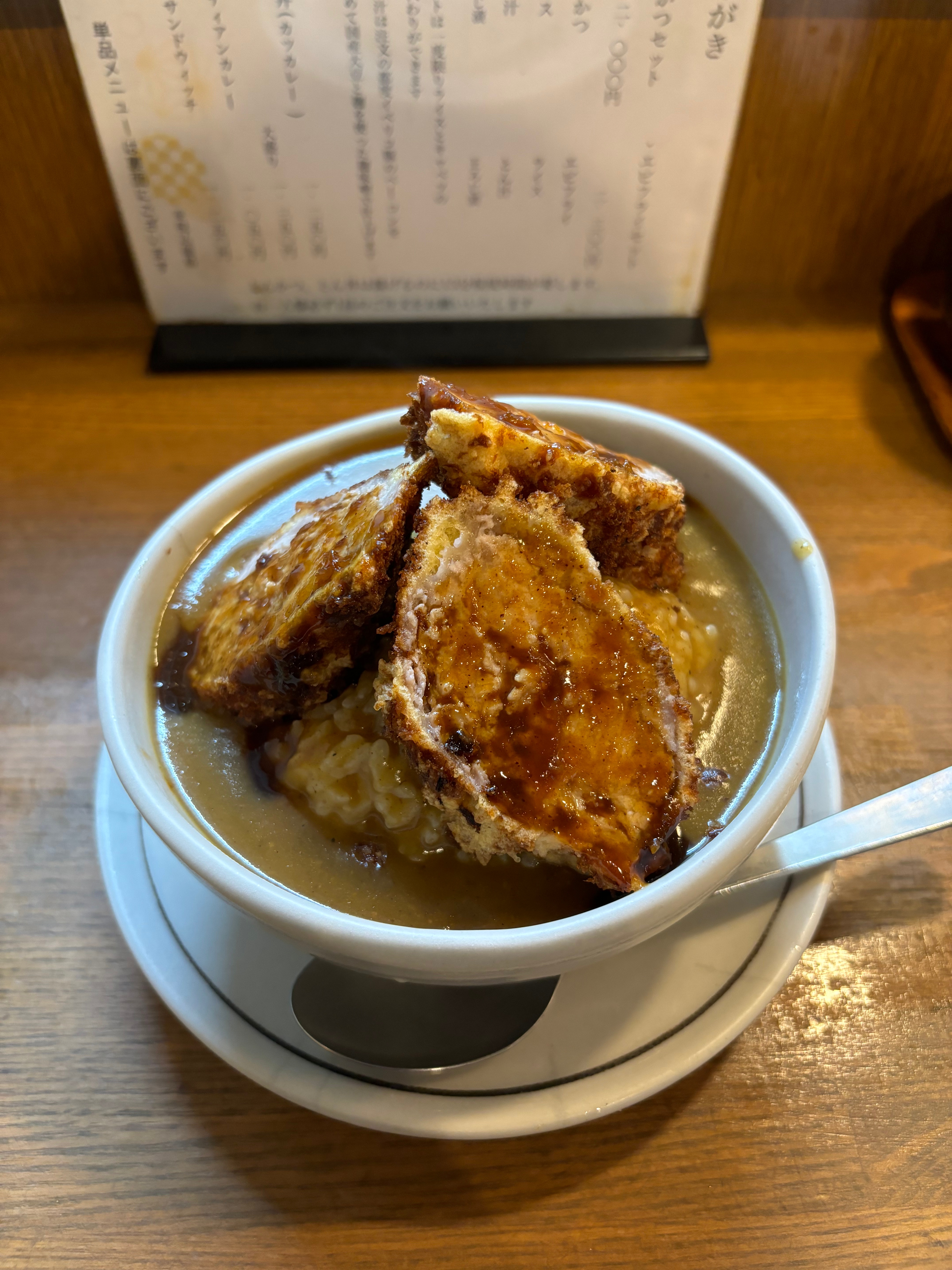
    The reason their tonkatsu curry is popular is because it differs in the sense that A, is served in a bowl, and B, the tonkatsu is cut almost into an oval. 

    It’s almost as if they cut the ends of the pork cutlet and only serve those, but even then I am still puzzled as to how they get in this shape. 

    Regardless, it was very tasty and actually a fun way to eat it! Up until this point I was so used to just eating the normal, thinner tonkatsu that were cut into strips, but being able to pick up thick pieces like this gave me a bigger sense of satisfaction I felt. 

    Despite them being so big however, they were perfectly juicy on the inside, and extremely crispy on the outside – your ideal tonkatsu. 

    It had a bit of a thicker breading to it which I think added to the crunch, and instead of taking the pork out to give it that nice golden colour, my impression was that they left it in just a bit longer to almost take it past that a bit more (in a good way). 

    And with this one would think it would sacrifice the pork’s tenderness, but it didn’t at all. Actually, it was shocking at how tender it was despite them being such thick pieces. 

    The picture I took really doesn’t show the amount of food the bowl contained, but the bowl actually had quite a bit of depth to it. 

    The rice was probably put down first and then curry was poured almost as if a castle moat surrounded it. 

    The curry was quite soupy, and though I am a bit of a thick-curry connoisseur myself, the flavour was definitely there, and was actually very good for dipping the tonkatsu into. 

    Perhaps the reason for putting it into a bowl is so they can make the curry soupier, or maybe it is because the soup is soupier they put it into a bowl? Regardless, it tasted great and I was able to get at it with a spoon easier than I would if on a plate, so I appreciated it. 

    I am sure that their other menu items are great too, so I definitely want to make a trip back here. 

    The location is excellent, and for this quality and price (the dish I ordered being around 1300 yen) it is hard to beat. This is a place I always recommend to people whether they live in Japan or not.

    Thanks for reading – if you’d like to support and follow along: 

    More about me

    Different types of ordering systems in Japan explained

    Purchasing an onigiri to keep me fuelled throughout my journey 🍙

  • Kashiwagi – Famous Soy-Sauce Based Ramen Shop Located 2 stops from Shinjuku!

    Kashiwagi – かしわぎ *Cash Only*

    1 Chome-36-7 Higashinakano, Nakano City, Tokyo 164-0003, Japan

    3 minute walk from Higashi-Nakano station  

    Hours (as of 2026/04): 11:30am – 3pm Every Day except Tuesday

    Order system: Ticket Machine

    Located in a quiet Higashi-Nakano area (just 2 stations away from Shinjuku) Kashiwagi lies tucked away. 

    Kashiwagi has been voted in the top 100 ramen restaurants on tabelog (Japan’s biggest food review site) for years as well as being featured in the 2018 Tokyo Bib Gourmand Michelin guide (restaurants under 5000 yen).

    This is well under that, with their bowls costing around just 1000, yet the quality being very high. 

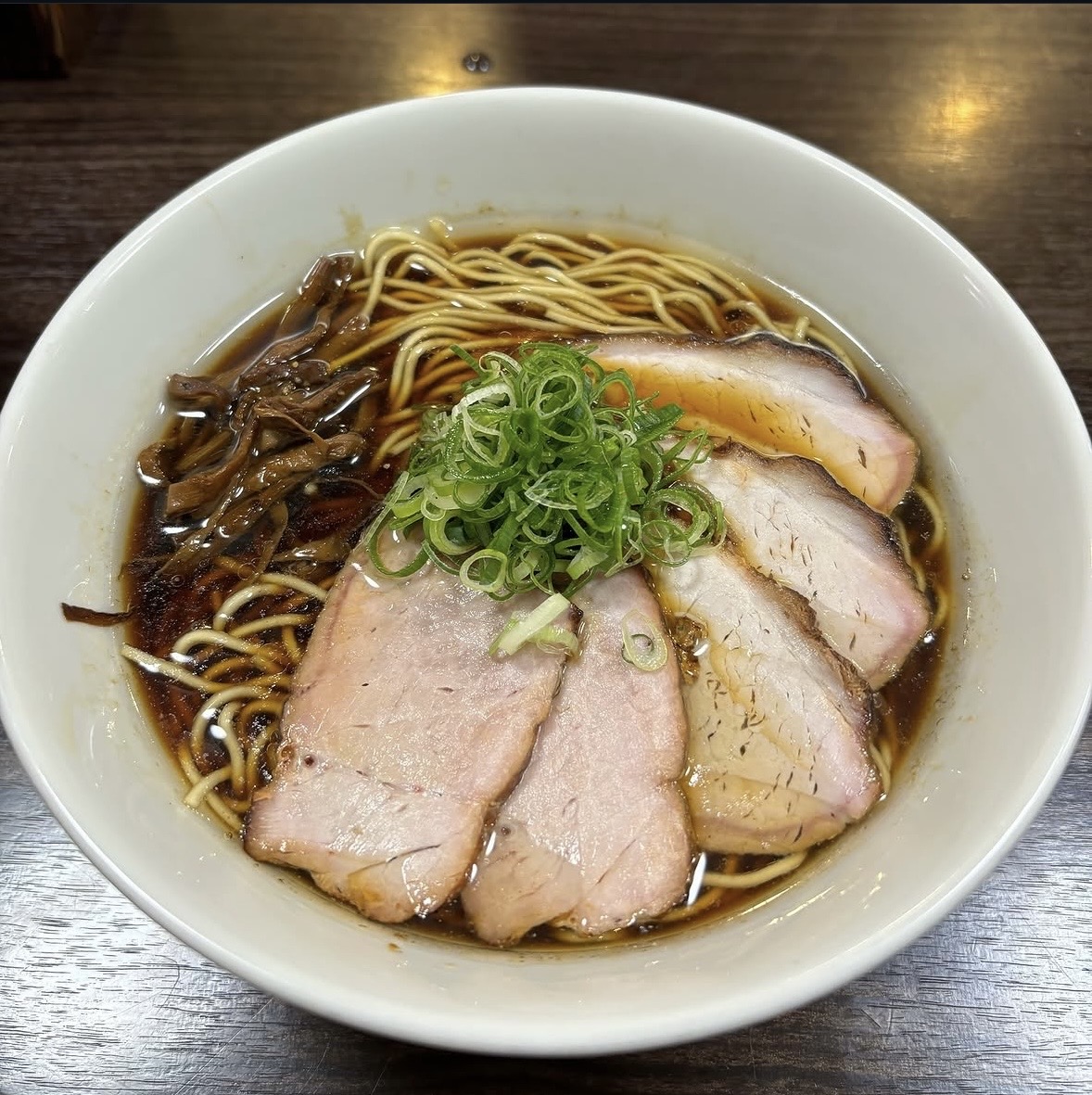
    They specialize in a soy-sauce based soup and they don’t overcomplicate it. In fact, it is a very simple bowl of ramen. 

    It has just 3 things – noodles, pork, and some green onions as a garnish. 

    Despite this however, they have mastered the soy-sauce broth to a tee. You see, there is only so much one can do to transform a soup with a soy-sauce base. This paired with the fact that it is one of the most commonly made ramen in Japan also adds another hurdle to achieving success with it. 

    I have seen quite a few shops that do different spins on it, sometimes making the bowl a bit too fancy to the point where it no longer gives me the feeling that I am eating ramen. 

    Kashiwagi however didn’t, and I think their strength lies in their simplicity. 

    The soy-sauce broth is dark, and that usually is a sign the broth is going to be strong. This was exactly the case here, and the umami from the soybeans let loose my hunger. 

    The noodles are thin and generally the same kind with what you will see with soy-sauce ramen, but they were also very good. I do not think they are handmade, but even mass produced noodles in Japan you will find are extremely good quality.

    Another thing I ordered too is a cheap staple in cheap, “use whatever you have laying around the house” kind of dish called TKG which stands for tamago kake gohan, or raw egg over rice. 

    Sometimes you will see this served at ramen shops, and I was especially happy to see it here, because TKG is usually eaten with soy-sauce. 

    So instead of just drinking all the soup, being able to pour some over my rice mellowed down the strength a bit while making the rather plain TKG more exciting.

    I also ordered the TKG partly out of curiosity and partly because I felt like the soy-sauce broth was strong enough that I wanted something to pace myself with, and it was the right call.

    It is one of those menu items that seems almost too simple to bother with until you actually try it, and then you understand immediately why it exists.

    The egg mellows out the intensity of the broth in the same way that rice does, but with a creaminess that rice alone cannot provide.

    It is a very Japanese way of eating — using simple, cheap ingredients to get more out of what is already on the table — and Kashiwagi does it in a way that feels completely natural rather than like an afterthought.

    Being in such a close proximity to Shinjuku, and being this popular of a shop, I think that going to check it out is worth it! Especially so because it will be a lot less crowded than other major Tokyo wards!

    Thanks for reading – if you’d like to support and follow along: 

    More about me

    Different types of ordering systems in Japan explained

    Purchasing an onigiri to keep me fuelled throughout my journey 🍙

  • Sugitaya – Iekei Ramen Shop Run By Disciple Of Founding Father Yoshimuraya in Yokohama!

    Sugitaya Ramen – ラーメン杉田家 本店 *Cash Only*

     3-5 Shinsugitacho, Isogo Ward, Yokohama, Kanagawa 235-0032, Japan

    4 minute walk from Shinsugita Station  

    Hours (as of 2026/04): 5am – 9:30pm Monday – Saturday

    Order system: Ticket Machine

    Ok, this is going to be a long one. 

    This is the shop where I ate my first ever “iekei ramen” which is now undoubtedly my favourite food of all time. It has a very special place in my heart. 

    Before I get into Sugitaya specifically however, I want to first talk about the origins of “iekei ramen” because it is important to know for those of you that are as serious as I am about it. 

    It was created by a man named Minoru Yoshimura in 1974 in Yokohama City, Kanagawa Prefecture (just outside of Tokyo). This shop takes over his last name and adds “ya” to it which is a very common thing that ramen shops do except they usually add the kanji 屋 which is a suffice for shop. However, iekei ramen shops in particular add 家 which also reads “ya” but is more commonly associated with the word “house”.  My explanation for this is because iekei (家系)means house-style and so I think that they add this to emphasize this as well as pay homage to Yoshimuraya as well. 

    Yoshimuraya, gaining rapid popularity for combining a soy sauce and tonkotsu (pork bone broth) together naturally gained the attention of up and coming ramen chefs and those who wanted to learn from the creator himself. 

    This led to Minoru taking a number of disciples under his wing from the 90s until early 2000s which a news channel was able to make a documentary out of and the clips from it are still on youtube from this day. Let me warn you though, Minoru was pretty tough on his disciples to say the least (you will understand if you watch it lol). 

    Speaking of disciples, those that actually worked at Yoshimura and went on to open up their own shops were 11, of these 1 which has since closed, and 2 of which are not considered “chokkei shops”. Chokkei means those that have not only done training at Yoshimuraya but have also gone on to be very successful. If you look it up online it will be easy to find all of them, but to guarantee you are in the right spot, they should have two pieces of paper both stamped with “Yoshimuraya” that certifies they are legitimate (though for those that like this ramen it is pretty common knowledge who the shops are so I don’t think anyone would try it anyways lol). 

    I myself have been to 7 out of the 10 and so I am hoping to be able to finish all of them in the near future!

    But what started this obsession with everything about this ramen was Sugitaya. 

    Also located in Yokohama, Sugitaya was actually the first chokkei shop opened, and though I would like to say I planned this to also be the first one I went to, it was really just by chance lol. 

    Having spent the day in Yokohama, on the way back to central Tokyo I looked up popular ramen shops in the area, as one would. 

    What came up first with an overwhelming amount of good reviews was Sugitaya so naturally, that’s where I went. 

    It was on the weekend that I went and also at ramen shops’ usual peak dinner time rush (around 6pm) so it was quite busy. I would say I lined up for about an hour (as you get closer to entering you can sit down though which is good). 

    As you get closer to the end of the line the staff will tell people to first go order from the ticket machine and come back to the line.
    Once you are done the staff will come back and ask you if you have any preferences. This is the only tough thing for non-Japanese speakers about this ramen I would say, so if they ask you I would just memorize “zenbu futsuu” which will give you just the standard bowl, no variations in the amount of oil or strength of the broth. This is likely the only thing they will ask you so even if you don’t understand them you can say this without worry! 

    I think I got the large bowl, but something I learned recently is that the normal sized bowl is always what you should get because that is the base for their recipe and will give you the most authentic flavor. My glutton self didn’t realize this for about a year though… 

    They have chashuu-men (extra chashu) as well as a few different options of toppings, but I think that the egg is a must. 

    Oh, and I ALWAYS get rice. The soup and rice is a match made in heaven. 

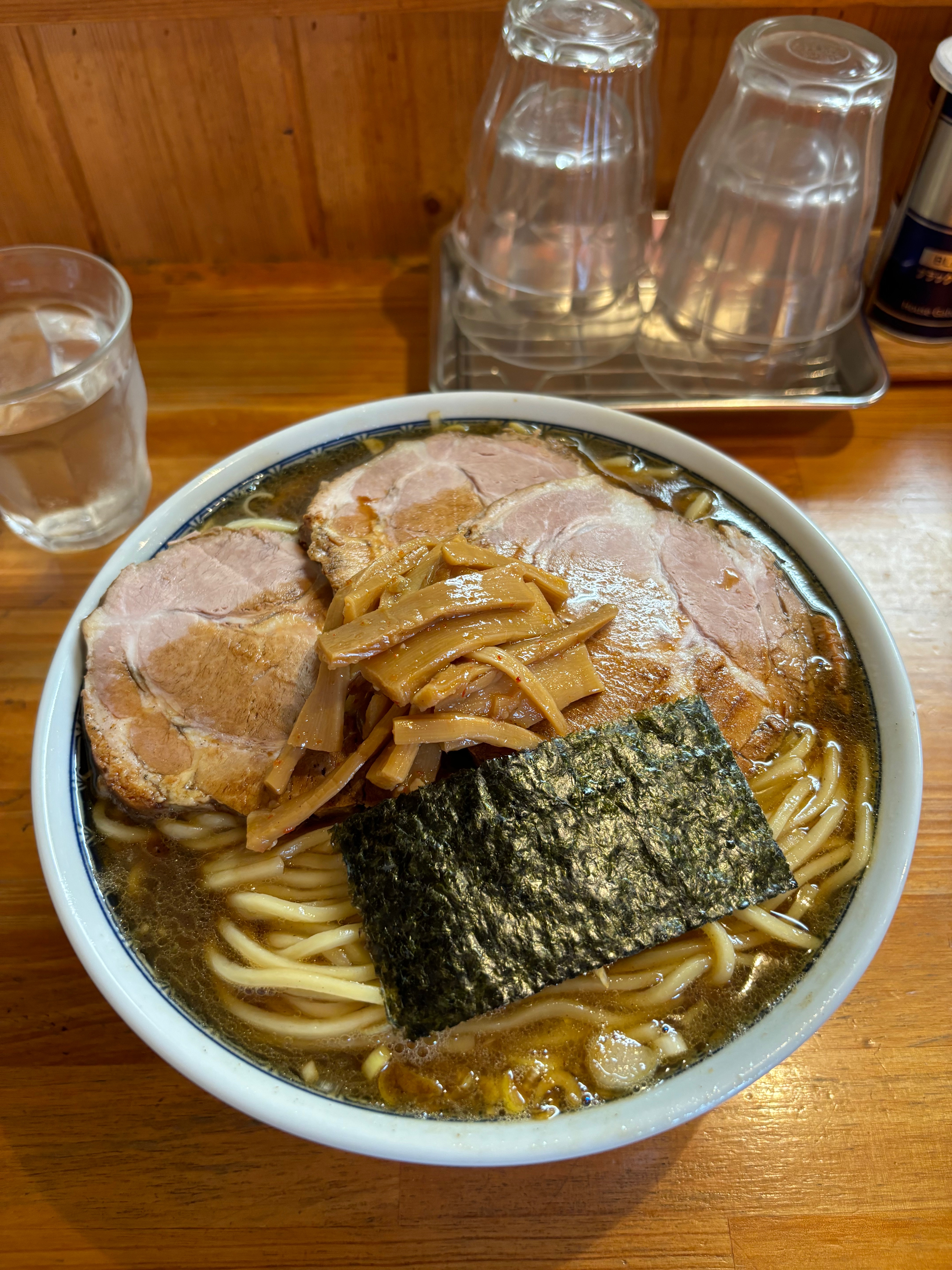
    All iekei ramen comes with 3 things regardless of the shop: seaweed, spinach, and chashu. 

    How you eat them is up to you, but there are a few different ways. 

    One is just taking everything in one bite – the beginner. 

    The pro, however, is to take the aforementioned white rice and to dip the seaweed in the soup and then kind of fold it over the white rice like a blanket. This bite alone will get you addicted to this type of ramen – I apologize in advance. 

    I mentioned that the soup is made from pork bones and soy-sauce, but one other thing they put in it that gives it that extra punch is chi-yu or rendered down chicken fat. All three of these things combined make for a decadent, strong flavored soup that has had a grip on me since my first sip of it. 

    Some people may find the soup too strong for them, but I absolutely love it, and everything that is put inside of it too. 

    All the top iekei ramen shops also get their noodles from the same supplier called: saiaki seimen which has been opened since Meiji-period Japan.

    They are slightly thick but have a really great elasticity and are also cut quite a bit shorter than other stereotypical ramen noodles which makes it easier to eat and avoid splashing soup on your clothes. 

    Speaking of which, a lot of these places don’t have disposable aprons you can use, so do be careful! 

    Ok, I think that is enough of my bombardment of info on this ramen, but It is something I am highly passionate about if you couldn’t tell already. 

    If you have the chance, then please go try it in Japan. It doesn’t necessarily have to be a chokkei shop either – there are lots now that I would even say are better than some of them all across Japan!

    Thanks for reading – if you’d like to support and follow along: 

    More about me

    Different types of ordering systems in Japan explained

    Purchasing an onigiri to keep me fuelled throughout my journey 🍙

  • Sanpin Shokudo – Shop Famous For Their Curry and Gyuudon Mix Near Waseda!

    Sanpin Shokudo – 三品食堂 *Cash Only*

    1 Chome-4-25 Nishiwaseda, Shinjuku City, Tokyo 169-0051, Japan

    8 minute walk from Waseda Station  

    Hours (as of 2026/04): 11:30-2pm Monday – Saturday 

    Order system: Menu

    Yet another famous restaurant near the Waseda University campus, Sanpin Shokudo has been open since 1965 after the current owner’s father closed down what used to be a hat shop. 

    It is essentially on campus with how close it is, and so it is mostly filled with students and faculty members, though I have seen other office workers and such come as well. 

    They are only open from the peak hours of 11-2:30, so it can be a bit of a struggle to get in without a line, but if you come a bt before 12 or a little after 1 you shouldn’t have an issue – just do know that the restaurant’s interior isn’t super big so you may be sitting right next to someone you don’t know. 

    The staff are all super kind, and it seems they have a really cool history. This youtube video goes into depth about it so if you are curious give it a watch: https://www.youtube.com/watch?v=vVoS5BR9-84

    What they serve is something I have yet to see anywhere else, though they are on their own very common dishes.

    It is both Japanese curry, and gyuudon (simmered beef and onion).

    You can get these two individually which wouldn’t turn any heads per-say, but what has them stand out is that you can get a “mix” bowl which combines the both of them together. 

    This is by far the most popular dish they serve and it is because it is really unique – combining two extremely common foods into one, seemingly quite simple but not in the least bit common.

    Naturally, this is what I ordered, and I will be honest, I was a little sceptical of how it was going to taste. 

    I thought that the two bold flavours might not go well together, but it was incredible. 

    The gyuudon was really rendered down, almost to the point where it was a little crispy, and the onions were caramelized to perfection. This on its own surpassed any gyuudon chain I had been to in Japan. 

    The curry literally looked like liquid gold, and the taste was pretty close too. It was creamy and with a slight hint of spice, but mostly sweet. There were some generous pieces of carrot and potato throughout, as well as the star of the show – the pork katsu

    It was covered in the curry and yet still remained crispy throughout the whole meal – I am unsure of how they managed it. 

    I also think the history behind the place adds a layer to the meal that you do not get at most restaurants.

    The fact that this started as a hat shop that the owner’s father converted when he decided to try something different, and that it has been feeding Waseda students ever since, gives it a kind of accidental legacy that no amount of branding can replicate.

    The students sitting around me when I went clearly had a relationship with the place — ordering without looking at the menu, chatting with the staff — and being a newcomer in that environment is one of my favourite things about eating in Japan. You feel like you have stumbled into something real.

    At ¥1,000 or less for a bowl that combines two of Japan’s most comforting dishes at a quality level that beats most dedicated curry or gyudon restaurants, Sanpin Shokudo is one of the easiest recommendations on this entire blog.

    Regardless of what piece of the meal you mixed together it tasted great, and this is definitely a place I have been meaning to go back to since I went for the first time. 

    I love Japanese curry and gyuudon, so much so that I would probably put them in my top 10 Japanese foods, so being able to eat both of them at once, and at extremely high quality at that, it is somewhere I recommend to people without question. Go check it out if you have the chance!

    Thanks for reading – if you’d like to support and follow along: 

    More about me

    Different types of ordering systems in Japan explained

    Purchasing an onigiri to keep me fuelled throughout my journey 🍙

  • Merci – Fan Favourite Mom & Pop Shop By Waseda University in Tokyo!

    Merci – メルシ *Cash Only*

    63 Babashitacho, Shinjuku City, Tokyo 162-0045, Japan

    2 minute walk from Waseda Station  

    Hours (as of 2026/03): Tuesday – Saturday 11am-3pm, 4-7pm 

    Order system: Menu

    Merci is located pretty much right in front of Waseda University, and is by far the most loved restaurant by its students and people in the area.

    It is a 30 seat mom and pop shop with a rather simple menu consisting of things like ramen and omurice. They also have a bunch of copies of manga and the shonen jump magazine which a lot of people were reading before their food arrived. 

    It just had a really relaxing feel to it, one that a lot of Tokyo restaurants don’t have because people are rushing to get in and get out – Merci on the other hand had a lot of people just sitting down and taking their time to eat. 

    Because of this, it is possible that you might have to line up depending on the day, but as long as you don’t go at around 12-1, you should be fine. 

    Merci at the beginning of 2024 actually closed down for 3 months because they were short-staffed, but when they opened up again I think they got even more business – from those that had gone before and others who haven’t and wanted to in the event they were to close down again. 

    Taking it that they have been open for 67 years, I hope that they continue to stay open and feed the students and staff etc. for years to come. 

    As for the food, it is nothing incredible, but it is still very good. 

    I ordered the ramen and chaahan and both of them had that machi chuuka (refers to local Japanese-style Chinese restaurants) taste to them. 

    The ramen had a soy-sauce broth to it and it was the perfect thing I would want to eat on a rainy day. Warm, slightly salty broth, good noodles and a bit of pork and bamboo shoots on top.

    The fried rice was generously served with some thick pork pieces beneath the rice and some really thinly shredded egg which I am still puzzled at how they made it lol. 

    Despite it being something so simple and seemingly easy to make at home, it still is nice when you know you can get it made way better than you would be able to make (at least this applies to me).

    The manga and Shonen Jump magazines scattered around the tables are also a nice touch that I think says a lot about who Merci is for. This is a restaurant that has always been for students — people who are a bit broke, a bit hungry, and just want somewhere comfortable to sit for an hour without feeling rushed.

    That has not changed in 67 years, and I think that consistency is its own kind of excellence. You can feel it the moment you walk in — the lack of urgency, the relaxed staff, the way people are actually talking to each other instead of staring at their phones.

    It reminded me of what eating out used to feel like before restaurants started optimising for table turnover, and that is genuinely hard to find in Tokyo at any price point, let alone under ¥700 a dish.

    If you ever are in the area I highly recommend coming here to experience a blast from the past and support a long-run family business! 

    Thanks for reading – if you’d like to support and follow along: 

    More about me

    Different types of ordering systems in Japan explained

    Purchasing an onigiri to keep me fuelled throughout my journey 🍙

  • Jyunteuchi Daruma – Incredible Quality Ramen Shop Run By One Chef In Tokyo!

    Must know Info:

    Jyunteuchi Daruma – 純手打ち だるま*Cash Only*

    1 Chome-18-3 Wada, Suginami City, Tokyo 166-0012, Japan

    1 minute walk from Nakano-fujimicho Station 

    Hours (as of 2026/03): Monday, Thursday, Sunday 11:30am – 3pm, Wednesday and Friday 11:30am – 3pm, 6-9pm

    Order system: Ticket Machine

    Located along the marunouchi line, Daruma is both a local and nationally loved ramen shop.  

    The area it is located in is a big residential area, so it will often be filled with regulars that are within walking distance, so there is not really a specific time for when it is busy, as it could be anytime throughout the day. 

    I have gone in the summer before, and the owner has umbrellas you can borrow to protect yourself from the heat a bit which is really appreciated. 

    The shop is run by just the owner himself, and whenever I have eaten here I sense the passion he holds towards his ramen making. He is also just a very nice person. 

    The “teuchi” part in the name refers to something being hand-made, and this is because the owner makes all the noodles from hand. In the picture I have of the outside of the restaurant, there is a little window on the left, and through there you can see the chef making the noodles throughout the day (usually at night). 

    Whenever I see something like this at a restaurant it almost makes me want to try it, even if just to support the owner(s). 

    The shop itself is quite spacious and very clean. I have seen very few ramen restaurants this clean actually, but it again speaks to the pride the owner has for his shop. 

    All the seats are along the counter, but they have very generous spacing so you don’t need to feel cramped at all. 

    The ramen is a soy-sauce base, but not overly salty or with an overly-strong soy sauce flavour either. It is super rich while at the same time not super filling. You can tell that the owner has perfected it, and while I wish I could know just everything that he puts into it, that info is by no means going to allow me the knowledge to replicate it. 

    The aforementioned noodles are likely the star of the show though, and they are super thick with a really good elasticity to them. They are a bit al-dante, and soak up the soup really nicely. It is also cool because you usually see thin noodles paired with a soy-sauce based soup so this is quite unique. 

    The chashu is also amazing – perfectly flavoured and super tender. Speaking of which, they have チャーシューごはん (chashu gohan) which is essentially a few different cuts of the chashu pork served on top of white rice and this was incredible. 

    It is almost as if the pork was glazed with something before being served, but it was so good I have contemplated going just for it alone sometimes. It is also only 270 yen, an incredible deal. 

    I think the thing that keeps me coming back to Daruma more than anything else is the sense that the owner genuinely could not imagine doing anything else. A lot of ramen shops feel like businesses first and passion projects second, but Daruma is clearly the opposite.

    The fact that he hand-pulls every single noodle every single day, alone, for a shop that could easily justify buying pre-made noodles and nobody would know the difference — that kind of commitment is rare anywhere in the world, let alone in a city with as much competition as Tokyo.

    The umbrellas for summer customers, the spotless interior, the perfectly spaced counter seats — everything about this place reflects someone who has thought deeply about the experience of eating there.

    It is one of those restaurants that makes you feel glad you went out of your way for it.

    With the closest station being under 20 minutes from Shinjuku station and relatively close to areas like Nakano, I highly recommend you come here to check it out. You will not be disappointed! 

    Thanks for reading – if you’d like to support and follow along: 

    More about me

    Different types of ordering systems in Japan explained

    Purchasing an onigiri to keep me fuelled throughout my journey 🍙
  • Toshioka Ramen – Strict, But Seriously Good Ramen Shop Near Waseda University!

    Must know Info:

    Toshioka Ramen – 自家製中華そば としおか*Cash Only*

    〒162-0851 Tokyo, Shinjuku City, Bentencho, 20−102 ロイヤルプラスパー 1階

    7 minute walk from Waseda Station

    Hours (as of 2026/03): 11am – 2:pm Monday to Saturday

    Order system: Ticket Machine

    Located close to the famous Waseda University is a very popular ramen shop – Toshioka. 

    It is run by just one person, and he used to be a disciple of a very famous ramen shop by the name of “Benten” in Takadanobaba before opening up his own shop in the neighbouring station. 

    I have never been to Benten (yet) so I can’t speak on the two bowls, but from what I have seen online they are very similar in taste and also look practically identical. 

    Another reason Toshioka is popular, or rather infamous is that the owner is not the nicest person, or at least very strict. 

    I have heard stories of people getting yelled at and when my friend and I went, after we had bought our ticket and placed it on the counter to be collected we had to probably wait for like 10 minutes just for them to get collected. We even had the couple next to us ask us if we should just continue waiting or not lol… It wasn’t the best vibe for sure.

    So why am I writing it in this blog then? Well that is because the ramen itself was really good, and good enough to get past the owner’s attitude. 

    They have both a salt and soy-sauce based ramen offered here, but I went with the more classic soy sauce one. 

    It was light but still had a good punch to it – it was really good. 

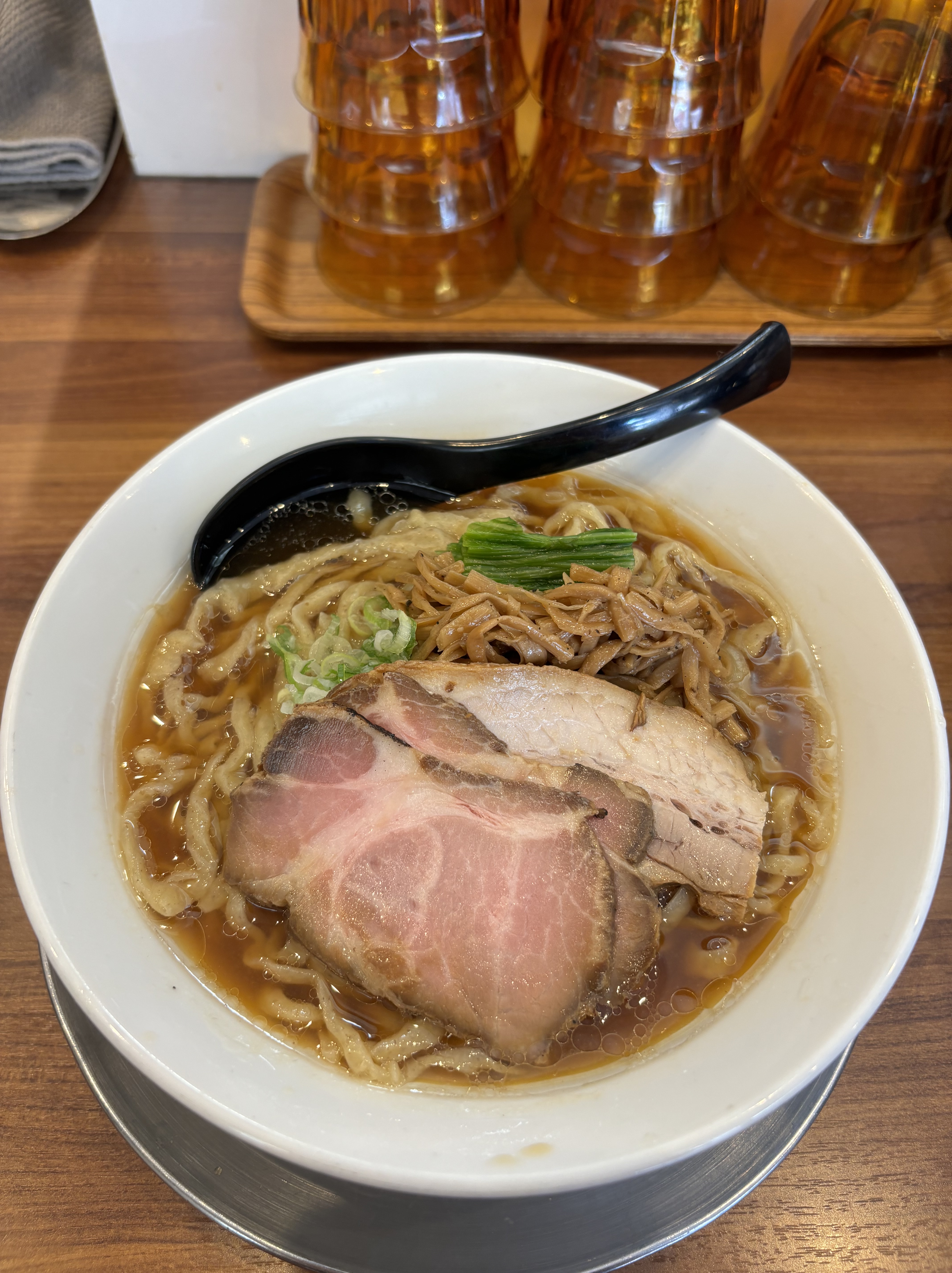
    The other highlight were the noodles which are made in house. They are thicker than your average ramen noodle, but had that good firm, homemade taste to them.
    Toshioka also has tsukemen (dipping noodles) so I imagine this would be great as well. 

    The chashu was really tender and flavourful and even though it is hard to tell, they were actually quite thick pieces so it was a generous amount I found (I also ordered the chasu-ramen so this is likely why). 

    What came with my ramen too was the stick looking things which is menma, or bamboo shoots and though you will see them occasionally on ramen, these were especially delicious. 

    They had a really good crunch to them and seemed to be flavoured with sesame oil. It was a nice fresh balance to the soy-sauce based soup. 

    I also want to say something about the noodles specifically because I think they are underrated relative to how much people talk about the owner’s reputation.

    Handmade noodles in a ramen shop are genuinely rare — most places buy from suppliers because it is cheaper and more consistent — and the thickness Toshioka goes with is not something you see often in a soy-sauce based bowl.

    It creates a completely different eating experience where the noodle is as much the focus as the soup, and I think that is intentional.

    The owner trained under one of the most respected ramen chefs in Takadanobaba and that lineage shows in every detail of the bowl, personality aside. If you can go in with the right expectations — arrive early, be patient, enjoy the ramen — you will leave very happy.

    And though you may not see it in the picture, the bowl is filled to the brim, and so the amount may be a lot for some people. Even my friend who often eats a lot had to pass the rest to me and I had to take one for the team (because it’s seen as rude to leave food in Japan). 

    Overall this was a very enjoyable bowl of ramen, and if you overlook the negativity surrounding the owner/chef, It is just like any other good ramen shop I feel! 

    Also, I recommend going a bit before it opens to guarantee you get in because the shop is small, and the chef also is pretty slow with getting peoples orders out so the amount of people that can get in are quite limited. 

    Thanks for reading – if you’d like to support and follow along: 

    More about me

    Different types of ordering systems in Japan explained

    Purchasing an onigiri to keep me fuelled throughout my journey 🍙