• Vejiro Shibuya Sohonten – Hearty Meat & Vegetable Stir-Fry in the Heart of Shibuya!

    Must know Info:

    Vejiro Shibuya Sohonten – 肉野菜炒め ベジ郎 渋谷総本店 *Cash Only*

    2 Chome-23-11 Dogenzaka, Shibuya, Tokyo 150-0043

    5 Minute walk from Shibuya station 

    Hours (as of 2025/12): Monday through Sunday 10am – 10:30pm

    Order system: Electronic Ticket Machine

    Another Shibuya gem, and despite being in such a central location, it is kind of hidden in plain sight. 

    If you are looking for a cheap, voluminous, and if you were to consider solely the amount of vegetables they use, dare I say “healthy”, it is a perfect place to fill you up without feeling entirely guilty about the amount of food you just ate. 

    Vejiro is a play on words, with the former referring to vegetables, and the “ro” taking inspiration from a famous, cult-following type ramen called “Jiro-kei” which is known for having probably the most ridiculous portion sizes in any type of dish in Japan, particularly recognizable for the amount of steamed bean sprouts (moyashi) that is piled up on top of the bowl. 

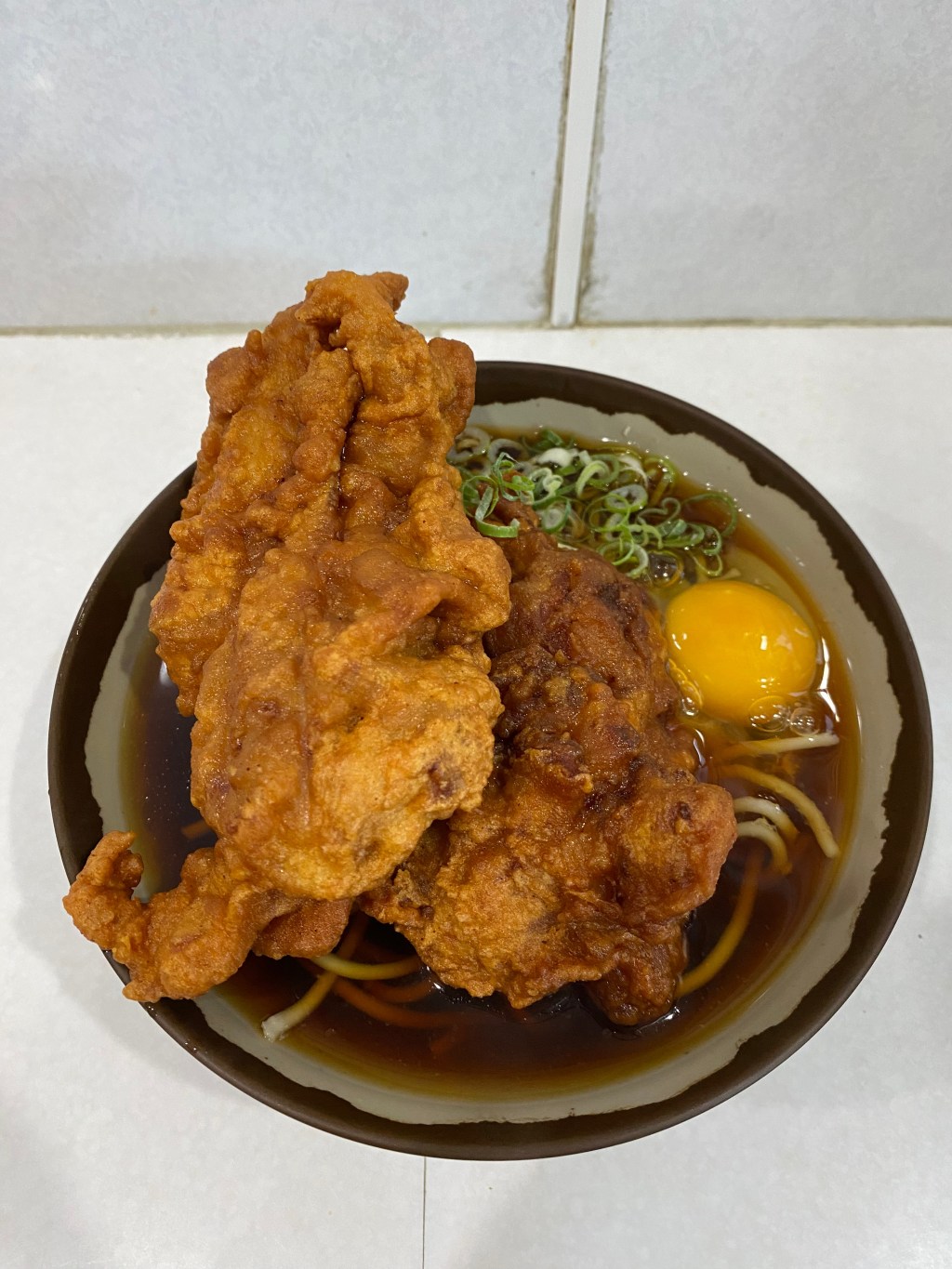
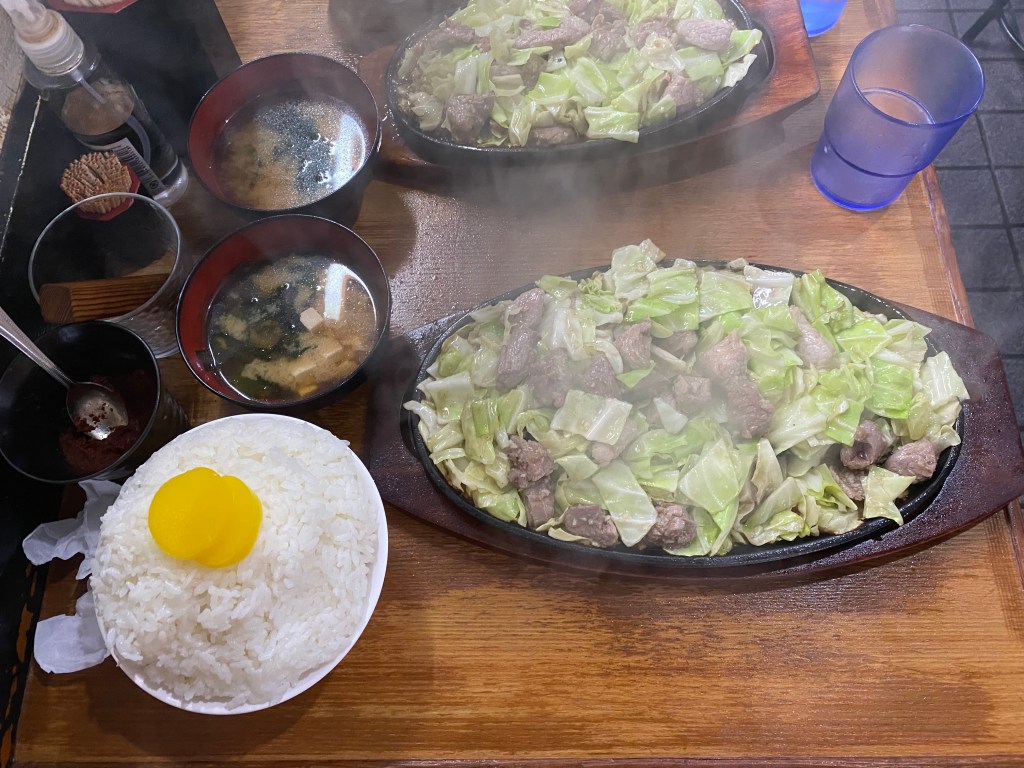
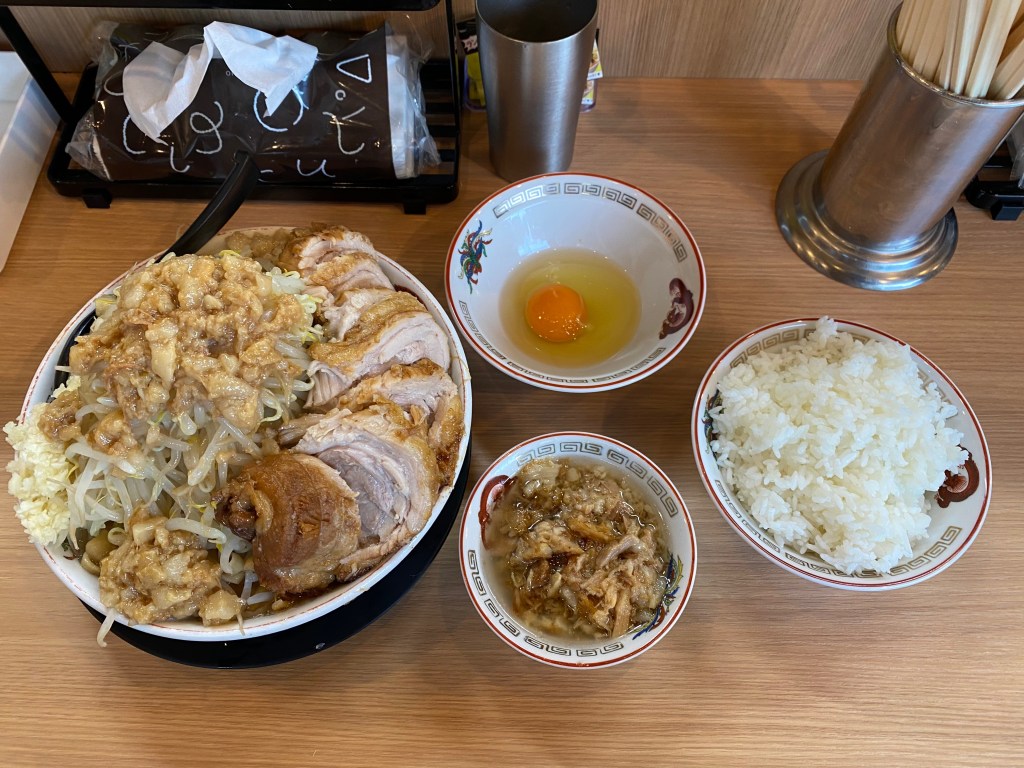
    Utilizing these vegetables, they decided to just turn it into a monstrosity of a vegetable stir-fry sort of thing, consisting of your choice of meat and it is all topped with “back fat” (essentially pork fat that they have put into a strainer and shake it over top of the dish) which might not sound appetizing but it is delicious and can a lot of time make or break a dish. 

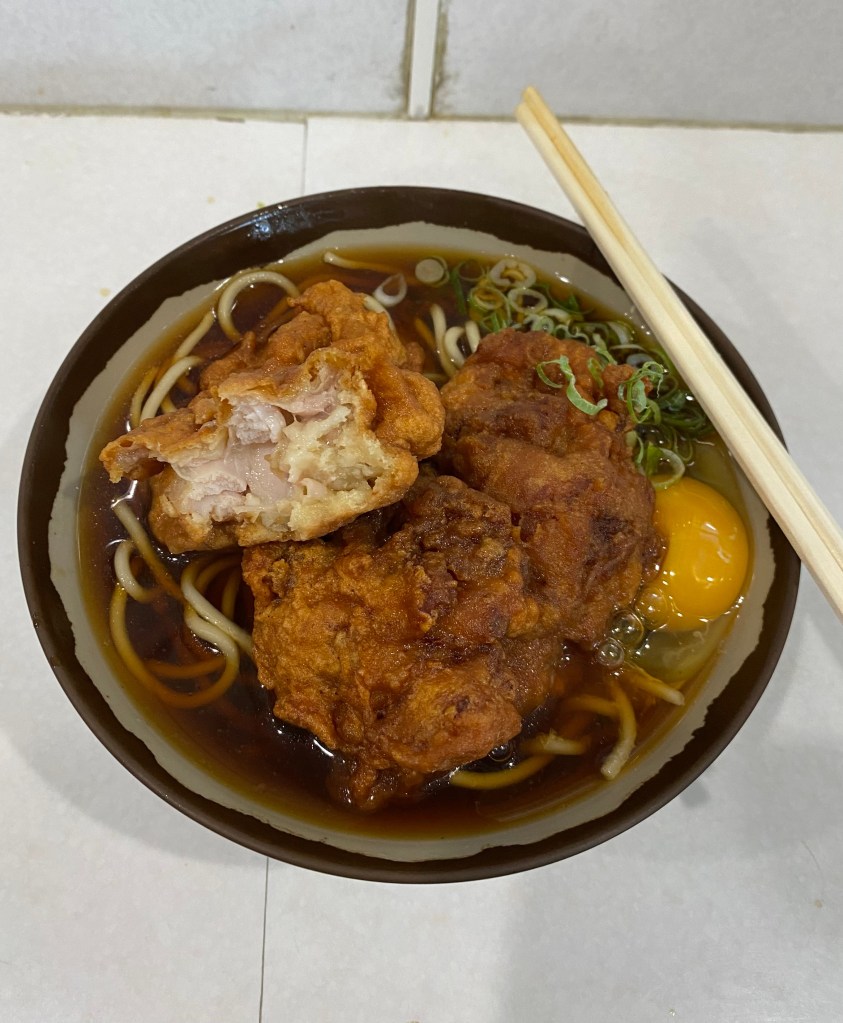
    You have the choice of chicken karaage or pork (I think karaage goes better personally), 300-600 grams of vegetables with no additional charge, and flavors like miso, soy sauce, ponzu etc. 

    I highly recommend rice with it as it pairs extremely well (if you can handle the volume of it lol). 

    You will also notice that I have a raw egg here (and yes it is perfectly safe to eat) but I just got used to eating them in Japan and honestly, there’s just something about it that makes me want to add it as a topping to whatever I am eating there if it’s offered. 

    This could just be the 6 grams of protein and health benefits my body so desperately craves after eating some of this food however… But hey, you only live once right! 

    There are 14 seats, including 3 or 4 tables with only 2 seats each and the rest placed at the counter. 

    Upon entering the restaurant they have a digital ticket machine where you will insert your money into and then give your food tickets to the staff after being seated. 

    As most local places are in Japan, it is very reasonably priced for the amount of food you are getting. 

    I liked this place not only because I was on the verge of getting scurvy and was able to find some vegetables…But mainly because they took an already established food and turned it into something of their own. 

    Time and time again, whatever the genre, new or old, Japan always tries to perfect it – making me want to go back time and time again to this place which I never thought I would say to myself about a place serving a vegetable stir-fry, but it was just that good.

    Lastly, it opens at 10am and closes at 10pm, so if you are going drinking or partying in Shibuya, this is a good pre-meal or, if you are going really hardcore, post!

    Thanks for reading – if you’d like to support and follow along: 

    More about me

    Different types of ordering systems in Japan explained

    Purchasing an onigiri to keep me fuelled throughout my journey 🍙
  • Kaiten Misakikō – Unbelievably High Quality Sushi Inside of Narita Airport!

    Must know Info:

    Kaiten Misakikō Narita Airport Bldg 1 Shop  – 回転寿司みさき *Cash or Card*

    Narita Terminal 1, 5th floor 

    Hours (as of 2025/18): Monday through Sunday 9am – 8pm

    Order system: Tablet

    I know how it goes, you arrive in Narita,  think of what to eat, and then end up going to the first thing you see which is likely that small mini stop (trust me, been there and done that). 

    But let’s be real, though efficient, you have just finished lining up in immigration after a flight, and the last thing I would want to do is line up again just to get a salmon or tuna onigiri which I know I’m just going to end up getting later again the same day.

    For those thinking the same way, and want to taste some authentic and fresh made sushi, then Kaiten Misakikō is the perfect place. 

    This is the first restaurant I ever went to in Japan, and it’s stood the test of time with how good it is because every-time I go to Narita airport I eat here.

    Now I don’t know about you, but when I land in a foreign country (regardless of how many times I have been there), I want to get my barrins, and this restaurant acts as the perfect place to sit down and gather your thoughts while indulging in some great sushi.  

    The shop is on the 5th floor of terminal 1 (pre-security), and is the last restaurant on the left hand side of the floor. 

    From the 4th floor you will want to walk towards where they have a bunch of shops (I think one of the first ones is one that sells luggage but don’t quote me on it), and once you see the first escalator, go up, and then walk left until Misakikō comes into view. 

    The store itself consists of around 25+ counter-only seats, and most of the time you are able to leave your luggage against the wall inside the restaurant (though depending on the volume and how crowded it is you might have to leave it right outside the restaurant, but rest-assured as there are windows surrounding the place, so you will be able to keep watch – I have done this once. 

    Once seated they have cups and a hot water dispenser with green tea, as well as soy sauce, oshibori (wet towel used for cleaning your hands before you eat) and a touch screen tablet. 

    TIP* While there is always sushi rotating along a conveyor belt, no matter how tempting it may seem, or how hungry you are, DO NOT take it from here. 

    Well, this is a bit dramatic as you may very well do so and I am sure it will taste fine, but this sushi is generally rotating for long periods of time and will not be fresh. 

    If you order from the tablet however, the chef will hand you your sushi right to you after making it fresh – so always opt for this option. 

    Any one of their sushi tastes great, and they source all of it from the famous Toyosu market in Tokyo. 

    I personally like their 3 sorted tuna nigiri set and their salmon with cheese that they use a blow torch over top of. For a non-sushi item I highly recommend the “chawanmushi” which is a warm egg custard cooked with various seafood in a small ceramic cup.

    All of their sushi starts from 160 a plate, and while it is more pricey when compared to another conveyor belt sushi chain, the quality and convenience make it extremely worth it in my opinion.

    Thanks for reading – if you’d like to support and follow along: 

    More about me

    Different types of ordering systems in Japan explained

    Purchasing an onigiri to keep me fuelled throughout my journey 🍙
  • Ayagawa Ramen – Incredible Chicken Broth Ramen in Ebisu!

    Must know Info:

    Ayagawa Ramen – 綾川本店2 *Cash Only*

    〒150-0013 Tokyo, Shibuya, Ebisu, 1 Chome−21−18 ライツ恵比寿 1F 

    4 minute walk from Ebisu Station, 24 minutes from Shibuya Station

    Hours (as of 2025/12): Monday through Sunday 11am – 9:30pm

    Order system: Electronic Ticket Machine

    A masterful chicken ramen built around a rich oyadori broth, chewy noodles, and a calm neighbourhood atmosphere just outside Shibuya.

    Ayagawa is a tucked away gem in Ebisu and has even made it into the top 5000 ranking on tabelog (Japan’s biggest food review site).

    Ayagawa is also commonly referred to as “chuuka soba” (Chinese noodles) much like other restaurants are, but note that there is no difference between the two words. 

    It has an easy to enter atmosphere, with a ticket machine to the right of you when you walk in (make sure to purchase your ticket before you sit down).

    The shop also has both counter and table seats making it easy to go either by yourself or as a pair. 

    This was the first ramen I ever had in Japan, but it still stands at some of the top ones I’ve eaten (nostalgia aside). 

    This shop specializes in “Oyadori” for both their soup and chicken toppings, which roughly translates to parent bird,  which refers to chickens that are no longer able to lay eggs. 

    Chicken ramen is few and far between in Japan, with the majority being pork based, so if you happen to go to one, they are generally great. 

    But differing from perhaps some of your image of a stereotypical chicken soup, this ramen takes it to another level.
    Besides using a ton of chicken bones to simmer down, they also include chicken oil which enhances the flavor to make it just that much more rich. 

    On top of this, they also include chicken chashu which while may be a bit more chewy than what you might be familiar with, it is because Ayagawa wants to stay to true to their use of the oyadori.

    I actually thought that this chicken was much more flavourful compared to a more tender counter-piece (think brown meat on a turkey at thanksgiving). 

    The noodles as well are perhaps even more uncommon, boasting a quite thick almost resembling wonton noodles, but are a bit al dente consisting of almost an udon texture.

    One thing I like about these noodles as well as I feel like they almost do a better job of soaking up the soup, as compared to its equivalents. 

    I think that this is a must try if you are in the area, as it’s just so unique, and despite having been to over 200 different restaurants, I have yet to only eat at one other place besides here that serves ramen with a chicken broth. 

    All in all, this is a great example of a restaurant that has mastered their craft and serves up an amazing bowl of ramen, all while being walking distance to Shibuya, but boasting a way less busy, quiet vibe to it.

    Japan never ceases to amaze me with how in such a close proximity two places can seem like completely different worlds. This is a prime example of that.

    Thanks for reading – if you’d like to support and follow along: 

    More about me

    Different types of ordering systems in Japan explained

    Purchasing an onigiri to keep me fuelled throughout my journey 🍙