• Hope Ken – A Legendary Ramen Shop In Business Since 1935!

    Must know Info:

    Hope Ken – ホープ軒 *Cash or Card*

    2 Chome-33-9 Sendagaya, Shibuya, Tokyo 151-0051, Japan

    9 minute walk from Sendagaya Station

    Hours (as of 2025/12): 24 Hours every day

    Order system: Ticket Machine

    Perhaps the nicest location for a ramen restaurant in Japan is Hope Ken – a legend status place for most ramen lovers. 

    I actually think that everyone who enjoys ramen should try and make a trip out here if you can just for the history alone. 

    Hope Ken opened in 1935 as a yatai stall (similar to the ramen guy in naruto except you don’t have a permanent location) and survived through WW2 until they opened their first shop in 1975. 

    For them to exist as long as they have, it isn’t just a testament of the flavor of their ramen, but also the fact that they were a founding father of the Japanese ramen boom in Japan.
    The reason we now see so many throughout Japan is partly because of Hope Ken and I think that it is an honor to be able to just stroll up to their shop and eat carefree. 

    On top of this, they were also the first shop to coin ”chacha style ramen” which is pork bones, soy sauce, and a lot of pork back fat they put in a strainer and shake over the bowl. 

    Another reason that makes them famous is that for every customer that sits down (or at the very least a few per counter or table) they will have a huge bowl of fresh cut green onions that you can help yourself to. 

    The ramen itself is on the milder side, but the back fat really packs a punch and enhances the umami of the soup well. 

    They use a thinner noodle which it seems they have kept tradition from when they were just a little ramen-stand. 

    The shop is big and has three floors: first is a stand up eating space, (also where they have the ticket machines where you pay) second has counters, and the third has tables. They will tell you where to go according to the size of your party and how busy the place is. 

    Another cool part about this is they have a shoot from the bottom floor kitchen to each of the second or third and so you don’t have to worry about it taking too long to get to you. 

    The restaurant sits right in front of the beautifully designed Japanese National Stadium and if you are seated on the upper levels by the window it offers a great view with lots of greenery and very few cars or foot traffic. 

    I actually don’t know how they snagged such a good location because they also happen to be the only restaurant in sight around here too.

    One tip for going is to check if there are events happening in the stadium or not because I have been to some and Hope Ken gets a huge line quickly! 

    A good thing about this however is that they are open 24 hours so you can go at your own leisure. 

    The flavor goes without saying, but it is the history that hides under the curtain which I think makes this a must visit while in Tokyo. Truth be told, I didn’t even know myself when I went the first time, but after researching it more, when I go back I think I will have a much deeper appreciation for them!

    Thanks for reading – if you’d like to support and follow along: 

    More about me

    Different types of ordering systems in Japan explained

    Purchasing an onigiri to keep me fuelled throughout my journey 🍙
  • Tenryu Gyoza – Packed, Delicious Gyoza The Size Of A Small Banana In Ginza!

    Must know Info:

    Tenryu Gyoza – 天龍餃子 *Cash or Card*

    〒104-0061 Tokyo, Chuo City, Ginza, 2 Chome−5−19 PUZZLE GINZA 4F

    10 minute walk from Ginza Station 

    Hours (as of 2025/12): Monday to Friday 11am-9:30pm, Saturday and Sunday 11:30am- 9:30pm

    Order system: Menu

    Located on the fourth floor of a building in a rather inconspicuous business area being Ginza, is some of the best gyoza I have had in Japan. Not to mention it is reasonable!

    The location can be a bit tricky to find, even if you use google maps as it might display “you have arrived” but are still in the middle of the street when the restaurant is inside a building (you may experience this a lot in Japan). 

    Luckily however, Ginza Tenryu has their sign on the left hand side of the building along with a few other restaurants actually, so you can confirm if you are in the right place or not. 

    Once you have done so, you can just walk straight past the sign and at the back wall of the building  you should see elevators on either your right or left. Then just ride these up to the 4th floor and you’re good. 

    Before coming here, I never took an area as posh as Ginza for having many restaurants, let alone one as well known as Ginza Tenryu 

    They are most well known because of their gyoza, and this isn’t based solely on taste, but rather the fact that one gyoza is the same size as a small banana. Yeah, this isn’t an exaggeration. 

    Not to mention you can only order in increments of 8, so it can be a bit tough when you are by yourself (trust me I know).
    But still, when I went in there on a weekday at lunchtime every single salaryman I saw there was ordering the same thing as me – 8 humongous gyoza and a bowl of rice. 

    The gyoza themselves are stuffed with pork and various vegetables and have a really good crisp to them. What I also appreciate is that the meat to vegetable ratio is significant, so it allows for a ton of meat juice to flow out when you eat it – further enhancing the umami.  

    You would also think that with the gyoza being this big they wouldn’t hold up their integrity, but they actually do quite well. 

    If you let them sit too long however, they will lose some of their crispiness, and so I recommend eating them at a good pace. 

    Besides gyoza they have plenty of other good menu items like ebi-mayo or ebi-chili which are both shrimp coated in mayonnaise or chilli which might sound gross but it is actually extremely good, and a super common dish at Japanese-Chinese restaurants. 

    The staff here are really nice, and the restaurant is big so you do not have to worry about how many people you come in with. They even have English menus available.

    The only thing I will say though, is that because it is so-uber popular, you may have to line up (especially if you go at night). 

    I assume a lot of you will be going to Ginza, and I think the one thing that stumps people is where they should eat. 

    This place checks all the boxes though. It is delicious, reasonably priced, and you can get in relatively easily without waiting too long despite it being some of the best and most unique gyoza you may ever have.

    Thanks for reading – if you’d like to support and follow along: 

    More about me

    Different types of ordering systems in Japan explained

    Purchasing an onigiri to keep me fuelled throughout my journey 🍙
  • Teppan Yakiniku Ooatari – Incredibly Good Steak And Cabbage Stir-fry On A Hot Skillet!

    Must know Info:

    Teppan Yakiniku Ooatari – 鉄板焼肉 大当り*Cash Only*

    1 Chome-25-19 Kyodo, Setagaya City, Tokyo 156-0052, Japan 

    5 Minute walk from Kyodo station

    Hours (as of 2025/12): Everyday from 11:30am-2:30pm, 6-10:30pm

    Order system: Menu (It is written on the wall)

    This is what I think of when I say “Japanese soul food”. 

    One menu item, meat, vegetables, rice, and a cramped interior filled with hungry locals that further adds to the atmosphere.

    This restaurant has been featured on TV and youtube channels alike plenty of times, and over the last few years it has really gotten popular. 

    What differs this from other places however is two things: 1 being that it was actually good to start with, and 2 being that the flavor hasn’t declined at all after getting popular. 

    They serve a famous dish from Fukuoka, which is known as teppen yakiniku where your food is served and continues to cook on a steel plate on your table. 

    It consists of 2 things on this plate: Cabbage, and steak. That is literally it. 

    Except the steak is seasoned perfectly, and the juice of it seeps into the cabbage, giving it a flavor I didn’t know cabbage was capable of attaining. 

    It is something that you can eat a ton of and not feel guilty about, because it really isn’t that bad for you, and this is another thing I love about it as well. 

    Now, some of you may also be wondering (is there really nothing to spice up the meal a bit more), and it is a good thing you ask, because perhaps the most important part of this meal isn’t even served on it – it is left on the table for you to put on yourself. 

    When you sit down at the table, you will see that there are some random wooden blocks. 

    These wooden blocks serve a purpose however, and they actually slot into the button portion of one of the sides of the hot skillet. 

    What this means, is that the skillet will be slightly slanted, and all of the juice from the meat will slowly drizzle down to pool up on the opposite end. 

    This is where the important part comes! The only other thing on the table should be a container with a spoon. 
    Open it up and you will have the most addictive crack-like substance known to man which is spicy miso paste. 

    I think you guys see where I am going now, but you are going to take that paste (it isn’t that spicy, but start small first) and drop it down into the pool of meat juice and stir it up.

    Then, for the rest of your meal, as the meat juices continue to trickle down, this pool is going to act as the dipping sauce for your meat and cabbage – all while staying on the same dish. 

    It is both ergonomic as it is simple, and it is even more delicious. 

    The menu is above the counter when you walk in but they have varying sizes that increase both the volume of both the cabbage and steak and while ordering may be a bit difficult, but there is only one thing on the menu, so just look at the sizes beforehand and decide. 

    Yet another hidden gem, except this time it is something that isn’t going to make you regret your life choices after eating it! So simple, yet so delicious – that is Ooatari!

    Thanks for reading – if you’d like to support and follow along: 

    More about me

    Different types of ordering systems in Japan explained

    Purchasing an onigiri to keep me fuelled throughout my journey 🍙
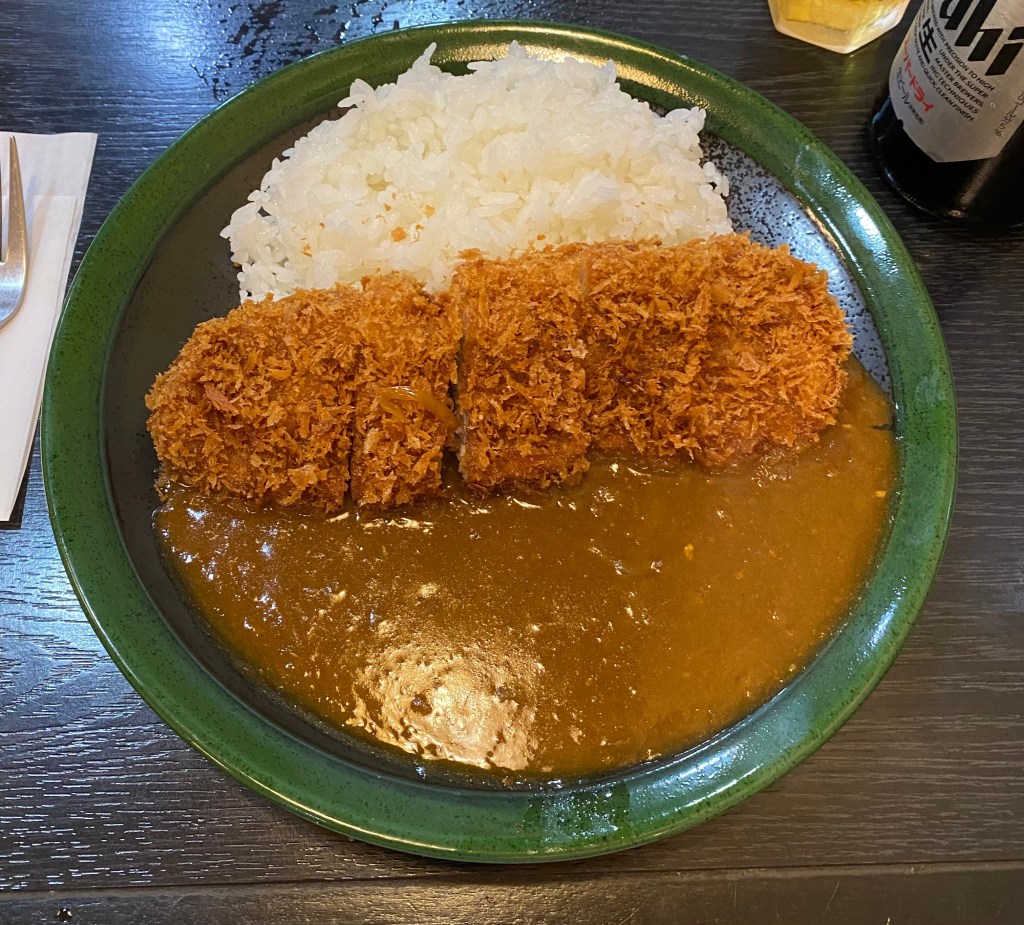
  • Sakaeya Curry House – Mom And Pop Shop That Serves Curry In Under A Minute!

    Must know Info:

    Sakaeya Curry Hourse – カレーの店 サカエヤ *Cash Only*

    110-0015 Tokyo, Taito City, Higashiueno, 1 Chome−6−3  Sakaeya 

    2 minute walk from Ohin-Okachimachi Station/8 minute walk from Okachimachi Station

    Hours (as of 2025/12): Everyday except Sunday from 11:30am-3pm, 5-8pm

    Order system: Call Out System

    What drew me into here was not that it is praised for having the most amazing Japanese curry out there, but rather underneath the name  “待ち時間0分” or zero minute wait time being written.
    Naturally, this piqued my interest, and so I went in to see a husband and wife standing behind the counter serving up curry at lighting speed. 

    You see it a-lot in Japan, but their service is so fast sometimes that the whole US coined term “fast-food” doesn’t even come close and this was one of those examples, but taken to the extreme. 

    Of course “0 minute wait time” is exaggerated, it was really only like 1-2 minutes for my curry to come out (and I ordered 2 lol). 

    There is rice in a huge cooker, and curry in a big pot next to it. For the meat they grill it up the moment they hear your order or if you get pork-katsu then they will fry it. 

    With how fast it came out, it wasn’t the most beautiful presentation I’ve seen, but I figured this would be the case. 

    I was a little skeptical however, about the taste of the food: “If it’s this fast there is no way it can be good!” But I was proven wrong! 

    The curry was actually really good! It was a bit more of a soup curry as you can see from the pictures, and had a good little kick to it which the sweeter-leaning Japanese curry often lacks. 

    The rice was normal, no complaints. 

    I had one bowl with chicken, which were pan-grilled cut up chicken thighs, and they actually paired quite well with the dish. 

    For the other one, the pork-katsu was actually quite nicely breaded and not too tough. I think katsu is the best topping on curry, so I have nothing else to say. 

    They had disposable chopsticks on the table, and 2 different kinds of Japanese tsukemono (pickled vegetables) with the black ones being a little saltier and the red ones sweet, kind of like a relish type of taste (this is a must in my opinion especially with a soup with spice). 

    The restaurant only has counter seats (kind of bar style) and there are not too many so I wouldn’t say to go in with more than 2 people. 

    When you finish, leave your bowl on the counter and pay your money over the same one – either the husband or wife will collect your money. 

    Sakaeya is not a top level restaurant, let alone a top level curry restaurant. But even with that being said, the taste is more than sufficient, and their selling point is the speed at which the food is served to you. 

    The husband and wife working here have obviously been doing it for years, and when you go to eat there it shows. I think this is a perfect example of Japanese craft and work-ethic you will want to see.

    Thanks for reading – if you’d like to support and follow along: 

    More about me

    Different types of ordering systems in Japan explained

    Purchasing an onigiri to keep me fuelled throughout my journey 🍙
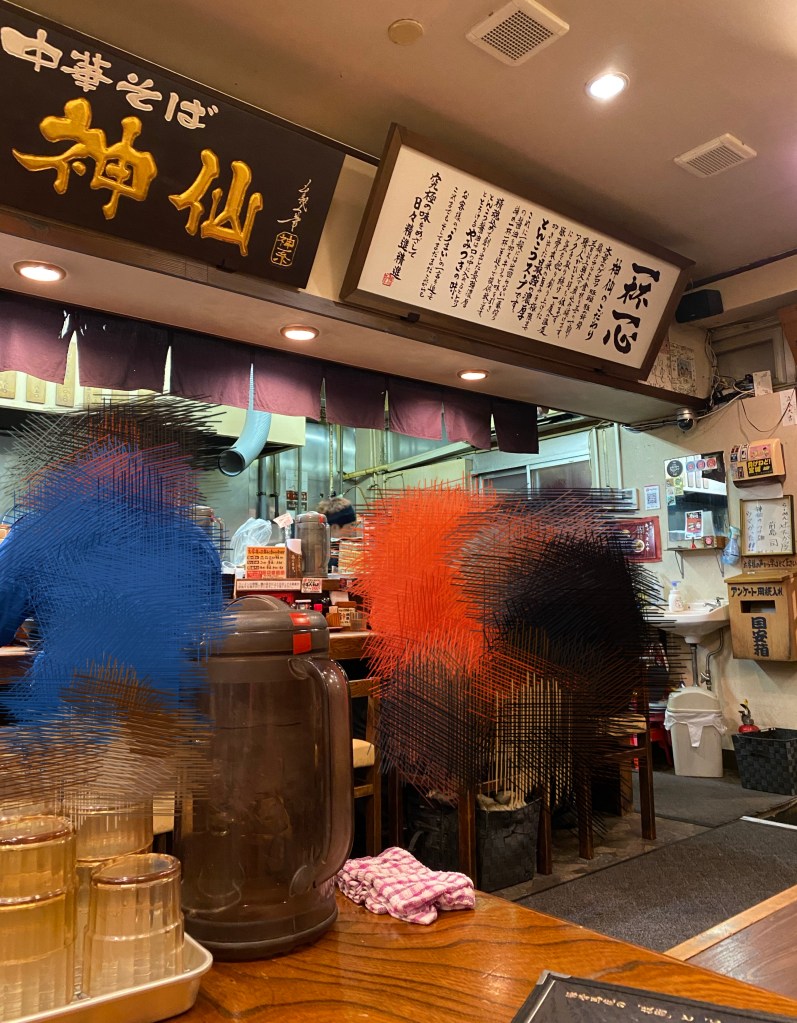
  • Bazoku – Delicious Hand-Pulled Noodles And Handmade Gyoza in Nippori!

    Must know Info:

    Bazoku – 中国手打拉麺 馬賊 *Cash Only*

    116-0013 Tokyo, Arakawa City, Nishinippori, 2 Chome−18−2 Ito Building 

    1 minute from Nippori Station

    Hours (as of 2025/12): Everyday from 11:00am to 11:30pm

    Order system: Menu

    Bazoku focuses on mainly Japanese renditions of Chinese food, but they make it way more approachable in the approach, and they also make their own noodles as well as dumpling dough. 

    You can actually see them on the side of the restaurant making it as they have a window there, but these were definitely some of the best noodles I have had in Japan. 

    Their elasticity was incredible, and it felt like they would break no matter how hard I tried to cut through it with my chopsticks (not in an overcooked way, but rather a perfectly done al dente kind of way). 

    I saw that a lot of people around me were ordering just plain ramen, and while I am sure it is good, I knew that I could get it anywhere else. 

    This is why I opted for something that isn’t super common, which is “Mabo-men” or Mabo-tofu noodles. 
    I mentioned rendition earlier because I don’t think that this is a Chinese dish, but they instead combined the two by placing mabo-tofu on top of their handmade noodles. 

    They mabo-tofu were the perfect spice level, and this is coming from someone who thinks too much sriracha on something gives me the sudden urge to drink something to wash it out, so do not worry. 

    Even though it was a tofu dish, they also put a generous amount of ground beef in there which I also enjoyed and once you mixed everything together in this dish it went in perfect harmony together. 

    It really goes to show you how much the quality of the noodles can make a difference. 

    The gyoza as well, being made from the same dough they made the noodles out of, were amazing. 

    It reminded me of good bread. You almost feel like putting something on it is a sin and will take away from the taste, and I almost felt the same way here except they did an excellent job of making sure that their dough was the star, and the filling was just a backup component supporting it (though still delicious). 

    Since here I have yet to had anything similar, and though I am sure it is out there, I question if they are making it as mild, and or/using their own noodles. 

    The good thing about Japan is that the noodle production companies are very solid, and oftentimes supply a lot of restaurants (especially in the case of ramen). But, because of this, it is very rare to see a restaurant still making their own, and this is why they often-times will have a window or something where you can see them doing it because it is a marketing point. 

    The inside of the restaurant was basic with both small tables and counter seats, and the staff were very accommodating. I am sure that if you had a few too many people the staff would gladly combine tables for you. 

    The restaurant is right in front of Nippori station so you can’t miss it, and I think it is the perfect warm taste of how Japan turns literally any dish into perfection. They also have a location in Asakusa too!

    If you are a fan of noodles, and want a place where they are the star of the show, then Bazoku is the perfect spot.

    Thanks for reading – if you’d like to support and follow along: 

    More about me

    Different types of ordering systems in Japan explained

    Purchasing an onigiri to keep me fuelled throughout my journey 🍙
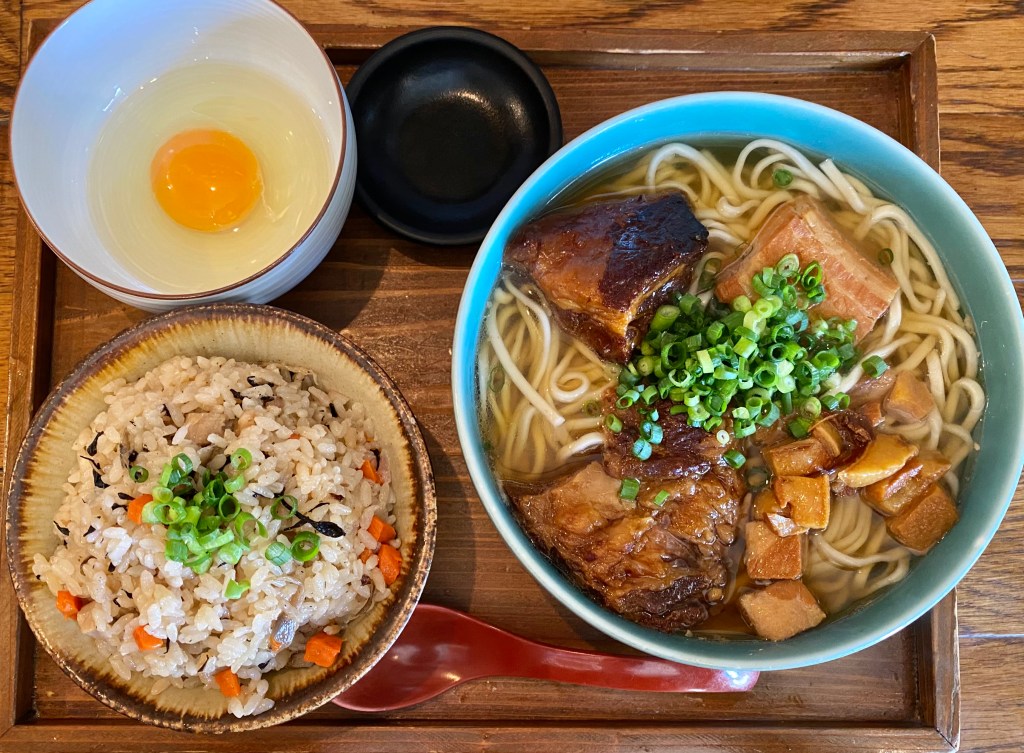
  • Kurosawa – One of the Most Reasonable And Delicious Meals In Tokyo!

    Must know Info:

    Kurosawa – 黒さわ *Cash only*

    6 Chome-38-7 Higashinippori, Arakawa City, Tokyo 116-0014, Japan

    5 minute walk from Nippori station

    Hours (as of 2025/12): Everyday except Wednesday and Sunday 11am-3:00pm (for lunch) 5-10:30pm (for dinner)

    Order system: Menu (pre-decided if going for lunch)

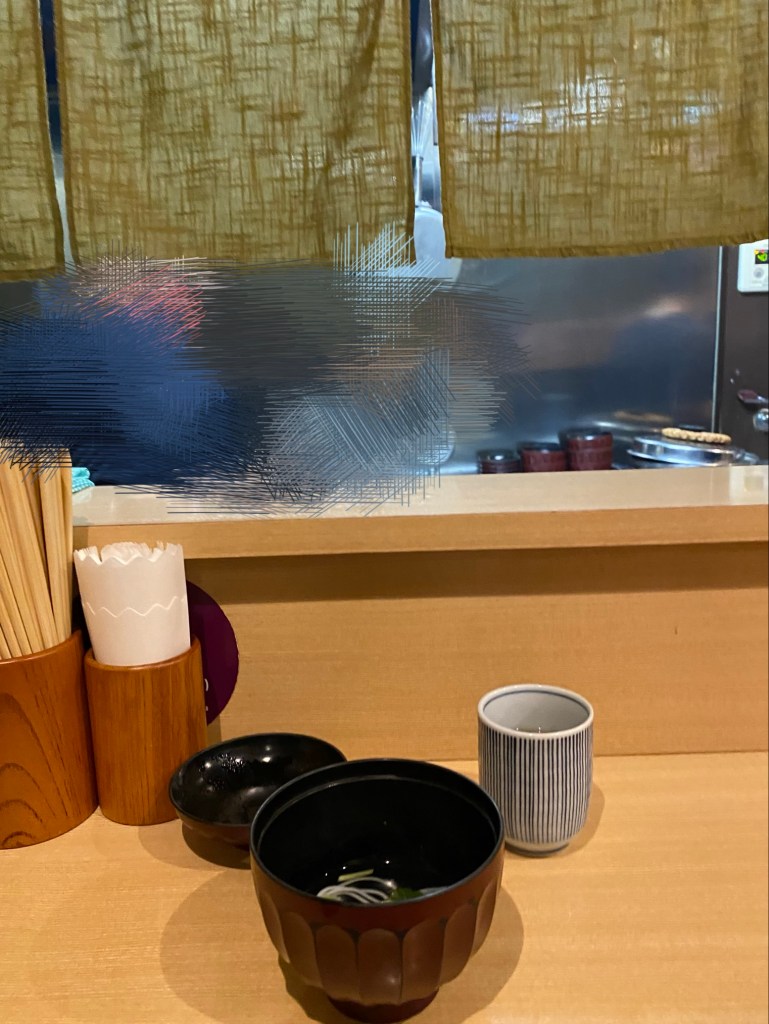
    One of the best, most reasonable lunches I have had in Tokyo, and that is saying a lot. 

    I found this place when I was attending a language school and it was right next door, but because their lunch time hours ran right through when I was in class, I never had a chance to go. 

    I think I actually had to skip my class to go here now that I think of it…and this probably isn’t something I should be posting on the internet where my parents can read, but I think it helps in getting across the stakes in which I took to get here, and it was more than worth it in the end. 

    Everyday their lunch menu changes and what it includes will be written on a chalk board outside of the restaurant, but it is in handprinted Japanese which not even google-translate will pick up so if you like surprises then head on in. 

    The best thing about this however, is the fact that you don’t have to order anything! Unless you wanted to order something extra or a drink). 

    What they are serving that day you will get, and so will everyone around you. 

    In my case, I had tuna sashimi, menchi katsu (deep fried meat cutlet),salt grilled Japanese rockfish salt, tofu, miso soup (with red sapper) and rice, but I think it can be safe to assume that the varying lunches will be some sort of rendition of similar foods with maybe a difference in fish. 

    All the fish was extremely high quality and you can tell that they get new cuts of it every morning, as the chef prepares it in front of you only after you have been guided to your seat. 

    The menchi katsu is a must try, and is actually something quite commonly found as a street food in areas like Asakusa. It is lightly breaded and actually really soft to bite into – not like any of the grease infested fried food that’s so readily available in the West. 

    The tofu acts as a bit of a palette cleanser, but is also great for you, which is a big theme in this meal. 

    They were generous with the fish in the miso soup, and this was actually the first time I had had it. It was a huge umami boost and made the soup almost a little creamy – definitely something I wish I could have everyday. 

    The rice of course ties the dish together, and the great thing is that every food on this plate pairs well with it. You could really sense the care they took towards deciding the menu. 

    The best thing of all though? Well there are actually 2, but the first is the price. 990 yen. This is utterly ridiculous, and 5 pieces of high quality tuna sashimi alone I would be satisfied with for this price, but I almost felt guilty at this price. 

    The second would be that the miso soup and rice have free refills, as many times as you want. I felt bad going more than twice but the staff were nice enough to plead with me to get more so I think I refilled both of them 4 times? 

    I definitely recommend this place, especially if you are taking the skyliner from Narita to Nippori station. A true hidden gem.

    Thanks for reading – if you’d like to support and follow along: 

    More about me

    Different types of ordering systems in Japan explained

    Purchasing an onigiri to keep me fuelled throughout my journey 🍙
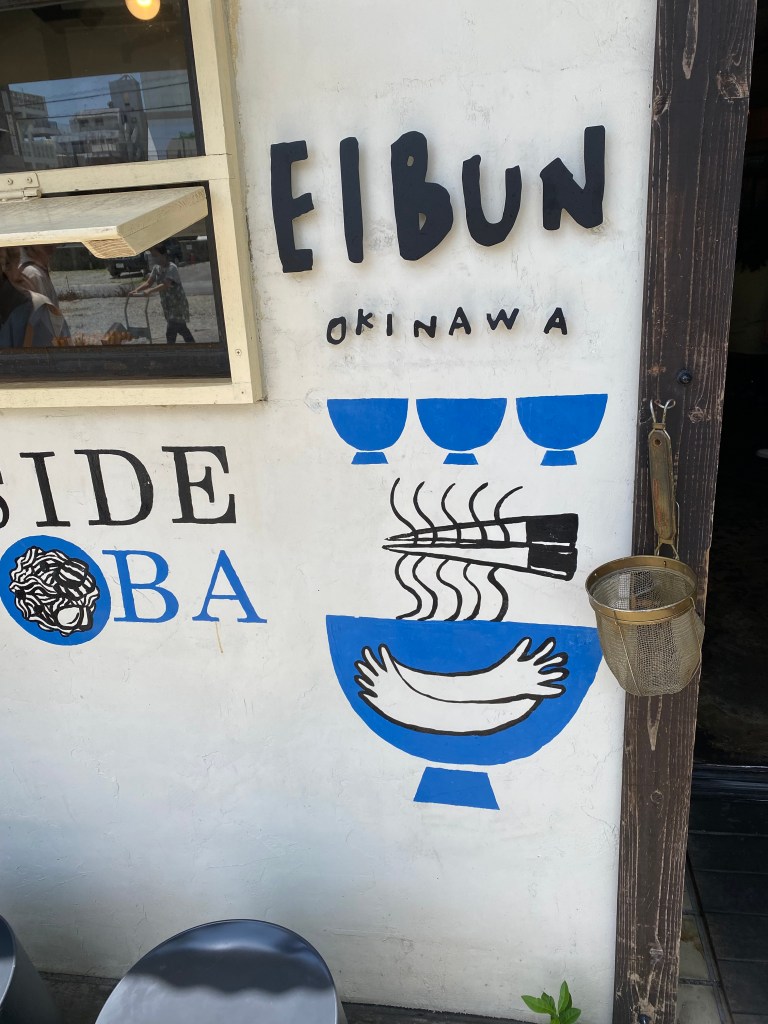
  • Buta-Yama – The Best Beginner Jiro-Kei Ramen In Japan!

    Must know Info:

    Buta-Yama – ラーメン豚山 *Cash only, some locations take Card* 

    Multiple locations nation-wide

    Hours (as of 2025/12): Check the specific shops page on google maps

    Order system: Ticket machine (electronic or non-electronic depending on shop)

    While this isn’t necessarily “local” in the sense that it is a chain restaurant and you can find them all across Japan by their very bright yellow signs, it is a very “local” in regards to the fact that really only Japanese eat here. 

    The genre is called “Jiro-kei” and I am sure you may have seen some videos on it as it has been picking up speed on social media with influencers and the like posting about it, but I would go as far as to say that it has the biggest cult following out of any food in Japan. 

    They are mostly famous for their ridiculous portion sizes, and often strict rules. Some independent shops will even make you give them a 10000 yen bill and ONLY if you finish the whole bowl of ramen do you get it back. Yeah, some of them are hardcore. 

    This can be the same with the original chain of jiro-kei shops. Boasting a yellow, super basic sign, they have quite a few locations across the country, yet they all slightly vary in their rules and taste – this is what makes it difficult to dine at them and I myself have never been to them for this reason. 

    A lot of these times these shops can be quite unclean on the inside, and the staff can be quite rude as well. But this is yet another reason why it’s popular… maybe because it is the complete opposite of Japanese society and people like the breath of fresh air it brings? 

    Regardless, what you see the majority of influencers and bloggers posting, are these exact restaurants – the original bunch.

    But what makes buta-yama different is that while still keeping the same style of ramen (and at high quality for it being a chain!) It is the complete opposite of the majority of jiro-kei restaurants in Japan with it being clean, easy to enter, with really simple rules, and with newer shops even boasting an electronic order panel which you can see the picture of the food you are ordering. 

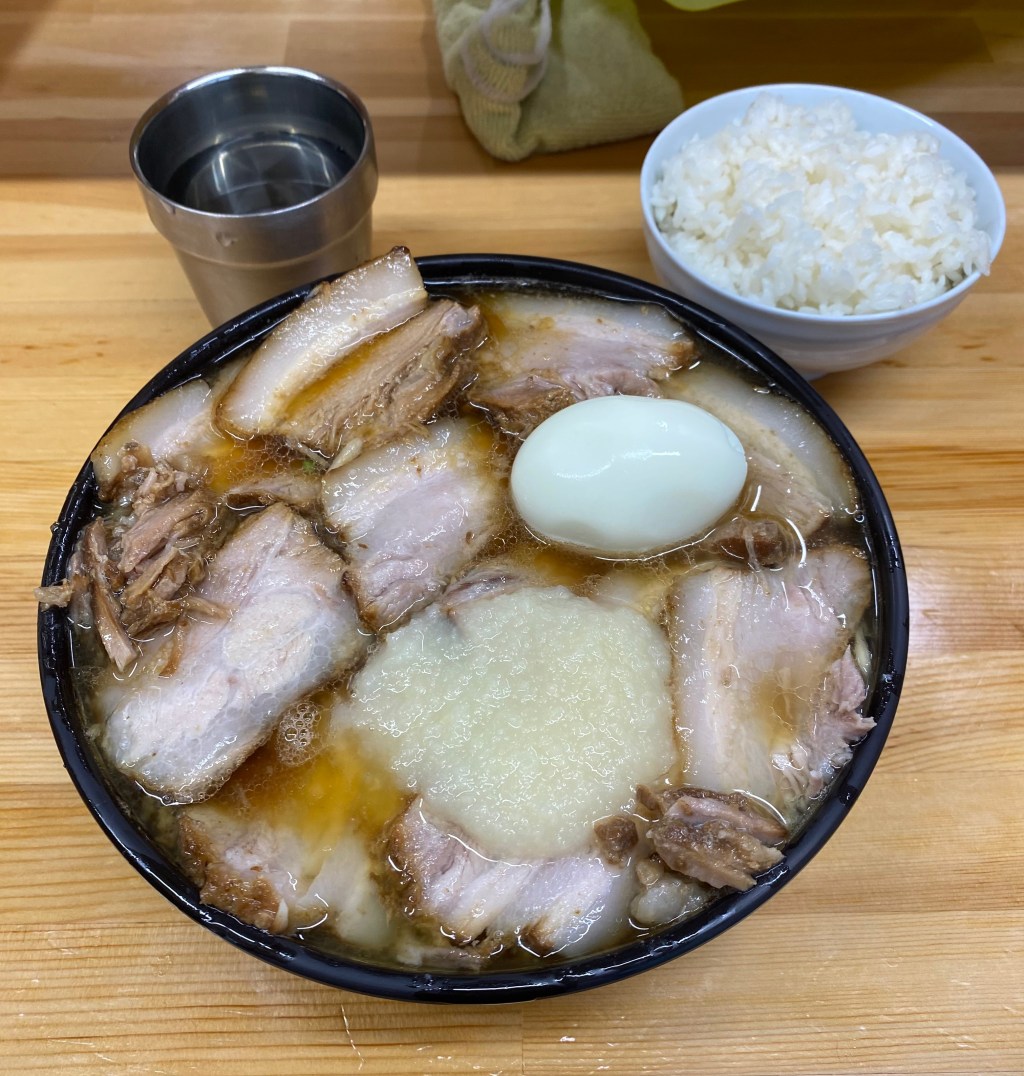
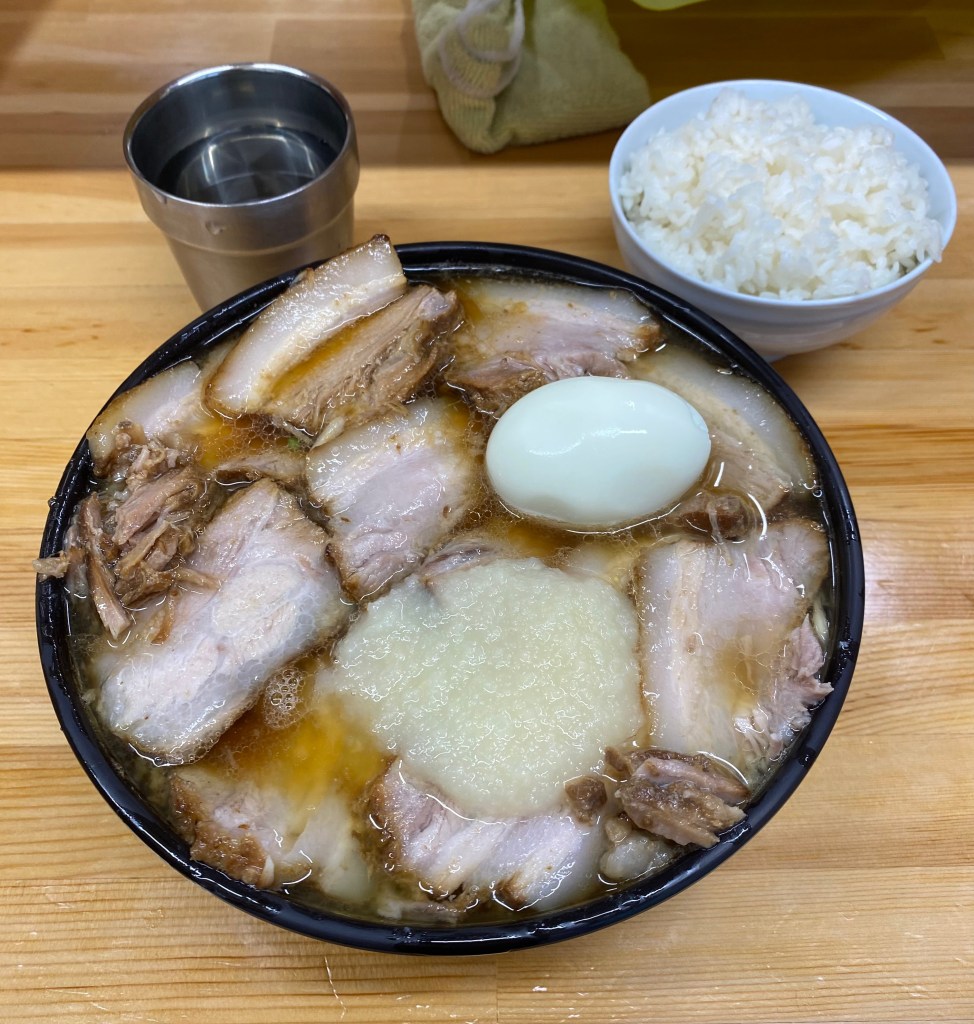
    Buta-yama, quite literally meaning “pork mountain” is the main selling point here, as you can choose anywhere from zero up to 8 tender, but extremely thick pieces of pork. 

    Additionally, there is generally a mountain of bean sprouts, tons of raw chopped garlic, and the slop looking thing on top of the bowl in the picture, “back fat” (trust me it tastes better than it sounds).

    As for the noodles, they are thick and done al dente, though you will only reach them after you have eaten some of the bean sprouts, and then you kind of grab the hidden noodles and pull them to the surface. This seems to be the golden standard for eating it. 

    The flavor was great to be honest, but this was only for the first portion because I overestimated how much I could eat and even though the ramen alone was enough to feed a small family of 4, I also made the mistake of ordering rice, extra back-fat, and a raw egg (which is sort of an advanced technique among the frequenters of jiro-kei shops where you dip your noodles in it after stirring it up, like sukiyaki). 

    While I finished it, I had to sit down on a set of stairs near the restaurant to reflect on the gluttony I just partook in. I have been back since and to other restaurants of the same style, but I have made sure to order what I know I can eat – this is the main thing I want to preface here. 

    Another thing to note is that everything is self-serve: water, aprons if you need it, chopsticks. One nice thing about Buta-yama as well is that at the location in Ebisu I went to, they had a water tap at the counter so you don’t have to worry about getting up. 

    Lastly, and the one caveat about jiro-kei is that there is a “call-system” which can be difficult even for Native Japanese speakers. While ordering is all fine and dandy because it can be done at a machine, the staff are going to ask you at some point before your food comes “what are your preferences?” 

    While slightly vague, a lot of stores (including Buta-Yama) now have little signs showing you what they consist of, but they are generally the quantity of “yasai” (beansprouts), “abura” (back-fat), and “ninniku” (garlic). 

    There are a lot of different variations and secret calls you can do but that is not within my capabilities as I am not a heavy jiro-kei consumer. But all you need to know are three things, whether you want your overall portion reduced, normal, or at the absolute max practically spilling out the bowl like I mistakenly did and is shown in the picture below. 


    Reduced: 全部少なめ, zenbu sukuname

    Normal: 全部普通, zenbu futsuu

    Max: 全部マシマシ, zenbu mashi-mashi

    If you say one of these three sets of words you will get your point across, regardless of your Japanese ability, and Buta-Yama is a big chain so there may even be staff that speak English, but at the very least they should be patient. 

    This ramen truly is complex, and that is why this post is so long when compared to my other ones, but there is still a lot of stuff I am (probably) leaving out, so if you want more on the history of this type of ramen, how to order, etc. there are dozens of other articles and videos on it so I suggest checking them out. 

    But in any case, no matter what restaurant you are recommended, or are told that “Buta-Yama” doesn’t taste as good as other, more traditional places I will stand by the fact that it is the perfect beginners spot and should not be overlooked!

    Thanks for reading – if you’d like to support and follow along: 

    More about me

    Different types of ordering systems in Japan explained

    Purchasing an onigiri to keep me fuelled throughout my journey 🍙

  • Gold Rush – The Best (And Most Inconspicuous) Hamburger Steak In Japan!

    Must know Info:

    Gold Rush – ゴールドラッシュ*Cash Only*

    〒150-0042 Tokyo, Shibuya, Udagawacho, 4−7 Tosen Udagawacho Bldg., 4F

    6 minute walk from Shibuya Station

    Hours (as of 2025/12): Every Day 11:30am – 10pm

    Order system: Tablet

    This is just one of those places you don’t want to share, and if I didn’t, I don’t know if anyone reading this would be able to find it – that’s how hidden it is lol. 

    When using google maps, and it says you have arrived at the destination, you still have a few more steps, one of which being to walk through the somewhat sketchy looking pathway to the elevator, and then get in this sketchy elevator filled with graffiti and stickers to the 4th floor – you will have arrived! 

    There are stairs, but they DO NOT go until the 4th floor so please take the elevator.

    Oh, and one more thing to mention is that there is a night-club that operates seemingly 24 hours so there may be a big line up of people outside along the sidewalk, but don’t be alarmed as this is not for the restaurant. The restaurant may also shake a little bit from the sound waves of whatever music they are playing, but just look at it adding to the ambiance! 🙂

    Now, for the food, Japan has both hamburgers and hamburger steaks, though they sound really similar in Japanese, gold rush however is the latter. 

    It is essentially just beef patties laid on a hot skillet and have sauce poured over them at your table. 

    It sounds simple, but it is amazing. Some of the best quality beef I have ever had.

    You can order from 1 up to 4 burgers, and the 4 equates to about a pound, so each patty is 150 grams. 

    You can also mix and match what you want on them, with cheese (mozzarella or cheddar), garlic, teriyaki, or just have them plain. The sauce that is poured on them however, remains the same. 

    Regardless of the size, they all come with baked or mashed potatoes, beans, some mixed vegetables, and a side of rice (of course). 

    How it works is when they place the skillet down on your table, position your napkin so that part of it is held down by the skillet and the rest you can hold in front of you to cover your clothes (the longer the better). 

    This is because when they pour the sort of gravy sauce over and it splatters everywhere, but it will not seep through the napkin so no need to worry!

    I don’t know, I guess I wasn’t cultured enough as a child to have anything other than the hamburger form, but there is something about eating it with just rice. But I have now taken inspiration and I am making it at home (google hambagu recipes). 

    The culmination of the high quality beef and rich, amazing sauce that almost seeped into the patty and almost caramelised on the skillet paired with the plain white rice allowed for me to taste and savor each of the ingredients – something I don’t feel I am able to do with a hamburger. 

    Oh, and drinks are self service! You get one complimentary juice or soda, and then the rest is just water.

    They also have a “lady’s set” which comes with salad, your choice of hamburger, rice or bread, and a dessert! I also just learned that you don’t actually have to be a female to order it either!

    This is a complete locals only, hidden gem spot, so if you are in Shibuya and feel you haven’t been getting enough protein during your time in Japan this is the place to go!

    Thanks for reading – if you’d like to support and follow along: 

    More about me

    Different types of ordering systems in Japan explained

    Purchasing an onigiri to keep me fuelled throughout my journey 🍙
  • Mankin Gyoza – The Most Unique And Delicious Gyoza In Japan!

    Must know Info:

    Mankin Gyoza – 萬金餃子 *Cash or Card*

    4 Chome-1-7 Sonan, Minami Ward, Sagamihara, Kanagawa 252-0312, Japan

    7 minute walk from Odakyu Sagamihara Station

    Hours (as of 2025/12): Every day except Wednesday 11:00am – 8:45pm

    Order system: Menu (waiter call button)

    BY FAR the best and most unique gyoza I’ve ever had in Japan. I would even be willing to say this is one of the best restaurants i’ve been to as well – it is that good. 

    The only caveat is that it is a bit far from central Tokyo, but if you get on the train from Shinjuku station you can get here in a 45 minute train ride (the same train line you would use to get to Shimokitazawa station). 

    The restaurant is big with both tables and counter seats, but it is a local favourite for people around this area and beyond, and they also have people picking up take-out constantly, so you might have to be prepared to line up, especially on the weekend. 

    Once you are seated they give you time to look over the menu and there is a button on the table which you press and the staff will often times come running over. 


    NOTE: You can only order once, (excluding drinks) so I would order more than you may even think you may be able to handle (they will give you a takeout box if you ask for it). 

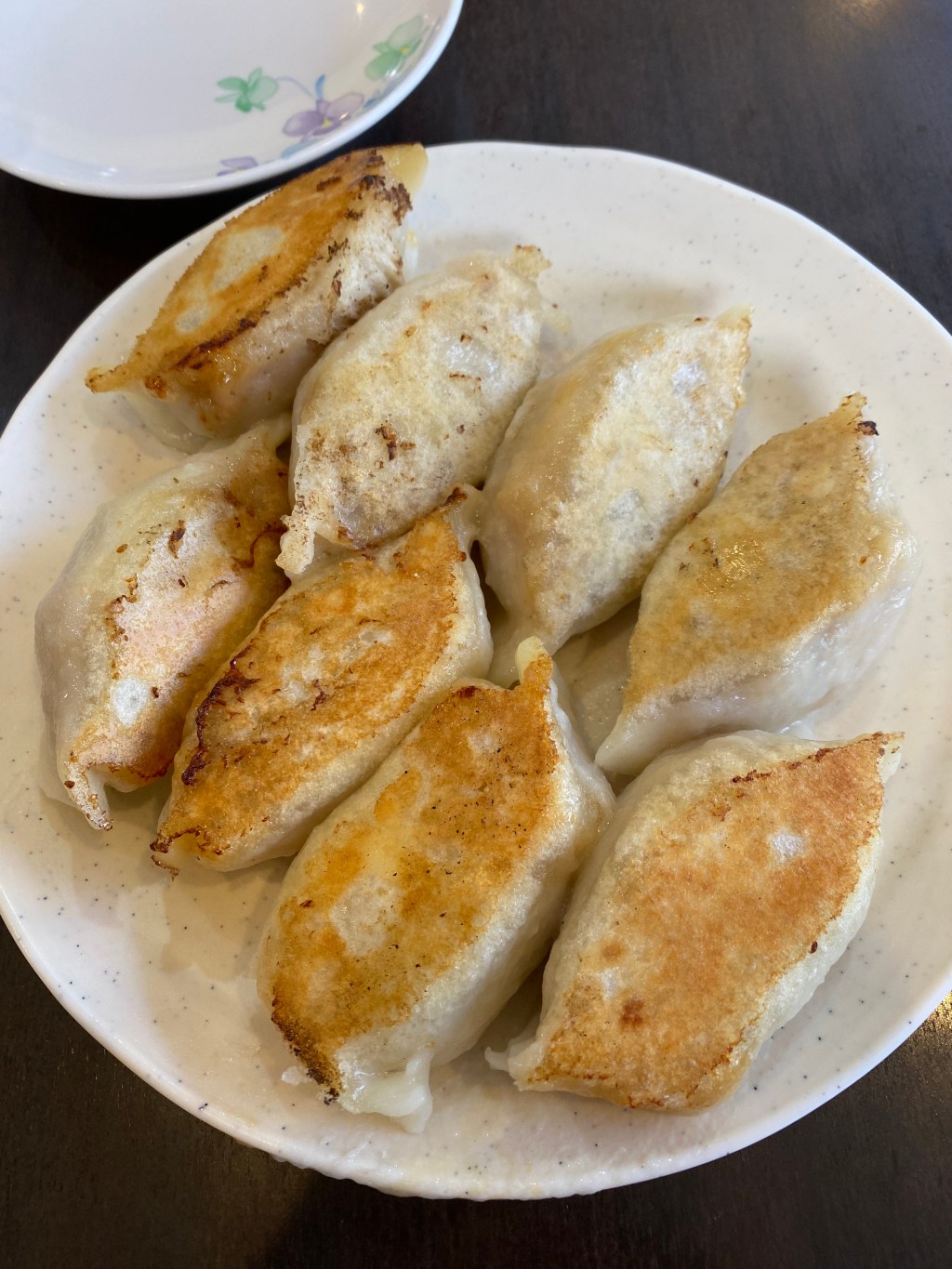
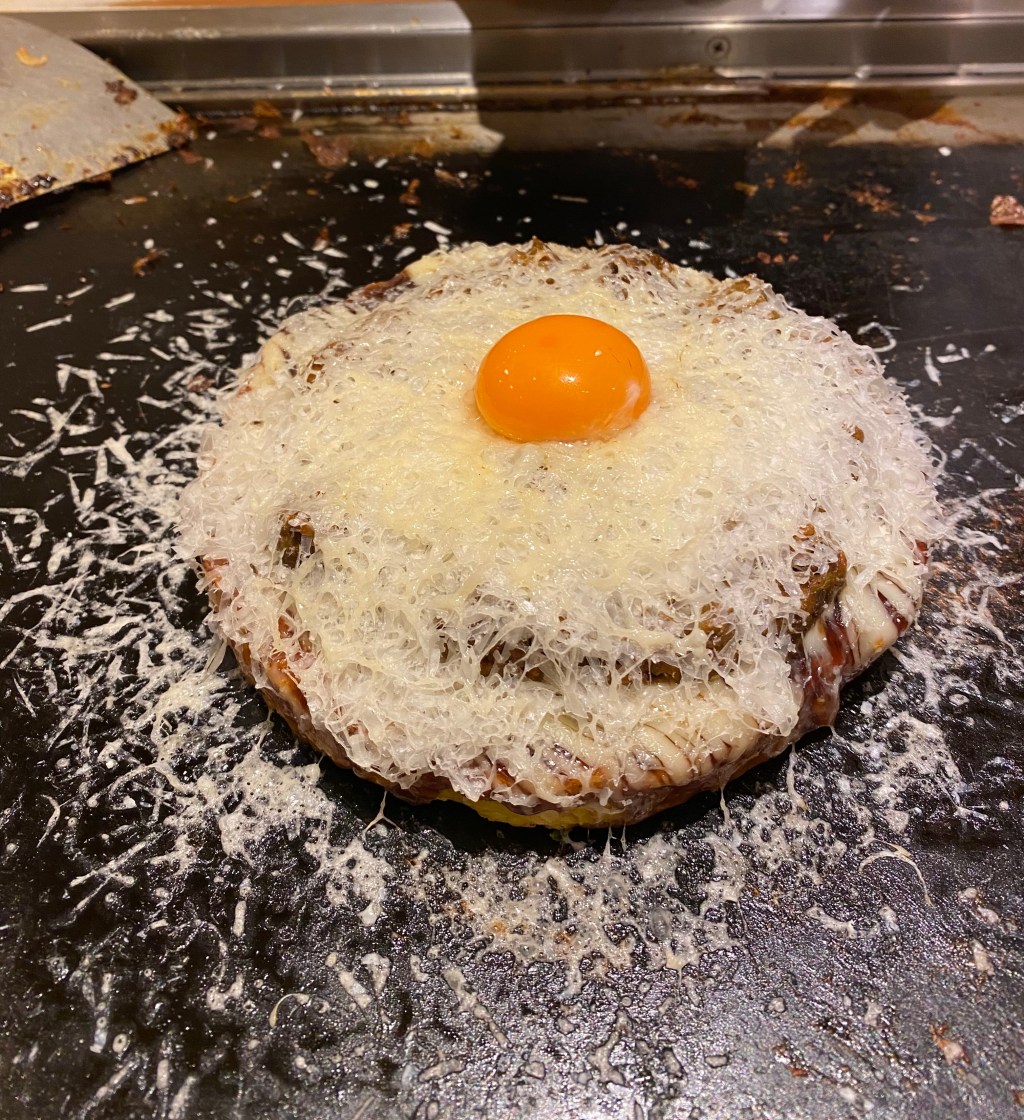
    Differing from what I guess I could call “normal gyoza” (I am sure you know what I am referring to) which are just simply pan fried, often without even the use of oil, the ones pictured (焼き餃子, yaki-gyoza) are actually slightly submerged in oil which gives them their puffy appearance. 

    I think that these are made thicker to begin with as well, but in terms of size they are definitely able to be eaten in just one bite (just be careful because they are ridiculously hot when they get to your table). 

    They come in sets of 8, and are as of right now only 600 yen. I think I ended up eating maybe 30, but I will leave the amount you want up to your own discretion – just know that they are extremely addictive. 

    A must to order with this is of course, rice. Another good thing I like is their “sesami taste chicken salad” (yes it is spelt this way), and the egg soup. 

    What I like the most however, is that they have heaps of raw, freshly chopped garlic just sitting on the table. 

    Putting this garlic in the same gyoza sauce dish and dipping the gyoza in it is incredible. I’ve never up until this point thought that “I want to eat raw garlic”! But this changed that. 

    It gives it such a good punch, and not just to the taste, but also to your breath which I will have to apologize about in advance…but if it’s just one meal you can manage, right? 

    When you are finished with your meal, bring your numbered plate on your table down to the front counter next to the front door and you can pay there. 

    If you have the time to get out here, there is nothing else like it. Even if there was, Mankin does it the absolute best. 

    Thanks for reading – if you’d like to support and follow along: 

    More about me

    Different types of ordering systems in Japan explained

    Purchasing an onigiri to keep me fuelled throughout my journey 🍙
  • Chūkamenten Kiraku – Ramen Restaurant Loved By The Locals In Shibuya For 75+ Years!

    Must know Info:

    Chūkamenten Kiraku – 中華麺店 喜楽*Cash Only*

    2 Chome-17-6 Dogenzaka, Shibuya, Tokyo 150-0043, Japan

    3 Minute walk from Shibuya station 

    Hours (as of 2025/12): Everyday except Wednesday 11:30am – 8:30pm

    Order system: Menu (order before getting seated)

    Open since 1952 and standing at one of Shibuya’s oldest ramen restaurants is Kiraku. 

    Located only a few minutes walk from the station the location couldn’t be better, but it is in the middle of Shibuya’s red light district, so walking past the restaraunt will put you in the centre of a bunch of love hotels…do be warned lol. 

    But this is yet another example of a hidden “gem” I suppose because how people started to discover it…well, I think it is self-explanatory. 

    But I digress, this is honestly a really good bowl of ramen (though they do have a few different things like gyoza as well) with a mom and pop shop sort of vibe to it (especially with the now 2nd owner being the son of the original). 

    Having the name “chuuka”, meaning Chinese, it isn’t your stereotypical ramen, but this is actually quite common in Japan. What differentiates this from a normal bowl isn’t the noodles or egg, it is that they put wontons in it. 

    While this doesn’t necessarily make it a wildly different tasting bowl per-say, it does at the very least differentiate itself from other bowls, and that is why I think it is worth having. 

    But it isn’t just this unique factor either, as the ramen is really good in and of itself. 

    The soup is a soy-sauce base, but they have garlic chips in there which really brings out the umami in it I feel. 

    While being completely honest, the egg and cha-shu could have been both a little less cooked for my liking, they were packed with flavour as can be seen with how dark the egg on the outside is – a tell tale sign that it has been brining for a long time. 

    Though I don’t have it pictured, I also had the fried rice (cha-han) which is something you really can’t go wrong with and it comes with an egg soup. I really like putting vinegar on my Japanese fried rice if they have it and though it sounds weird I would try it out – it surprisingly pairs really well.

    Gyoza was also something that was on the menu and I saw on a lot of other tables, I however didn’t think I had the stomach capacity, though looking back I wish I gave into my gluttonous tendencies and ordered it. 

    As for ordering, it is done while you are in line/when you enter the restaurant. To save yourself the stress I highly recommend looking at the menu beforehand. 

    The nice thing with this however, is often times only a few minutes or seconds after you sit down the food will come – leave it to the Japanese 

    When you finish, whether upstairs or downstairs, right next door to the same door you walked through is someone standing there with a little table who will either know your order or you will have to remind her of (got to love a high trust society like Japan) and you pay here.

    Thanks for reading – if you’d like to support and follow along: 

    More about me

    Different types of ordering systems in Japan explained

    Purchasing an onigiri to keep me fuelled throughout my journey 🍙