• Asakusa Tsurujiroh HANARE – Authentic Okonomiyaki & Monjayaki In The Heart Of Asakusa!

    Must know Info:

    Asakusa Tsurujiroh HANARE – 浅草 つる次郎 HANARE *Cash or Card*

    1 Chome-36-2 Asakusa, Taito City, Tokyo 111-0032, Japan

    2 minute walk from Asakusa station

    Hours (as of 2026/01): Monday – Friday (closed Wednesday) 11:30am-3pm – 5-10pm, Saturday 11:30-10pm, Sunday 11:30-9pm

    Order System: Menu

    Located right in the heart of the ever so busy Asakusa is a shop specialising in all things yaki – specifically okonomiyaki (from Osaka) and monjayaki which has its roots in Asakusa. 

    If you walk down the main shopping street/district, it will be down a smaller alley on either your left or right depending on what way you are walking down. 

    This place is popular, and hence very busy, so it is likely that you will have to line up. Do be prepared. 

    But, they now have a reservation system on their website for up to 4 people, so I would suggest doing this in advance to guarantee a spot. 

    The place consists of both a first and second floor and on the second you are asked to take off your shoes and put them in a shoe locker. 

    What separates them from other places serving these same types of foods is that they have quite a few renditions of non-common flavors on their menu. 

    Traditionally speaking, okonomiyaki is essentially a savory pancake with a few different ways of making it, but the most common consists of mixing various ingredients like cabbage and green onions in a batter, grilling it, and topping it with strips of pork and sauces. 

    The “okonomi” means whatever you like and “yaki” means grilled, so as long as it has the latter component to it, it doesn’t matter how you make it, and Tsurujiroh does just this. 

    The base of their okonomiyaki stays consistent with how it is generally made and is good just as is, but the toppings such as the one in the picture above which has grated cheese, japanese curry underneath, and a raw egg, and other like their famous mentaiko (cod roe) and cheese which is hit with a blow torch before served. 

    These toppings all pair excellently with the pancake base and every single one of them looked good. It was just that I was with only one other person so we didn’t want to overindulge (though it was tempting). 

    The second thing on their menu they are famous for is monjayaki, which consists of a similar batter to okonomiyaki, but because of a higher water content added, it ends up turning into a gooey like consistency which you generally eat right off of the stove you cook it on using little spatulas. 

    I am unsure of the tables on the first floor, but the ones on the second had their own grill to cook it, and the staff will assist you if you are having trouble. 

    To be fair, I have heard that a lot of foreigners don’t like the texture, and after looking at it at first glance I was a little put off too. But upon eating it I was pleasantly surprised and came to really like it. 

    The fun thing, too, is that you get to cook it yourself which makes for a fun experience often-times only found in Japan (think Yakiniku or Shabu-Shabu).

    Either of these two dishes are must eat when in Japan, and being able to kill two birds with one stone at the same restaurant is not very common, especially when they are both very good quality. 

    Additionally, this place has really good highballs (soda water and whiskey) which they use black both black and red label johnny walker. It also says they have all you can drink too, so for those of you that want to go crazy, this is perhaps a good spot for it. 

    These foods are staples in Japanese cuisine, and eaten on their own. They are great, but they also pair the best with alcohol (as most Japanese food tends too). 

    If you are already planning on going to Asakusa (which I imagine a lot of you are), then skip the touristy spots and come to one where all the locals are.

    Thanks for reading – if you’d like to support and follow along: 

    More about me

    Different types of ordering systems in Japan explained

    Purchasing an onigiri to keep me fuelled throughout my journey 🍙
  • Santon The New 2nd – Popular Gyoza Restaurant In Japan’s Biggest Chinatown!

    Must know Info:

    Santon the new 2nd – 中国家庭料理 山東 二号店 *Cash Only*

    143-3 Yamashitacho, Naka Ward, Yokohama, Kanagawa 231-0023, Japan

    8 minute walk from Ishikawachō Station Station

    Hours (as of 2026/01): Every Day 11am-11pm

    Order System: Menu

    Santon is located in the middle of Japan’s biggest China Town, and I think it is the best restaurant that they have here. 

    It is off of the main drag a little bit, and you have to walk through this kind of narrow alley to get there, but don’t be alarmed! It is Japan after all. 

    I assume that at some point Santon had a “1st” location, but they don’t anymore and have decided to keep the “2nd” in the name, so there is no need to get confused. 

    Santon has 3 stories to it, with the seating all consisting of tables. 

    Depending on your party size they will decide which floor you go on as some are bigger than others, so they may make you wait a bit and have people behind you go first. 

    Santon has a really good reputation for people who have been to China Town here, so naturally it gets busy (especially on the weekend). 

    A tip to avoid this however, is to go a bit after lunch time because the rush should have died down a bit. One thing about Japan is that the people are very time regimented, so even 30 minutes after the 12-1 lunch period can make a night or day difference. 

    When you are seated, if it is a busy time and the waitresses are running around, then you will have to get their attention, and generally this is done by yelling out “sumimasen” or excuse me, but I think if you try and get eye contact with them and raise your hand tall enough then it should be ok!

    As for the food, everything is very good. But, I definitely think that the star of the show is their “sui-gyoza”, or boiled gyoza. 

    Generally gyoza are pan-fried and having them boiled was a first for me, but they were incredible (though the visual appeal of them is severely lacking lol…)

    In boiling them, I felt that it allowed me to focus more on the taste of the dough because it made it a bit more chewy than usual, and obviously didn’t have any crispiness to it either. 

    But their normal yaki-gyoza also use the same dough and filling as the, so naturally they are also very good!

    Additionally to this, the Xiao Long Bao (Shoronpo in Japanese) and the ebi-chili were also fantastic. 

    The Long Bao had a really good size to them, and a ton of juice on the inside. 

    They had vinegar on the table to eat with both this and the gyoza, as well as soy sauce and a chili oil. 

    The ebi-chili are essentially just huge, plump fully peeled shrimp that are drenched in a sweet chilli sauce. 

    I have never tried the original Chinese dish so I don’t know how the taste compares, but I know the Japanese version of it is at the very least, delicious and pairs extremely well with white rice! 

    Whatever dish you order here, it is delicious and I don’t want to say authentic to China per-say, but certainly authentic to the Japanese style of Chinese cooking!

    Thanks for reading – if you’d like to support and follow along: 

    More about me

    Different types of ordering systems in Japan explained

    Purchasing an onigiri to keep me fuelled throughout my journey 🍙
  • Hamburger Restaurant Matsumoto – Local Loved Hamburger Steak Set Meal In Tokyo!

    Must know Info:

    Hamburger Restaurant Matsumoto – ハンバーグ レストラン まつもと *Cash or Card*

    Japan, 116-0002 Tokyo, Arakawa City, Arakawa, 6 Chome-6-1 West Hill Machiya B1F

    2 minute walk from Machiya Station

    Hours (as of 2026/01): Tuesday – Sunday 11am-2:30pm, 5-10pm

    Order System: Menu

    A very simple, at home-feeling shop serving up a really solid hamburger steak. 

    For more info on what a hamburger steak is, check this article: Gold Rush

    I lived in this area for some time and that is why I found this place, but that is exactly why I wanted to write about it. 

    While it isn’t the best thing I have ever eaten, the quality and service were still excellent, and I wanted to be able to tell you that no matter where you are in Japan, there are always places like this lurking around. You just have to look. 

    The restaurant itself is located down a stairway that leads to an open-type shopping area I guess you could call it (it’s still outdoors just on the bottom level). 

    There were a few restaurants down here too, and I probably would have thought I would get mugged walking down there without any idea of what it had, but thankfully, Matsumoto had their sign up on the upper level (sidewalk). 

    I went during lunch and it was a simple menu.

    One thick hamburger steak with your choice of sauce on top, rice (you can increase or decrease the portion size of this), a consomme soup,  and the little black dish is Hijiki Seaweed that’s been simmered down in soy sauce, mirin, and sugar. It is a very traditional palette cleanser type thing in Japan. 

    I went with their signature demi-glace sauce and it was very good. They also had things like cheese and gravy toppings which looked delicious.

    The patty is made out of 100% Japan beef, and so you can rest assured that the quality is not lacking.

    Eating a hamburger patty with rice may seem odd, but to me, it was a revelation. It changed the way I view approaching beef patty’s and that they don’t just belong on a bun. 

    They also had a little bit of vegetables and pasta on the hot skillet which soaked up the sauce nicely (don’t ask me why there was pasta). 

    Overall, a very harmonious dish with the soup and seaweed acting as nice pauses in between beef and rice. 

    They had quite a bit of seating with lots of tables, but it was a long, narrow restaurant, so I think 2 people might be the sweet spot.

    If you are ever around this area then stop by, because you will certainly get some nods of approval from the locals that come here. Trust me.

    Thanks for reading – if you’d like to support and follow along: 

    More about me

    Different types of ordering systems in Japan explained

    Purchasing an onigiri to keep me fuelled throughout my journey 🍙
  • Tsukiji Gindaco Highball-Sakaba – Cheap And Delicious Takoyaki + Drinks!

    Must know Info:

    Tsukiji Gindaco Highball-Sakaba – Shibuya East Entrance – 銀だこハイボール酒場 渋谷東口店 *Cash or Card*

    2 Chome-22-13 Shibuya, Tokyo 150-0002, Japan

    1 minute walk from Shibuya Station

    Hours (as of 2026/01): Monday and Tuesday 11:30am – 8pm, Wednesday-Sunday 11:30am – 11pm

    Order System: Menu

    Now you may have heard of, or even seen Gindaco, and this is because it is actually a chain restaurant. 

    But, instead of solely serving food, they have started to produce izakaya (Japanese bars) like places which I think is the perfect pre-game spot on any occasion.

    I have been to this location a few times, and first off the location can’t be beat. They have another one I know of in Shinjuku too, but it is a bit of a walk away. 1 minute is practically inside the station. 

    Gindaco serves a Japanese street food with origins in Osaka: Takoyaki, which are little octopus bits dropped into batter and cooked over a round shaped grill to make little balls. They are then topped with a sweet sauce, mayonnaise, and bonito flakes which are thin pieces of shaved tuna. 

    They are the perfect bit filling that they are delicious – exactly what you want to have in your stomach before a night of drinking. 

    You can get the basic with just the two aforementioned sauces, but they also have other flavors like teriyaki and egg salad, or my favorite, mentaiko and cheese which they use instead of a normal mayo the japanese delicacy of spicy atlantic cod roe (mentaiko) mixed into it. 

    Regardless of the flavor, you can start at only 4 pieces so I think getting a bunch to try would be a good idea. 

    What makes this particular location cool is that it is “tachi-nomi” or in other words you drink while you’re standing up at high tables. This makes it really easy to socialise with new people and move around a bunch – I highly recommend it if you want to meet new people in Japan. 

    You pay downstairs at the register, wait for your drinks and food, and then bring it up to your table.

    At night they even put some tables outside increasing the amount of people that can eat there. 

    Their highball (whiskey and sparkling water) is under 400 yen and beer is 550. They also have other drinks like lemon and various flavored sours that are priced the same as the highball. 

    I think that a lot of people just assume this is only for food, and that is why it is only filled with locals there. 

    Get your fill of protein and carbs with a few drinks included and enjoy yourself, maybe meeting some new people before you head out on the town. 

    I think this is the perfect reasonable place to do so, so please go check it out.

    Thanks for reading – if you’d like to support and follow along: 

    More about me

    Different types of ordering systems in Japan explained

    Purchasing an onigiri to keep me fuelled throughout my journey 🍙
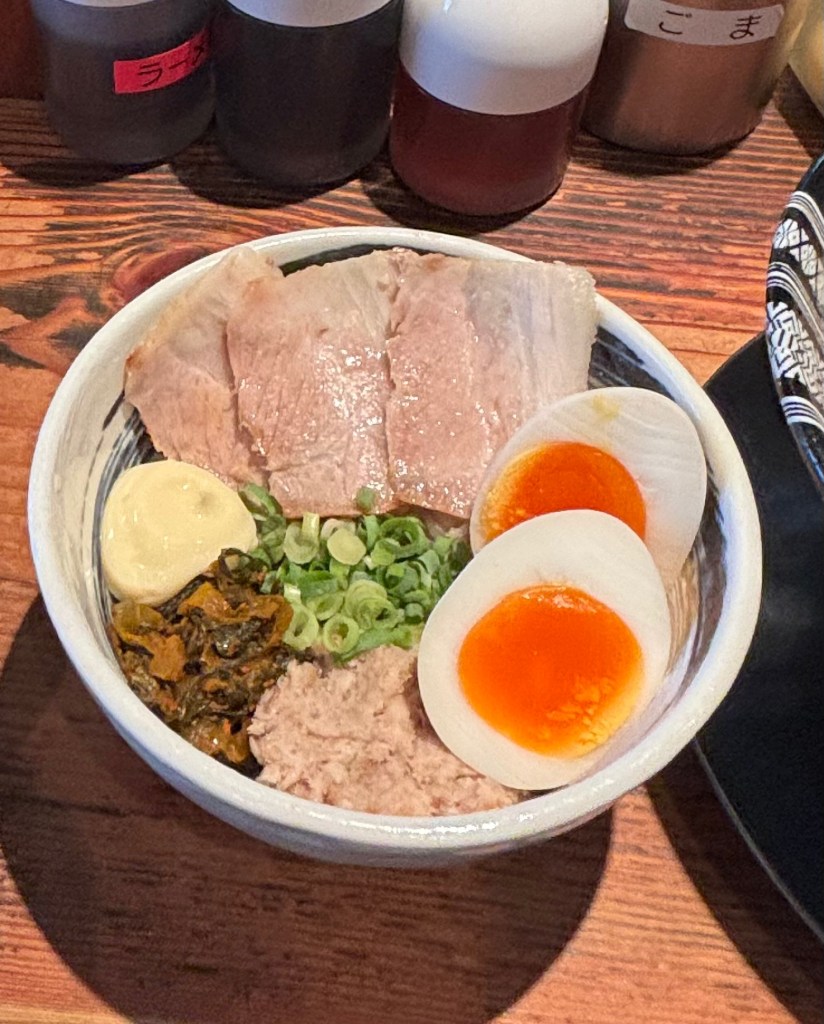
  • Katsudon-ya Zuicho – Popular Katsu Don Filled With Sweet Sauce In Shibuya

    Must know Info:

    Katsudon-ya Zuicho – かつどん屋 瑞兆 *Cash Only*

    Japan, 〒150-0042 Tokyo, Shibuya, Udagawacho, 41−26 パピエビル

    8 minute walk from Shibuya Station 

    Hours (as of 2026/01): 11:30am – 6pm everyday except Sunday

    Order System: Menu

    Ok, so I know I am going against my rule of only introducing “local eats” in Japan with showcasing this restaurant, I felt that it deserved a spot on the list. 

    I was hesitant about writing about it because it has gained so much traction on social media recently, and it seems that there aren’t very many people that travel to Japan who don’t know about it. But some places I still feel I should cover. 

    Because it is popular, this naturally comes with a long line, and even when I went to it nearly 3 years ago we still had to line up for like 20 minutes. 

    The good thing about this however, is that the restaurant is located inside of a building on the first floor and a bit tricky to find, so seeing the lineup will be a good visual landpoint. 

    When in line, the staff will eventually come over and ask you how many people you have and the amount of rice (they are all the same price) you would like. You can also order 1 or 2 eggs (I recommend 2). 

    Katsu-don, or a pork cutlet bowl is the only thing they have on the menu, and it allows them to be efficient in their rotation of the customers despite the restaurant only having 8 counter seats available. 

    Now, what differs from other katsu-don places is I suppose the size of the meat, as well as the fact that they cover it in sauce before they serve it, which allows for a pool of sauce to form over top of the egg. 

    The pork is well-breaded, and despite being rather thick, it’s still cooked perfectly. While I wouldn’t say it is the most tender piece of meat you will have, I didn’t find myself too fixated on it. 

    It is the harmony of the dish that makes it, and that is why I suggest you order 2 eggs – because I found that I finished eating it before I was done with my meat. 

    I mean, truthfully speaking, katsu-don can be found anywhere. But one with good quality such as this place that is well established are perhaps few and far between (the location is also great). 

    But, with that being said, I am certain there are other katsu-don places, and many may taste a lot better. 

    I just felt an obligation to share this as it is still technically “local” because it seems that Japanese customers do still frequent here (even though it is predominantly foreigners). 

    If you are willing to wait, you will get a solid katsu-don. But if you want an even more local, lineup free place, then they are definitely out there – you just have to look.

    Thanks for reading – if you’d like to support and follow along: 

    More about me

    Different types of ordering systems in Japan explained

    Purchasing an onigiri to keep me fuelled throughout my journey 🍙
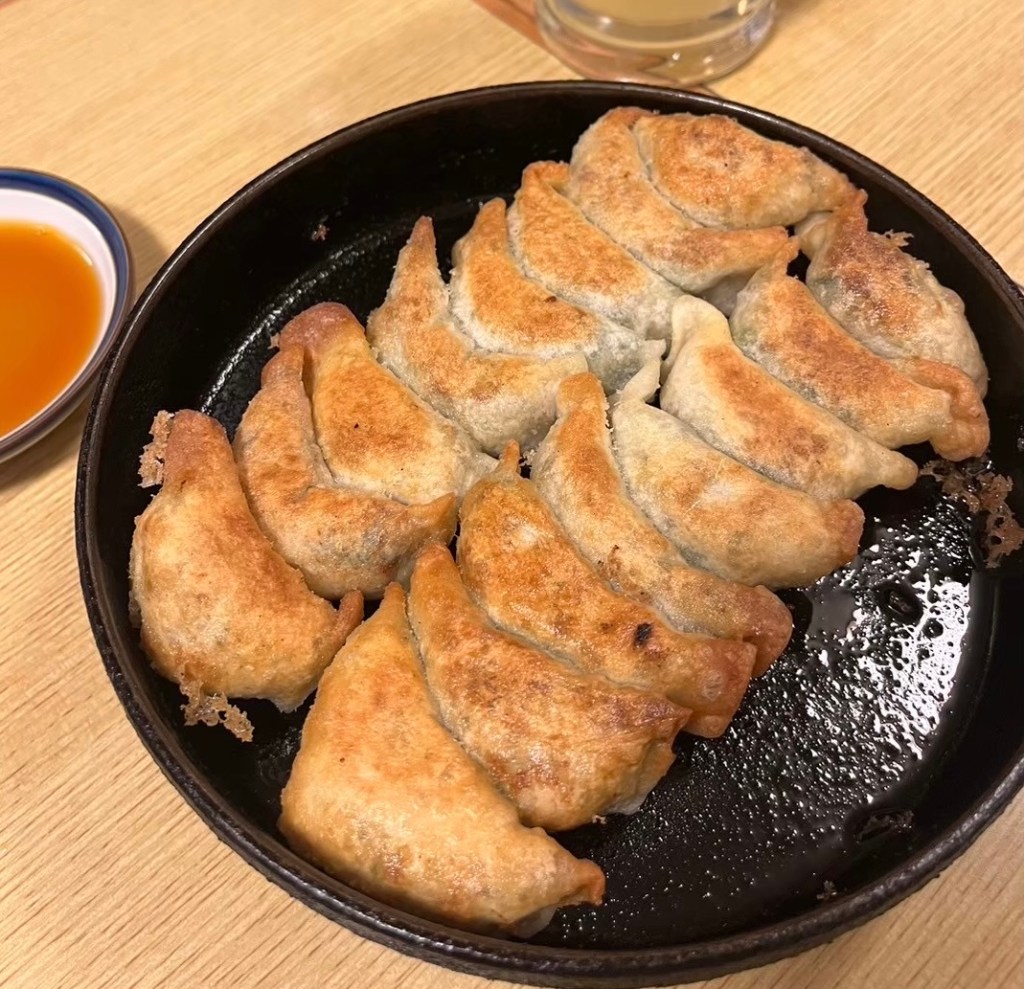
  • Tonkatsu Yamaki – Incredibly Crusted And Perfectly Cooked Tonkatsu

    Must know Info:

    Tonkatsu Yamaki – 山㐂 *Cash Only*

    3 Chome-65-1 Arakawa, Arakawa City, Tokyo 116-0002, Japan

    2 minutes from Mikawashima station, 15 minutes from Nishi-Nippori/Nippori station 

    Hours (as of 2025/12): 11:30am – 2pm, 5 – 8pm everyday except Tuesday and Sunday

    Order System: Menu

    A total hidden gem tonkatsu place with the best breading I have seen/eaten I think to date

    This place is super nostalgic to me, because I still remember it was one of the first days I was in Japan living alone for the first time, and started attending a Japanese Language School. 

    I wasn’t confident in my Japanese, but I was still determined to go into as many local places as possible, and what kind of opened up these gates for me was Tonkatsu Yamaki. 

    It is a bit of a walk from any major stations, but I think it is highly worth going over any other tourist-trap, influencer filled places you can find in places like Shibuya or Shinjuku. 

    Because the shop is so local, it is also really easy to enter and the time I went (right at the peak of lunch time) only had 1 other person in there. 

    It’s a husband and wife running the place, with the husband cooking and the wife serving. 

    The menus are posted on the walls in various places and were quite overwhelming, so I vaguely remember pressure ordering with what I could read, which was you guessed it, tonkatsu and curry. This was also the first time I had a bin-beer by myself (500ml bottled beer) that you pour into a little glass yourself (because when in Rome right?) 

    Besides this though, they also have shrimp fry, scallop fry, and other things. I am sure they are all great because they have the same crust on them, so you can order with confidence. 

    Again, going back to the crust, it almost looks fake. It looks like small ice shards are coming out of it, and I want to know how they have perfected it to this extent. 

    But underneath the beautiful breading was perfectly cooked pork, still juicy, and a perfect amount of tenderness. 

    The curry was mild, as Japanese curry tends to be, and there is just something about a fried meat with Japanese curry and rice. It truly is a match made in heaven. 

    If curry isn’t your thing, then they have basic teishoku (set meal) sets which consist of just the meat or fish of your choosing, cabbage, rice, miso soup, and a few Japanese pickled vegetables (sort of like a pallet cleanser). 

    With the aforementioned tourist trap places, tonkatsu can get pricey, especially depending on the type you are getting. 

    But with Yamaki (and other local shops) they keep the price low to cater to the hard working locals, and this is what allows them to maintain a strong customer base. 

    It is the same here – right around a 1000 yen for most of their dishes, and for the quality it is hard to beat. 

    An amazing tonkatsu shop in a bit of an inconspicuous location, but well worth the trip to get there.

    Thanks for reading – if you’d like to support and follow along: 

    More about me

    Different types of ordering systems in Japan explained

    Purchasing an onigiri to keep me fuelled throughout my journey 🍙
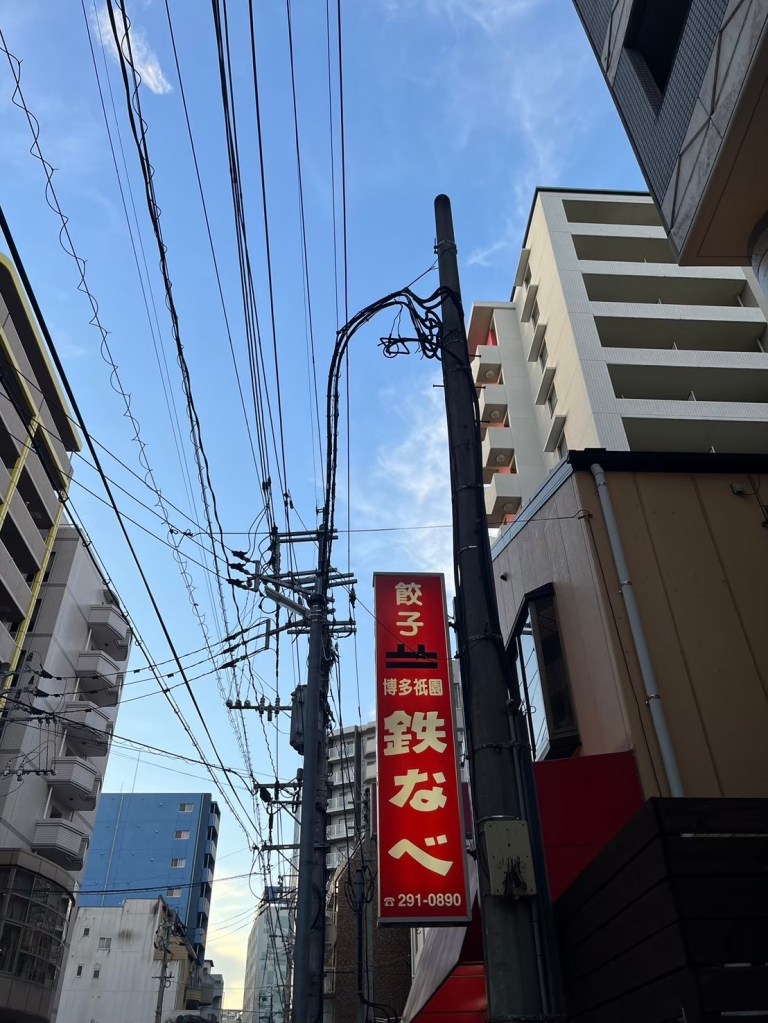
  • Kitaotsuka Ramen – Delicious Chashu Pork Topped Soy-Sauce Base Ramen!

    Must know Info:

    Kitaotsuka Ramen – 北大塚ラーメン*Cash Only*

    1 Chome-14-1 Kitaotsuka, Toshima City, Tokyo 170-0004, Japan

    4 minute walk from Otsuka station 

    Hours (as of 2025/12): 11am – 2pm, 5 – 10pm everyday except Sunday

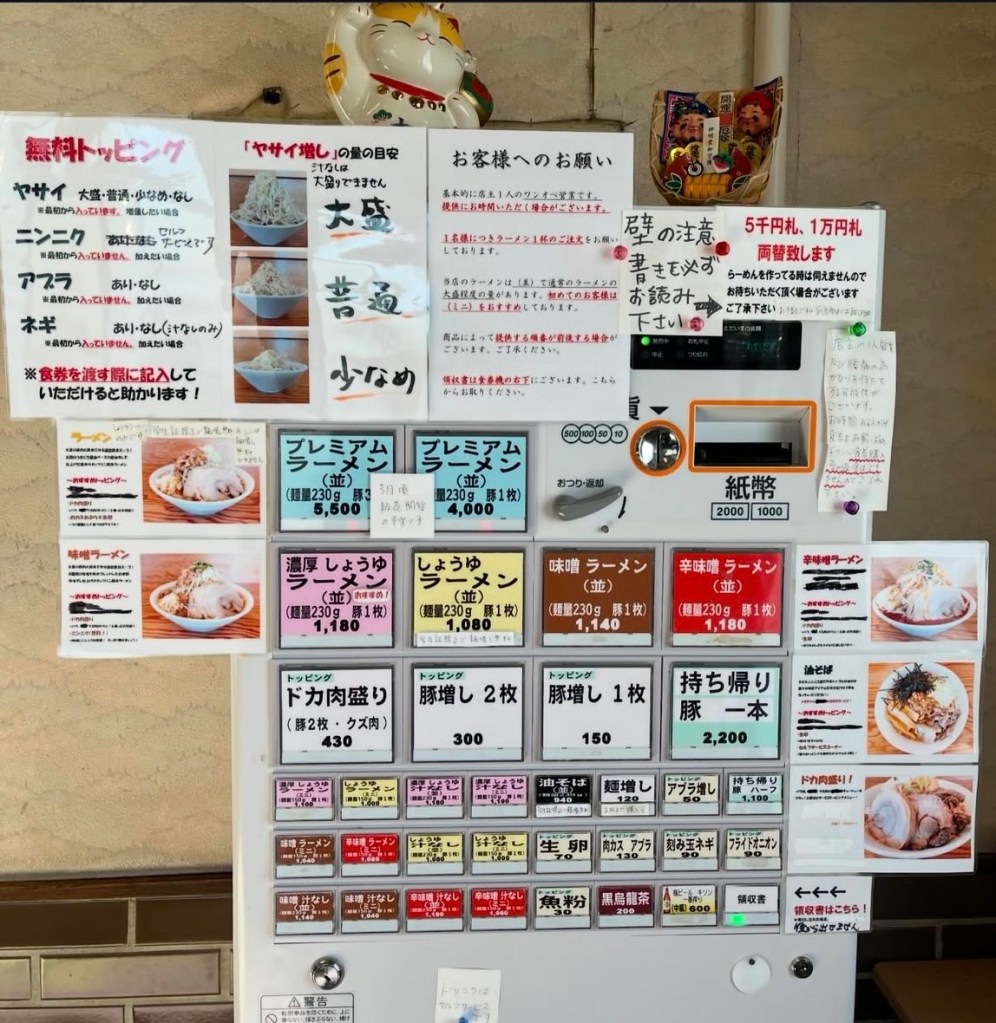
    Order System: Ticket Machine

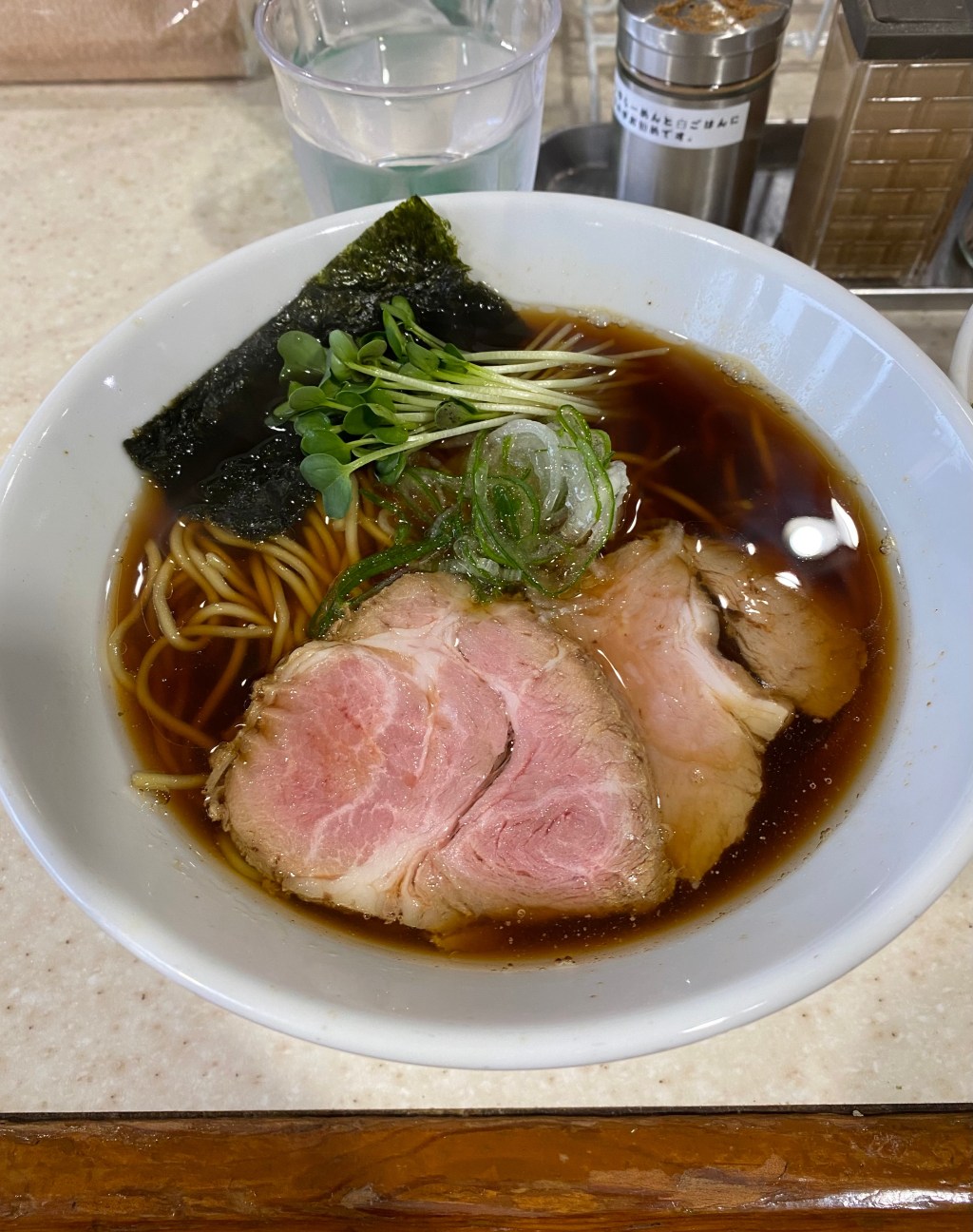
    Yet another conveniently located shop along the Yamanote Line specializing in a stronger soy sauce base soup, and most famous for their cha-shu ramen. 

    The shop is run by a husband and wife and their son – I love to see this in Japan, especially with so many great restaurants not having their legacy carried on. 

    The inside of the shop consists of only counter seats that wrap around the area where the ramen is prepared, and they will pass it through slits in the counter to you. When you finish you leave the bowl where it is and they will take care of it. 

    There are quite a few counter seats from what I remember, but it is very narrow inside the place, so you may be rubbing shoulders with someone – just be aware. 

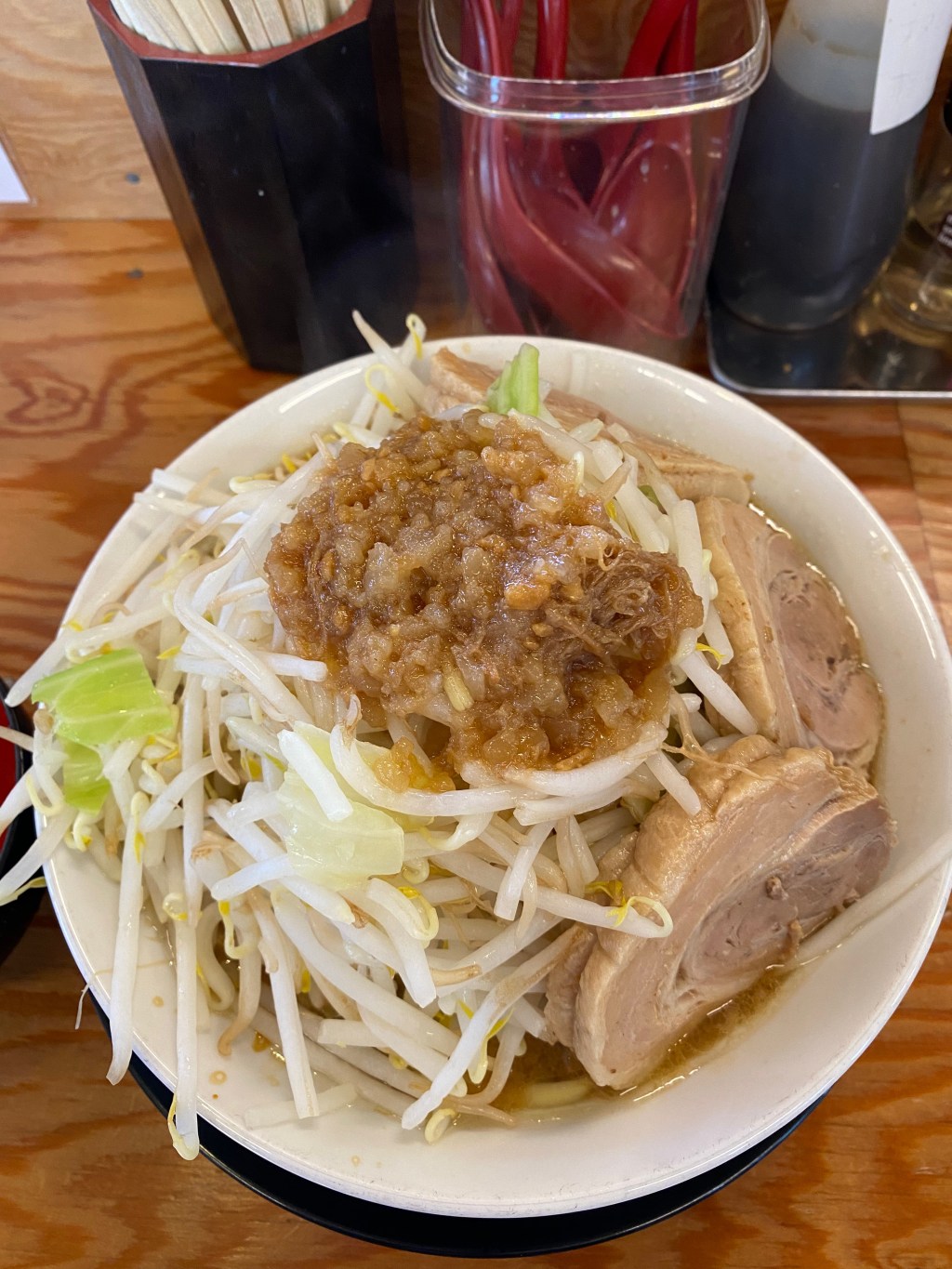
    The cha-shu ramen is famous because of its distinctive way of plating it, where the whole top of the bowl is covered – offering a layer between the noodles and soup underneath. 

    But it isn’t just the visual appeal either, because every single piece of pork is ridiculously tender, and I appreciate that they have it cut up into bite sized pieces, making it easy to eat with the noodles, as opposed to separately which I can find to be a bit of a caveat of mine with some ramen places. 

    The soup is rich, and very addictive. I think both times I’ve been there I have drank all of it even though I knew my blood pressure would not like it! 

    But, as a means to combat this, I made sure to pull out my trump card of putting a garlic topping on my soup. I just didn’t expect it to be as much as it was! 

    However, I was pleasantly surprised when I had mixed it into the soup as it gave it an even richer taste. 

    You may notice that the Japanese love putting a ton of garlic on their food, but 99% of the time it is freshly crushed, and you can taste the difference in quality to its processed counterparts. 

    It really acts as an umami bomb in some things, and if you don’t like it I would still go in with an open mind. 

    The egg is also perfectly cooked, still with a bit of a slightly-runny centre.

    I had rice, and I think it pairs well, as it does with practically any dish. I recommend putting some of the garlic, pork, and black pepper they have at the table – it is a bite from heaven. 

    If you like spice, I have heard that their “spicy ramen” is also really good. It keeps the pork and everything the same, but they had what looks like hot chili oil and ground beef – similar to dan dan noodles. 

    This restaurant has everything. It is family run, filled with locals, and more than anything has some delicious ramen that you will be able to tell other people about who probably have never heard of it. 

    Thanks for reading – if you’d like to support and follow along: 

    More about me

    Different types of ordering systems in Japan explained

    Purchasing an onigiri to keep me fuelled throughout my journey 🍙
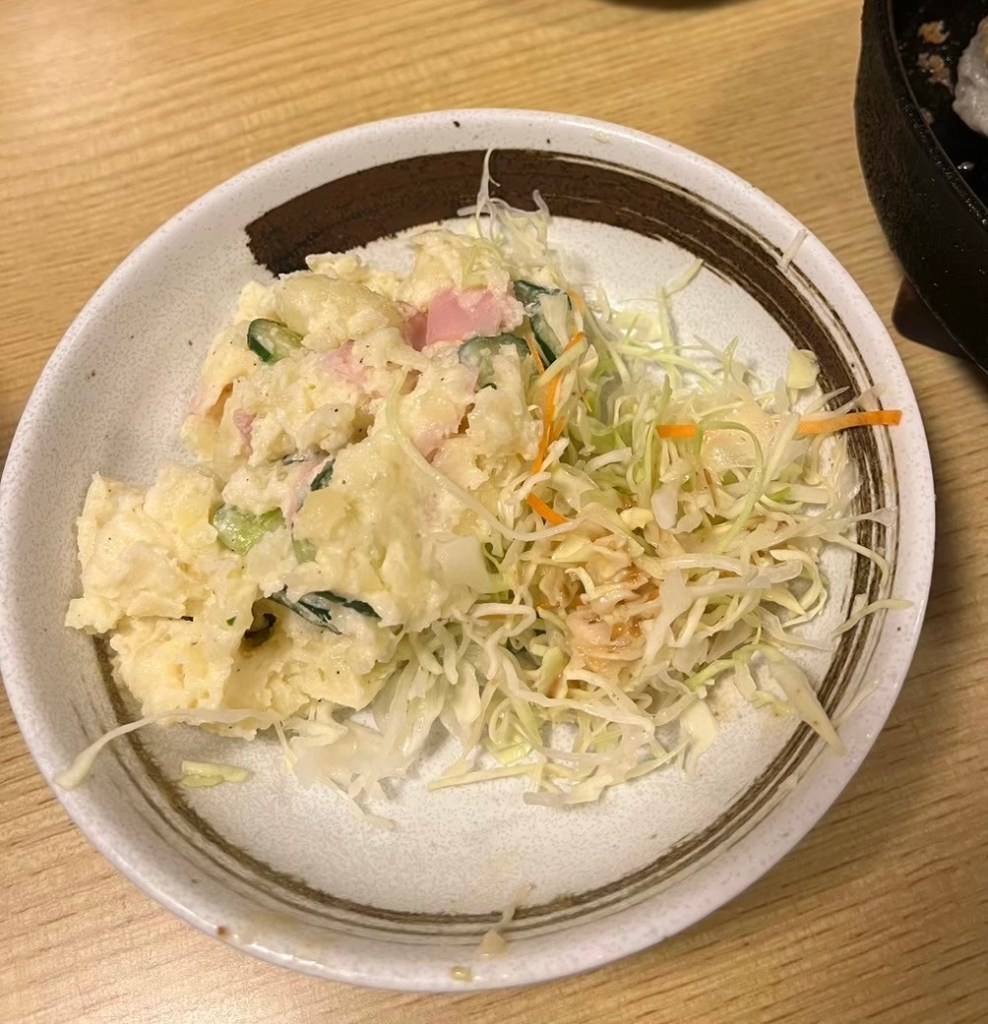
  • Uchitateya – Delicious And Voluminous Udon In Ikebukuro!

    Must know Info:

    Uchitateya – うちたて家 *Cash Only*

    Japan, 〒171-0022 Tokyo, Toshima City, Minamiikebukuro, 3 Chome−13−17 あづまビル 1F

    3 minute walk from Ikebukuro Station

    Hours (as of 2025/12): 11am – 9pm everyday except Thursday

    Order System: Ticket Machine

    Uchitateya is located in the heart of Ikebukuro, and is a shop that specializes only in Udon.

    But it isn’t just your normal udon, it is handmade, super thick and chewy, and instead of slurping them, it’s more like you have to chew your way to the end – a very unique way of eating noodles and a first for me. 

    There are various flavored soups you can choose from, and they are all on a touch screen outside of the shop with pictures. 

    Also, perhaps the most famous part about this shop is the fact that you can choose the size of your noodles all the way up to 1kg (which I actually ordered). 

    Surprisingly however, I was able to finish them all! Though it took me a while… 

    If you line up, then you go up to pay at this machine first, and then go back to your spot in line – generally a staff member will be there directing people so don’t worry. 

    Japanese people also don’t cut in line generally so even if you leave your spot it will be secure (is it that hard for the West to replicate this?). 

    After you have paid you will give your tickets to an employee who will also tell how big your party of people is.
    The amazing part about this is because when you go inside to sit down, your udon will come out extremely quickly because they’ve been preparing it for you while you wait outside. I love this about restaurants in Japan – complete and utter efficiency. 

    Your noodles are served in these brown wooden box-like things, and the soup separately – so you are essentially eating tsukemen (dipping noodles) udon, which is unique in and of itself. 

    You can choose for your soup to be either hot or cold, and I went with the hot curry soup – it was amazing. 

    It was quite thick, as Japanese curry tends to be, and I was worried that I wouldn’t be able to soak up any of it because there was so much, but the thickness actually helped attach to the elasticity of the noodles. 

    Additionally, the brown watering bucket looking thing had hot water in it which you could add to the soup incase it was too strong, or you simply wanted to extend the amount you got.

    While the number of noodles might not be that many, you are not getting scrimped out on the portion size, because some of the length of the noodles I remember were double the length of regular udon.

    With every bite of the noodles you get a nice handmade, wheat, slightly salty taste to them, and the velocity they have make them so addicting. 

    I could have probably just had the noodles on my own if I could (but maybe not 1kg).

    They had table seats, but since I went on my own, I got to sit at the counter and watch the chefs prepare the udon – always nice when you can see the chefs in action and how your food is being prepared. 

    Overall, this is an extremely unique and delicious udon place I highly recommend if you are in Ikebukuro.

    Thanks for reading – if you’d like to support and follow along: 

    More about me

    Different types of ordering systems in Japan explained

    Purchasing an onigiri to keep me fuelled throughout my journey 🍙
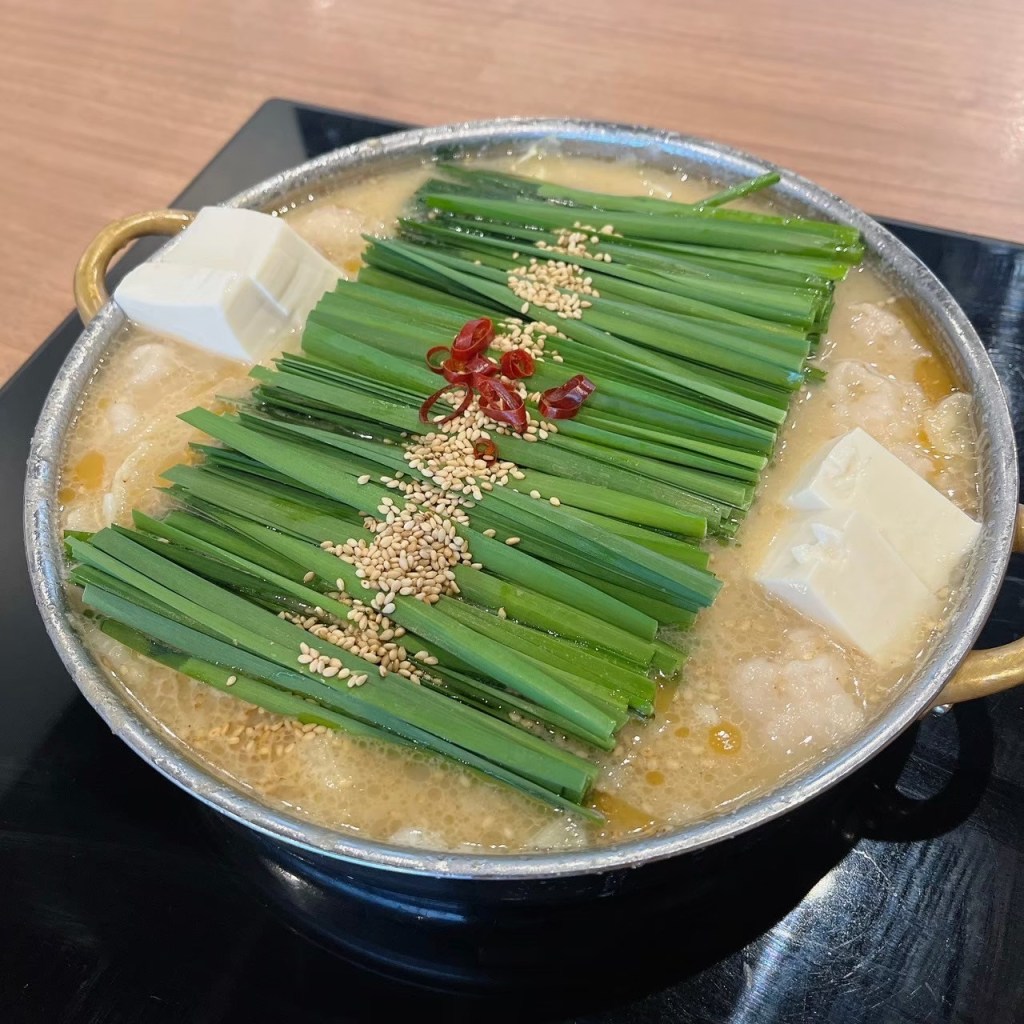
  • Marucho – An Incredibly Good Dipping Noodles Spot Loved By The Locals!

    Must know Info:

    Marucho – 丸長 *Cash Only*

    3 Chome-19-4 Shimoochiai, Shinjuku City, Tokyo 161-0033, Japan

    5 minute walk from Mejiro Station

    Hours (as of 2025/12): Monday to Friday 11am – 2pm, 5:30 – 8:45pm, Saturday 11am-2pm, Sunday closed

    Order System: Call Out System

    Located conveniently along the Yamanote Line, Marucho is an uber popular tsukemen (dipping noodles) and ramen shop loved by locals. 

    I found out about this restaurant from a radio host known as Nomura Kunichi and he also had a small role in the movie “Lost in Translation” (the scene where they are at Karaoke). 

    If you are in Japan you are likely going to ride on the Yamanote Line, but Mejiro isn’t a stop most of you will probably get off at, and this is mostly because they don’t have much going on. 

    But, they do have marucho, and people from far and wide come to eat here for lunch. 

    I went with my friend the first time we got there right after it opened I think but the inside of the store was full and there were at least another 10 people lined up outside. 

    But if you know anything about Japan, if you see a bunch of people lining up outside a restaurant (especially so if they are in suits) you know the place is going to be worth the wait. 

    It is a simple menu, and you can choose either tsukemen, which seems to be the main attraction here, or just classic ramen.
    Regardless of what you order, the soup and noodles will be the same. 

    The tsukemen has a few variations, one with vegetables (bean sprouts), one with a raw egg, and one with menma (boiled bamboo shoots). There is also a menu item labeled “cha-shu” but they all come with it – this one just gives you extra. 

    The cha-shu is extremely tender and cut up into little bits so that they have the potential to latch on to your noodles when you are dipping it in. 

    I still found that even after I had finished my noodles a lot was left so I just ate up the rest with a spoon. 

    A worker also asked me if I wanted extra boiling water as well so I could enjoy the soup more, so this is an option too. 

    The noodles are not anything too crazy, just basic ramen noodles I suppose. 

    But it is the broth that is the star of the show. It is a rich soy sauce broth, and by cutting up the pieces of pork into it, it gains an even deeper level of flavor. 

    The restaurant is small with only 8 counter seats, and this is part of the reason why the lines can get as big as they do.  

    The menu is posted on the wall outside of the restaurant, and you should decide what you are going to order in advance, because the moment you step in you will be expected to just sort of yell out your order to the staff. This was definitely a shock to me, and it is difficult if you don’t have any Japanese ability. 

    I think a way to combat this however, would be to just simply have your menu item selected and written down in Japanese on your phone so you can show the staff – it should be fine this way. 

    It is a sort of cutthroat environment, and the female head chef/owner runs the show, which is a cool thing because it’s so uncommon in Japan. 

    This is an extremely solid bowl of tsukemen and a super cool, Japan-like environment if you could say.

    Not to mention, Mejiro station is really conveniently located, so If you have the chance to get out here I really recommend it! 

    But make sure to keep your parties to 2 or less, because it’s tiny inside! 

    Thanks for reading – if you’d like to support and follow along: 

    More about me

    Different types of ordering systems in Japan explained

    Purchasing an onigiri to keep me fuelled throughout my journey 🍙
  • Yayoi Ken Roku Go Ten – Soba With 2 Pieces Of Huge Chicken Karaage On Top Of It!

    Must know Info:

    Yayoi Ken Roku Go Ten – 弥生軒 *Cash Only*

    2-4-3 Honmachi, Abiko City, Chiba Prefecture JR Abiko Station Platforms 1 and 2

    Inside of Abiko Station

    Hours (as of 2025/12): Monday through Friday 7am-11pm, Saturday 7am-9pm, Sunday 7am-8pm

    Order system: Ticket Machine

    Now, I want to preface that this isn’t necessarily a post saying you have to go to this specific train-platform located restaurant, but if you have the time and don’t mind getting on a decently long train, then I think this the perfect place. 

    It is pretty far from central Tokyo, and there is really nothing to do where it is located lol…I know this from experience too, because I literally got on a train just to go and eat here, and when I finished I got on the train going the opposite direction from the same platform. 

    But I digress. One of the things that makes these a cool thing to experience is that they are not as common as they used to be, and can only be found at a handful of stations in Tokyo. 

    Another thing that’s unique about them is that they almost never have chairs at it, and the same goes for Yayoi Ken here.
    What this means is you take your food once it is served from the register area, bring it to the counter to eat standing up, and bring the bowl back when you are done. 

    This is called ”tachi-gui” or just simply eating while standing up, and it is commonly associated with shops that serve soba or udon. This was a form of eating Japan came up with to cater to busy workers who need to get in and get out of the restaurant quickly. 

    While it is a bit of a gimmick in some forms, it is an important part of Japanese food’s culture, and the places that have this are now few and far between so I think everyone should try eating there at least once because you can get the true overworked Japanese business person experience! 

    This is just me joking (only partly), and despite Yayoi’s fast turnover of customers, they still manage to frequently have line ups. This is because they do something different from normal train-platform restaurants. 

    While they are still a soba restaurant, they put 2 pieces of huge, juicy karaage on top of it. 

    Why did this come about? I don’t know, but it is unique and why not put a fried food on top of a rather healthy one? 

    Maybe it’s the sort of un-written rule that soba should stay plain without any outrageous toppings, and having this sort of taboo is what makes it popular – it breaks away from the norm. 

    Regardless, the chicken was huge, and really tender. The only thing I want to mention is that regardless of if you get your soba cold or hot, the karaage is naturally going to lose its crunch as it is slightly submerged in the soup – so be aware of this. 

    Other than that, it is extremely cheap. Literally one bowl with two big pieces of karaage is 660 yen. It doesn’t even make sense, and I question that some of these restaurant sales are not in the red. 

    Overall, this isn’t a place I would say to drop everything to go to, especially if you are not in Japan for a long time. But, being that this is the “6th restaurant”, they have 3 other restaurants with one labeled without a number, one with a number 5, and one with a number 8…Why it is all over the place like this I don’t know! But at the very least they are all in the same proximity in Abiko City.

    If you have the chance, I would say it is worth it 100% because truthfully, I don‘t know how much longer restaurants of this kind are going to be open for, despite it having such a deep history in Japanese society. 

    Thanks for reading – if you’d like to support and follow along: 

    More about me

    Different types of ordering systems in Japan explained

    Purchasing an onigiri to keep me fuelled throughout my journey 🍙