
Aburi TORA Jiyugaoka – 熟成鮨と炙り鮨- 自由が丘店 *Cash or Card*
2 Chome-15-4 Jiyugaoka, Meguro City, Tokyo 152-0035 (de aone building, 3rd floor)
3 minute walk from Jiyugaoka Station
Hours (as of 2026/11): 11am-10pm every day
Order system: Tablet
Aburi (meaning “flame”) TORA is a conveyor belt sushi chain that started in Japan. Its main selling point is oshi sushi, a box-pressed nigiri that gets hit with a blowtorch on top. They sell regular nigiri too, but the oshi sushi is the most popular. I went to the Jiyugaoka location, and it’s one of the top sushi places I recommend in Japan.
What is oshi sushi?
Oshi sushi started in the Edo period as a way to preserve and transport fish using pressure and curing. It’s one of Japan’s oldest forms of sushi, but it isn’t very common today.
How Aburi TORA compares to other conveyor belt sushi
Technically this is a conveyor belt sushi chain, but it’s a tier above the big three (Sushiro, Kura Sushi, and Hama Sushi). You can see it in the price and in the quality.
The Canada connection: a chain that was reverse-imported to Japan
One interesting fact is that Aburi TORA was reverse-imported back into Japan. The current owner took over his father’s company in 1996 and opened his first flagship store, called Miku, in Vancouver in 2008. They served the signature torched oshi sushi there, but it wasn’t until 2019 in Toronto that the group combined it with conveyor belts.
It was so popular that it was brought back to Japan, and there are now 4 locations in the Tokyo area. I’ve never been to the Canadian locations, but I imagine the quality is similar. This was my first time at one in Japan, and I wasn’t sure what to expect, but it was very good.
How to get a table at Aburi TORA
None of the restaurants take reservations. You can reserve your spot in line online at the location of your choice and check how busy it is, but you need the Japanese messaging app LINE to view it. You can download it from foreign app stores, and since it’s what everyone in Japan uses to communicate, it may be worth having anyway if you ever meet someone Japanese you want to keep in touch with.
Ordering at Aburi TORA
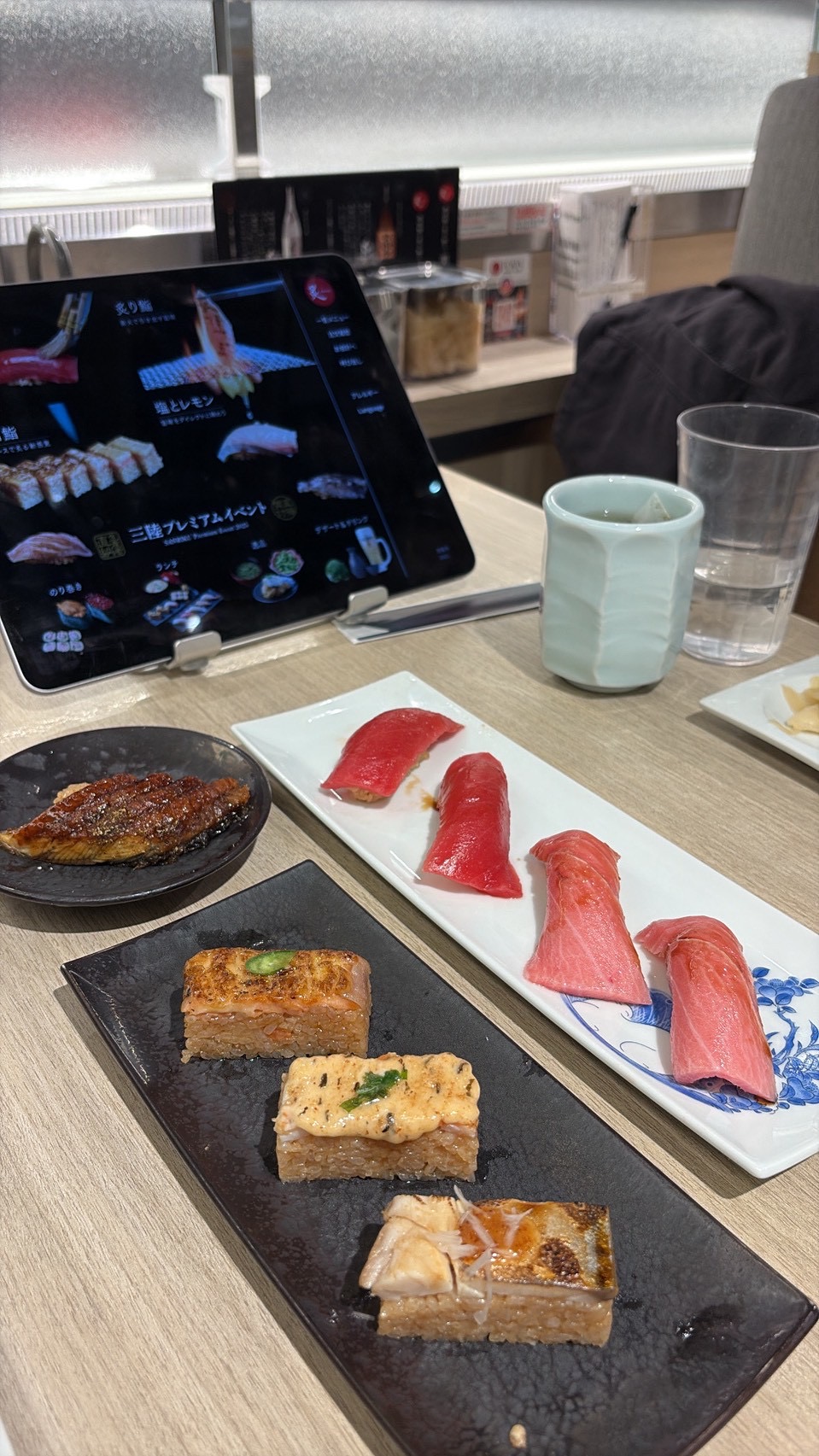
You order on a touch panel at your seat. It has photos of every dish, so it’s really easy to spot what you’re ordering, and there’s an English version too, so you don’t need to read Japanese.
Is Aburi TORA expensive?
It’s more expensive than the other conveyor belt sushi places you may know, but honestly? I think it’s still fairly priced. The Aburi Oshi trio (the rectangular ones) is ¥520, and keep in mind they’re blowtorched too.
What to order
Aburi Oshi trio
The trio comes with salmon, mackerel (saba), and shrimp. I don’t know if the blowtorch adds to the tenderness, but they were very tender, and yes, they’re all topped with cheese. If you’ve never had it and don’t think it would go well, don’t knock it until you try it, because it does. Besides salmon, this is the only place I know of that does it with other fish too, so it’s worth trying.
Grilled nigiri
Besides oshi sushi, you can get grilled nigiri, where they lightly char the fish over a gas flame grill and then form it. If you love BBQ, this is a really cool one to try.
Lemon and salt nigiri
They also have nigiri with lemon and salt, which is a really refreshing bite. I’d never had it before, but what doesn’t go well with salt and lemon? Not much. Sometimes I even find myself wanting to bring some to other conveyor belt sushi places to spruce things up lol.
Aged tuna
Their original preparation method is aging the ingredients at exactly -0.1 degrees to draw out the maximum umami. Three pieces of this style of tuna, at varying fattiness levels, are ¥1,380, and they’re absolutely amazing. Everything instantly melts in your mouth.
The Vancouver roll
Their only roll on the whole menu (most spots have California rolls) is the Vancouver roll. I imagine it’s a nod to their first shop in 2008, which started it all.
Why the rice looks darker
You may notice the rice is a bit darker than you’re used to. They season it with red vinegar instead of the standard white vinegar, which gives it a more acidic, richer flavour that paired well with the different ways they prepare the fish.
Final thoughts
You won’t easily find places with sushi-making methods like this, let alone all of them in one place. I highly recommend trying them all, because each one has its own goodness. Here is another good local sushi place to check out too: Sushi no Midori Umegaoka
Thanks for reading – if you’d like to support and follow along:
Different types of ordering systems in Japan explained
Purchasing an onigiri to keep me fuelled throughout my journey 🍙