
Corasse Fukushima – コラッセふくしま*Cash or Card*
1-20 Mikawa Minamimachi, Fukushima, 960-8053, Japan
4 minute walk from Fukushima Station
Hours (as of 2026/05): 9am – 9pm Mon-Sun
Order system: Ticket Machine
Ok, now this might be the most inconspicuous place I have ever eaten across Japan, in fact, nobody walking past this would even think of having a restaurant inside of it, including me.
Now, I had made the plan to travel across a few prefectures in Tohoku and make my last stop in Fukushima as it was the closest and on its way to Tokyo.
Since I didn’t ever bother getting my Japanese drivers license, I had done hours of research on what buses and trains I would need to take to get to whatever restaurants and tourist attractions I needed – I had it all planned out.
Except when I got to Fukushima, the weather had different plans. It was snowing quite heavily.
I didn’t think much of this, until I was told by the bus operators that they were disbending operations for the day. That was it – all my plans ruined.
And not to take anything out of Fukushima, but even around the station there was nothing to do. I mean there were little to no restaurants, even convenience stores were a little bit of a trek away.
So yeah, it was quite discouraging.
Thankfully however, my hotel was right next to the station which allowed me to walk around what was there to see by the station… Spoiler, there was nothing.
So this left me eating a 7-11 bought meal in my hotel room that night. Until the next morning before I had to depart, and because the buses were still not in service, I thought that there had to be something local I could eat here.
This is when I found myself wondering into “Corasse Fukushima” which while resembling just a normal office building, I could see a ton of people with shopping bags and suitcases heading in, so I myself deciding to check it out too – considering it was next to my hotel and I had nothing else better to do.
What welcomed me on the whole left side of the building on the first floor was a huge shop selling a ton of Fukushima’s famous souvenirs as well as fresh ingredients like vegetables and fruit.
Among this, there was a rather big section dedicated to ramen, specifically Fukushima’s legendary ramen town “Kitakata City” which is known to have the most ramen shops per capita in Japan, and was somewhere I was planning on going to this morning.
So while there was a lot of frustration to say the least, it was still cool to see what could have been. Or at least I thought…
This was when I found myself wandering deeper and deeper into the restaurant when I came across a familiar smell – ramen!
Yes, you are not going to believe it but in the far right corner of this gift shop area, they actually had a space where various ramen shops can essentially rent the space it seems.
In front of the area where they are making the ramen there is an electronic ticket machine with photos and makes your ordering efficient.
I am unsure at what the pace is for when a shop changes here, but at the very least it is only one at a time.
While based on recent reviews of the type of ramen people have been able to buy it seems to be the same, in my case I was graced by god and was able to eat the same type of ramen that Kitakata City is famous for – Kitakata ramen.
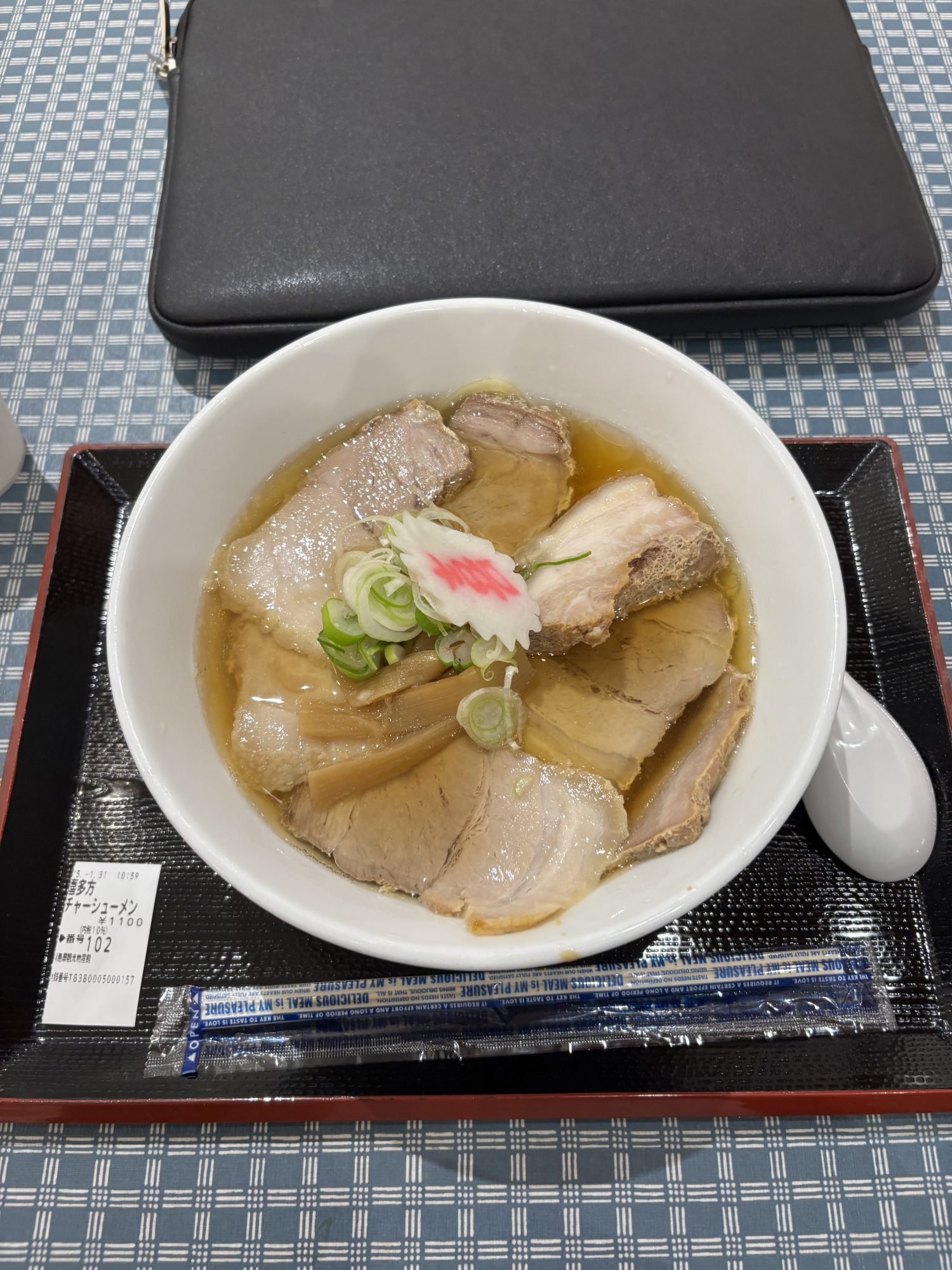
Now Kitakata ramen has a few distinctive features – one is the huge amount of chashu covering the bowl, another is how bland it actually looks, and the third being that it is generally eaten as a breakfast food.
This was something I kind of figured was the case because when I planned to hit a few shops out in Kitakata, most of them were open from like 7:30am. Now this made it the perfect timing for me because I had to get back to the city centre and catch a bullet train back to Tokyo, but thinking about it now, it is earlier than any other ramen shops I have seen before.
So, this fact actually made me feel better about myself when I was going to buy it inside of this gift shop at 9:30 in the morning!
But as for the visual and chashu presentation – while it sounds bad, it kind of looks like it is lacking any flavour.
I mean the chashu is kind of bland looking, and that is pretty much the only thing in the bowl you can see besides a few green onions or bamboo shoots.
But this is an example of “don’t judge a book by its cover” because I knew that there had to be a reason Kitakarta ramen was as famous as it is.
After my first sip of the soup and bite of chashu I understood.
The soup was gentle, yet punchy with hints of soy sauce, pork bones, and what I found out later was sardines. All three of these things are super high in umami so it is no wonder they combined for such a delicious soup. Not to mention, none of these three things were super pronounced in any way either – they each went together harmoniously and actually felt normal to eat in the morning.
The chashu however really caught me off guard. It was soooo tender. Like almost breaking in half when I picked it up with my chopsticks. They were also super thick pieces so this was even more impressive.
Not to mention, it had a really good taste to it as well. It was clear it had been brined in something for a while to not only add to the flavour but also the tenderness.
Both of these things with the signature noodles of this dish – “hirauchi jukusei takasuimen” which have a high water content compared to other noodles made it a really refreshing bowl not leaving me wanting to take a nap after (which I sometimes feel with ramen shops).
Honestly? While I still really want to go see Kitakata City, for those of you with not a lot of time or don’t want to travel all that way out of the city centre, then this place will probably not disappoint, and in my opinion actually serve a really competitive bowl to the famous shops in Kitakata.
Thanks for reading – if you’d like to support and follow along:
Different types of ordering systems in Japan explained
Purchase an onigiri to keep me fuelled throughout my journey 🍙
Leave a Reply