
Must know Info:
Chūkamenten Kiraku – 中華麺店 喜楽*Cash Only*
2 Chome-17-6 Dogenzaka, Shibuya, Tokyo 150-0043, Japan
3 Minute walk from Shibuya station
Hours (as of 2025/12): Everyday except Wednesday 11:30am – 8:30pm
Order system: Menu (order before getting seated)
Open since 1952 and standing at one of Shibuya’s oldest ramen restaurants is Kiraku.
Located only a few minutes walk from the station the location couldn’t be better, but it is in the middle of Shibuya’s red light district, so walking past the restaraunt will put you in the centre of a bunch of love hotels…do be warned lol.
But this is yet another example of a hidden “gem” I suppose because how people started to discover it…well, I think it is self-explanatory.
But I digress, this is honestly a really good bowl of ramen (though they do have a few different things like gyoza as well) with a mom and pop shop sort of vibe to it (especially with the now 2nd owner being the son of the original).
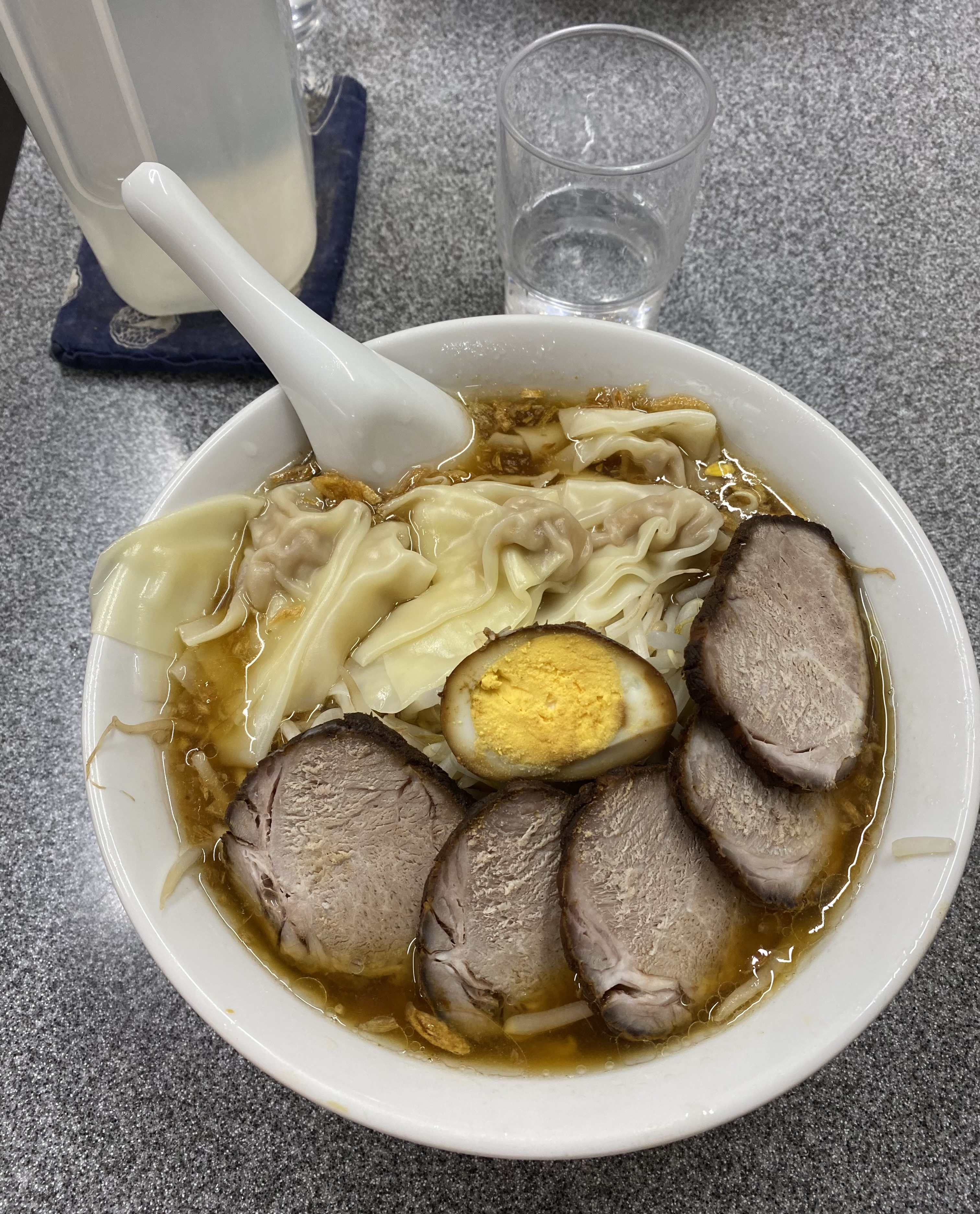
Having the name “chuuka”, meaning Chinese, it isn’t your stereotypical ramen, but this is actually quite common in Japan. What differentiates this from a normal bowl isn’t the noodles or egg, it is that they put wontons in it.
While this doesn’t necessarily make it a wildly different tasting bowl per-say, it does at the very least differentiate itself from other bowls, and that is why I think it is worth having.
But it isn’t just this unique factor either, as the ramen is really good in and of itself.
The soup is a soy-sauce base, but they have garlic chips in there which really brings out the umami in it I feel.
While being completely honest, the egg and cha-shu could have been both a little less cooked for my liking, they were packed with flavour as can be seen with how dark the egg on the outside is – a tell tale sign that it has been brining for a long time.
Though I don’t have it pictured, I also had the fried rice (cha-han) which is something you really can’t go wrong with and it comes with an egg soup. I really like putting vinegar on my Japanese fried rice if they have it and though it sounds weird I would try it out – it surprisingly pairs really well.
Gyoza was also something that was on the menu and I saw on a lot of other tables, I however didn’t think I had the stomach capacity, though looking back I wish I gave into my gluttonous tendencies and ordered it.
As for ordering, it is done while you are in line/when you enter the restaurant. To save yourself the stress I highly recommend looking at the menu beforehand.
The nice thing with this however, is often times only a few minutes or seconds after you sit down the food will come – leave it to the Japanese and their efficiency.
When you finish, whether upstairs or downstairs, right next door to the same door you walked through is someone standing there with a little table who will either know your order or you will have to remind her of (got to love a high trust society like Japan) and you pay here.
Something I also really appreciate about Kiraku is how it manages to exist in such a chaotic part of Shibuya without feeling like it has been swallowed up by it.
The interior is narrow and simple, with just enough seats to feel intimate without being uncomfortable, and the fact that it is now run by the second generation owner gives it a warmth that a lot of ramen shops just don’t have.
You can tell that the people behind the counter genuinely care about the place, and that kind of thing always comes through in the food.
There are plenty of ramen shops in Shibuya that try to stand out by being flashy or trendy, and Kiraku is the complete opposite of that — it has just been quietly doing its thing since 1952 and has no intention of changing anytime soon. That in itself is reason enough to go.
Thanks for reading – if you’d like to support and follow along:
Different types of ordering systems in Japan explained
Purchasing an onigiri to keep me fuelled throughout my journey 🍙
Planning a trip to Japan? These may help:
Leave a Reply