Must know Info:
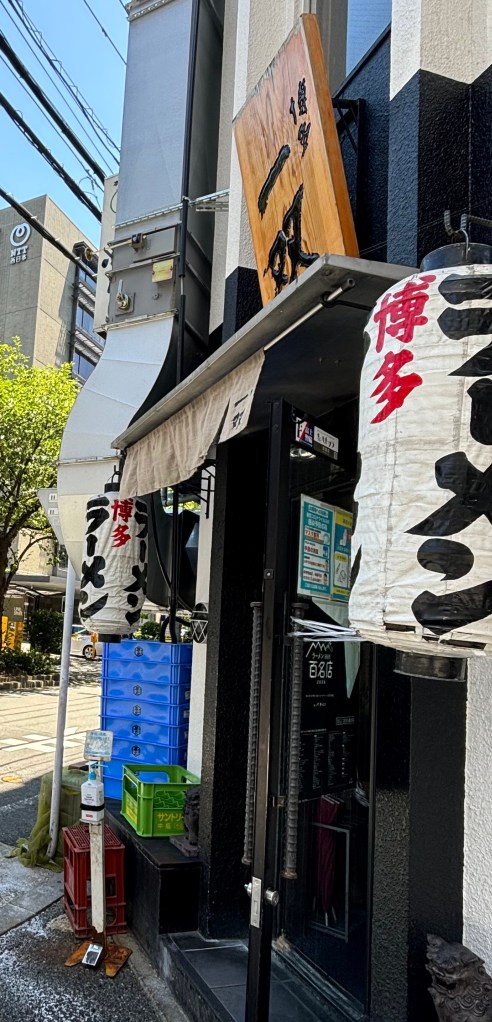
Hakata Issou Honten – 博多一双 博多駅東本店 *Cash Only*
3 Chome-1-6 Hakataekihigashi, Hakata Ward, Fukuoka, 812-0013, Japan
7 minute walk from Hakata Station
Hours (as of 2026/02): 11am-12am everyday
Order system: Ticket System
Perhaps the longest I have lined up for any restaurant throughout my time in Japan was this uber-popular Tonkotsu ramen shop in Fukuoka, “Hakata Issou Honten”.
Being that tokotsu ramen, or pork-bone broth ramen has its origins here, it is a no-brainer that if people come they are going to eat it, and this restaurant happens to be the most popular, or at least most widely recognizable.
It is a small shop, with only about 10 counter seats and 3 ish tables, but they do have a fast turnaround, it is just that the sheer volume of people lining up overtakes this significantly.
When I went it was near the end of July, so it is a peak time for travelling and I think that this definitely had something to do with it, but I think I lined up for over an hour, and I will warn you that there isn’t much shade, so this paired with the heat of the summer felt like I was in a sauna lol. But it was worth it!
Once I got up to the end of the line, the staff started directing people to go and purchase their food tickets before heading back to the line so if there is a line just wait until they call you in. If you are lucky and there is no line then I would go up and purchase it right away!
Ok, now to the main part I am sure you all have been waiting for – the food, and let me tell you it was amazing.
As I mentioned, tonkotsu ramen originated in Fukuoka, and it is the same style of ramen that Ichiran Ramen serves (though I have never been there). Also – a side note: there are way better ramen shops that are a lot less busy and cheaper than Ichiran so please try going to them (use this website for reference if you need!).
I will get it out of the way now, but tonkotsu ramen is rich. I might even go as far as to say that it is the richest ramen soup you can have in Japan (but don’t quote me on it!)
Because of this some people might not like it, but I personally loved it, and though I felt like I needed a gallon of water afterwards it was completely worth it. Keep in mind, this was also with me eating it in 35C+ weather, so I can imagine this taste would be empathized even further if eaten in the colder months.
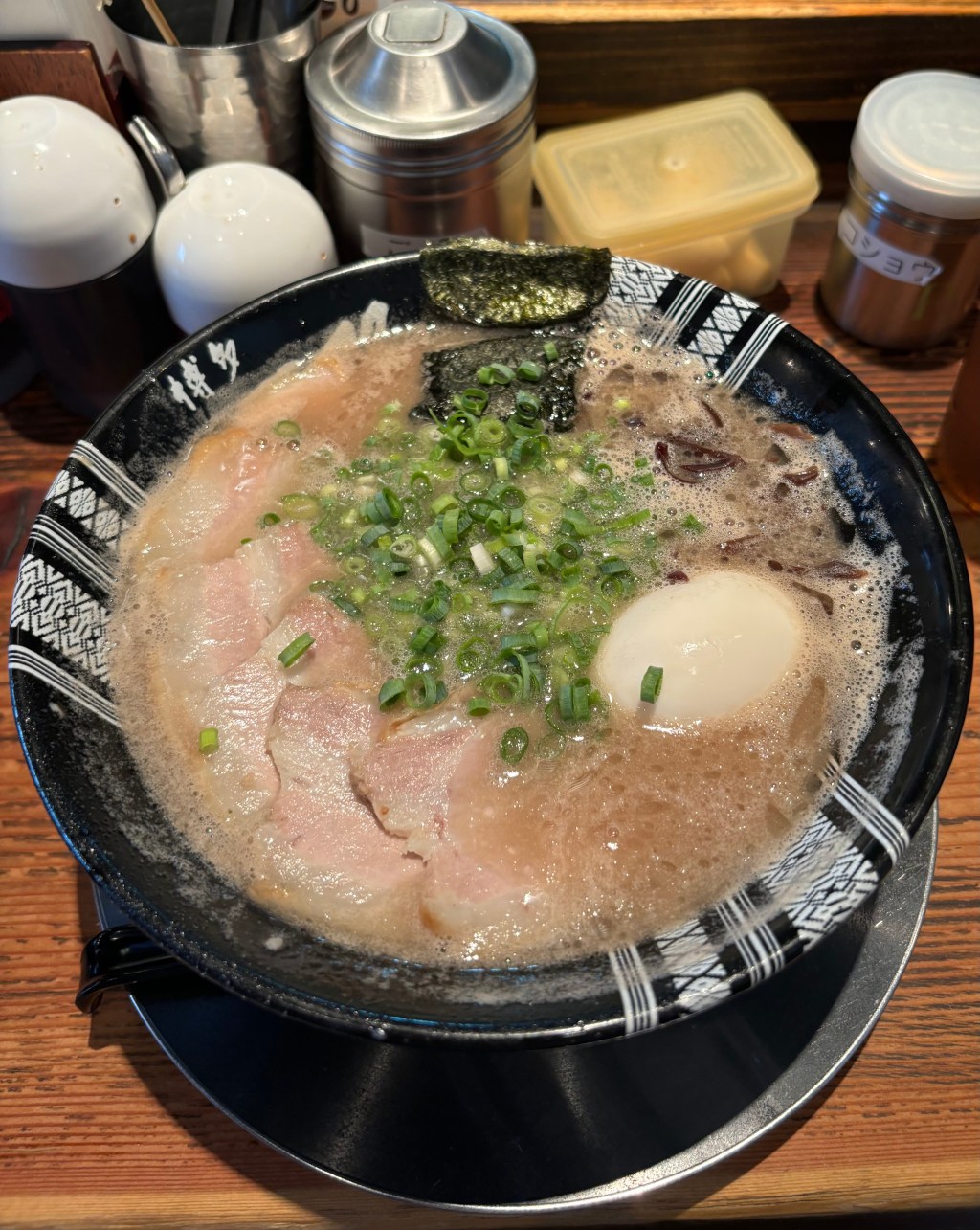
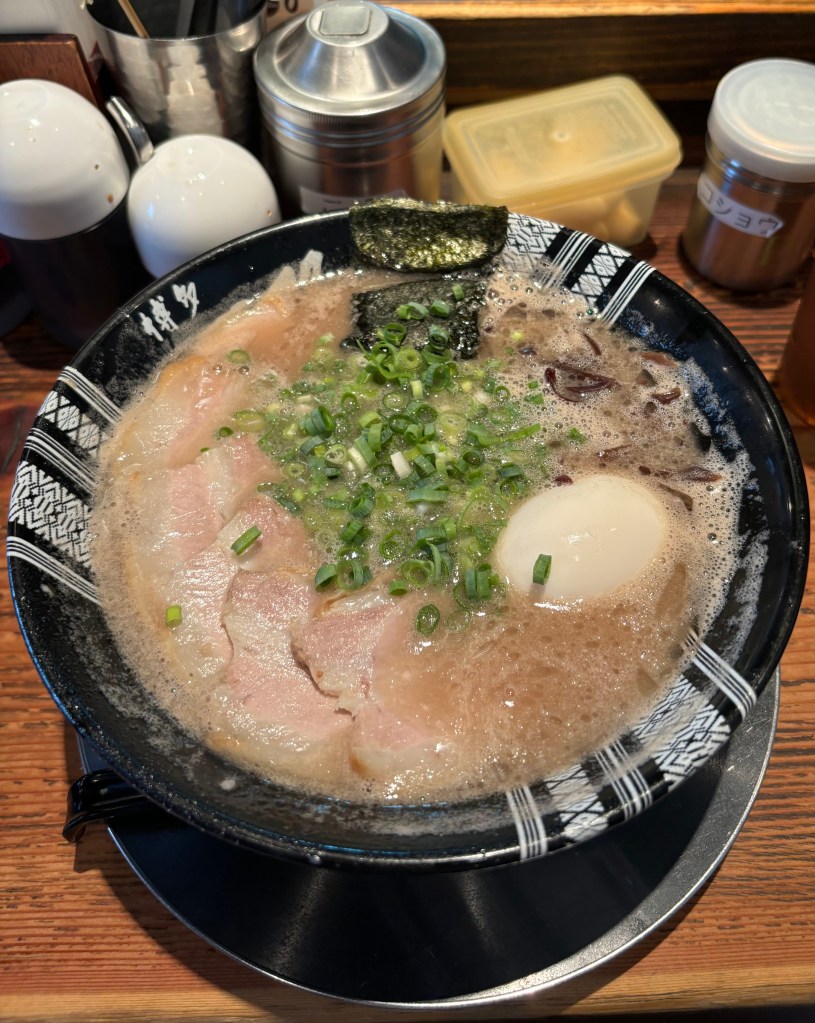
Regardless, the soup is while rich, not overly salty, and it completely captured all of the umami from the heaps of pork bones that are being simmered down for hours before it’s served.
It is garnished with finely cut green onions and seaweed, kikurage or black ear mushroom (don’t worry, it really only adds a little bit of a crunch and isn’t a very strong flavor for those that don’t like mushrooms), a perfectly cooked egg, and chashu pork – all making for a rather simple, yet perfected bowl of ramen with all of the ingredients acting harmoniously together.
The noodles, which is a very identifiable factor in this ramen, is both how thin they are, as well as the fact that you can choose how hard you want them. I recommend “barikata” which means very hard and makes them almost a little el dente.
Aside from this, I got a bowl of rice, which I will likely write in every single one of my ramen posts, but especially with those that have a strong soup broth like this, I think that it is absolutely necessary (of course if your stomach is able to fit it in).
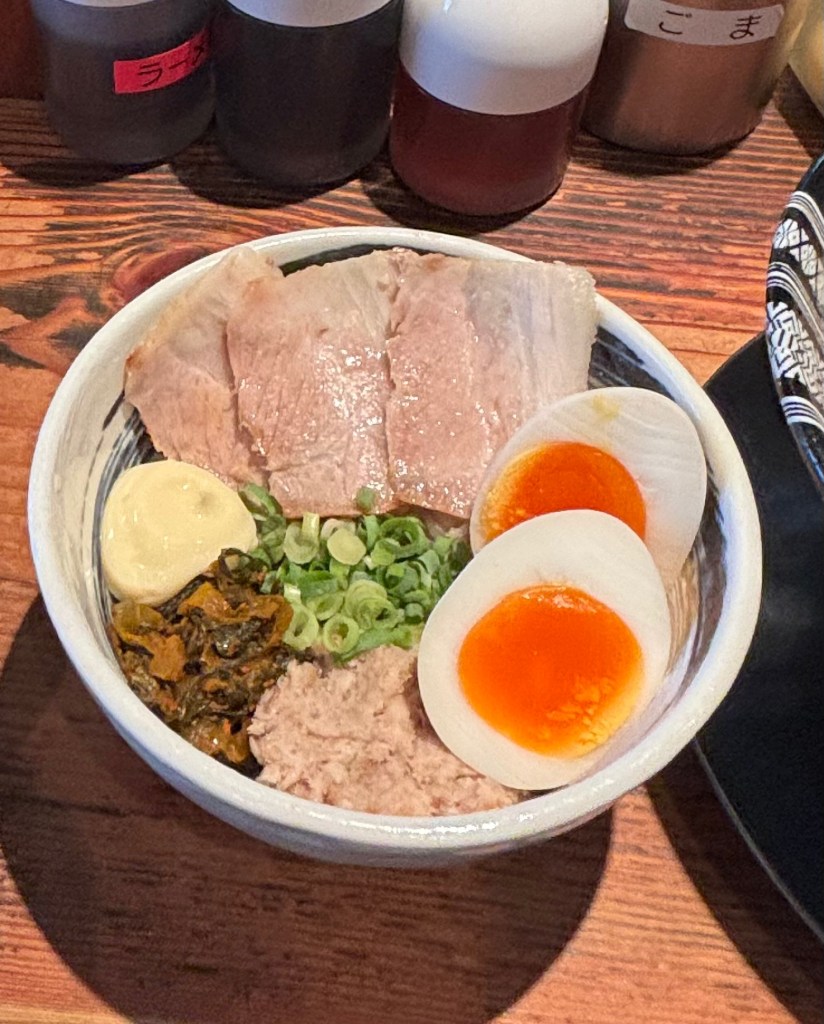
But for me, after waiting over an hour in the heat It got me extra hungry and so to replenish the amount of weight I lost in sweat I also ordered the “makanai bowl” which was an amalgamation of a bunch of different ingredients like egg, some canned tuna mixed with mayonnaise, more mayonnaise just on its own, chashu, green onions and a few other things. It was very good, and felt like something you would throw together with whatever ingredients you have laying around your house.
This brings me to my next point, because “makanai” is a term used describing when someone will eat food from their workplace on their break, and so my thought process is that the restaurant turned this into an actual menu item because the staff ate it so much.
While people may say that there are better places for tonkotsu in Fukuoka, and that this place is “too overrated” because there are always long line ups, I would say that it might be true.
But in terms of convenience with its proximity to the station, as well as how far they have perfected their craft, it speaks for why it is as popular as it is and I highly recommend you check it out!
Thanks for reading – if you’d like to support and follow along:
Different types of ordering systems in Japan explained
Purchasing an onigiri to keep me fuelled throughout my journey 🍙
 LocalEatsJapan
Leave a comment