Must know Info:
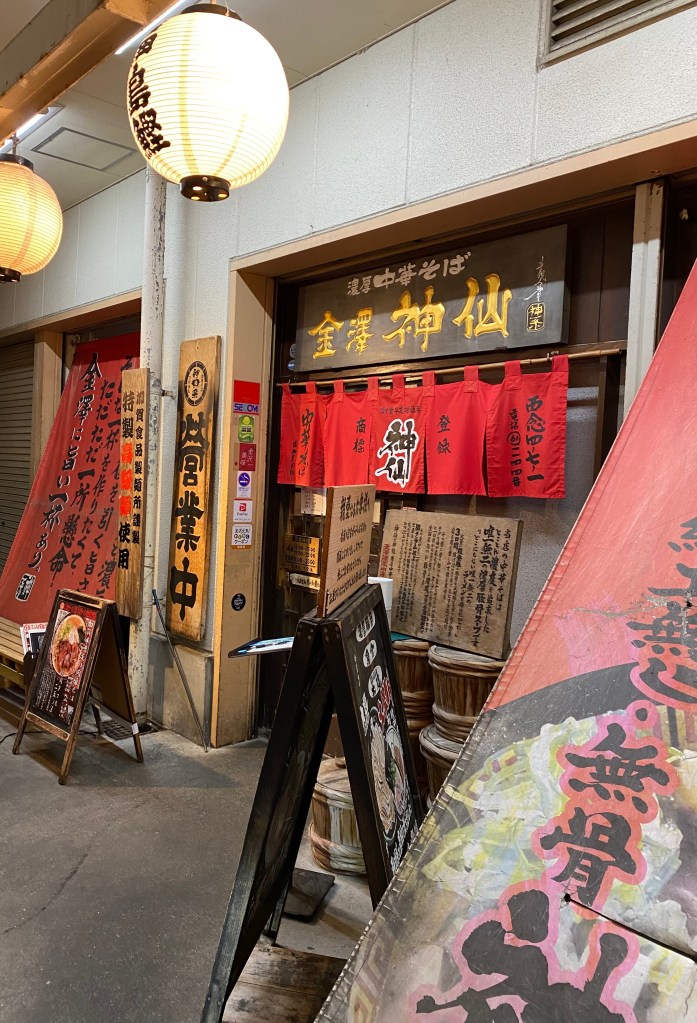
Ramen Shinsen – 金澤濃厚中華そば 神仙 *Cash Only*
〒920-0024 Ishikawa, Kanazawa, Sainen, 4 Chome−7−1 中央卸売市場前飲食通り
27 minute walk from Kanazawa Station, 12 minutes including walking via bus
Hours (as of 2026/01): Mon-Fri 11am-3pm, 5:30-11pm, Sat-Sun 11am-10pm
Order System: Menu
Kanazawa has gradually been getting popular over the last year or so, and for good reason.
While there isn’t necessarily a ton to do or see, it is that in and of itself that makes it appealing for me. They also have great food!
One of my first stops was Ramen Shinsen for an evening bowl of ramen, and the food, nor the atmosphere didn’t disappoint.
Note that I was in a car here, so access was quite easy, but even if you walked it is under 30 minutes so very feasible I feel.
Because it is in the so-called “country-side”, or at least isn’t in a city, it allows for a lot bigger plots of land to build a shop on, and this is another reason why I really enjoy getting outside of the super populated places in Japan because the restaurants are almost always great quality and are super easy to enter.
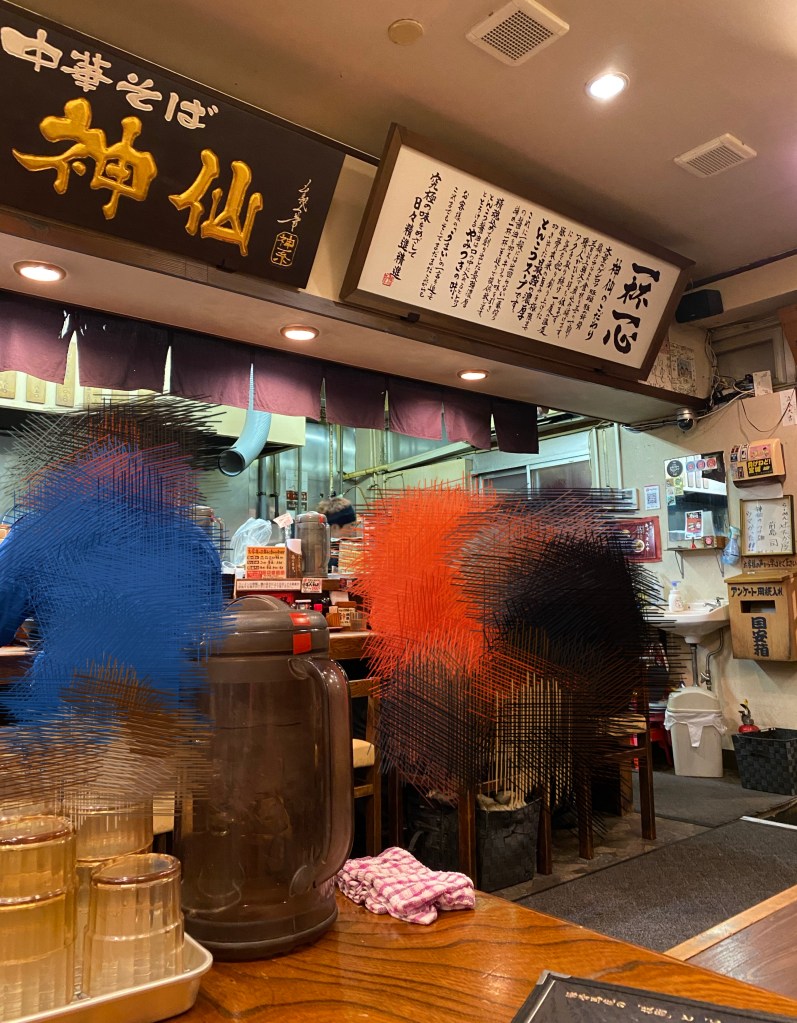
Ramen Shinsen had both bar seats (as ramen shops usually do), but they also had an area where you would take your shoes off and actually sit down on a little cushion to eat your ramen (it doesn’t get more traditional than this I feel).
At the tables (and counter), they had various toppings including black pepper and doubanjiang (豆板醤)which is a Chinese chili bean paste and Japan has specific ones used just for ramen. If you like spice then I recommend it, but always try the soup before you put anything in it!
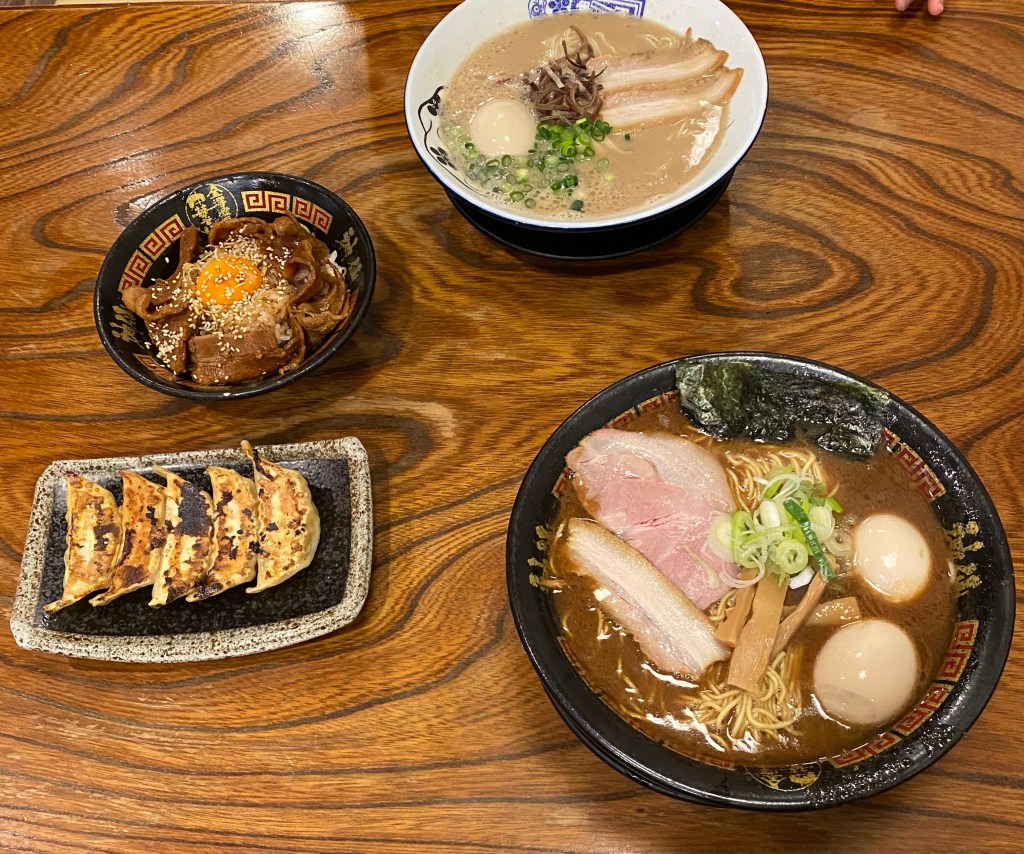
Shinsen’s menu was quite large, but they specialize in one type of soup base which is tonkotsu (pork bones).
Tonkotsu ramen has its origins in Fukuoka, and so they have traditional ramen that they would have there, with a few different variations like extra cha-shu or a spicy version etc.
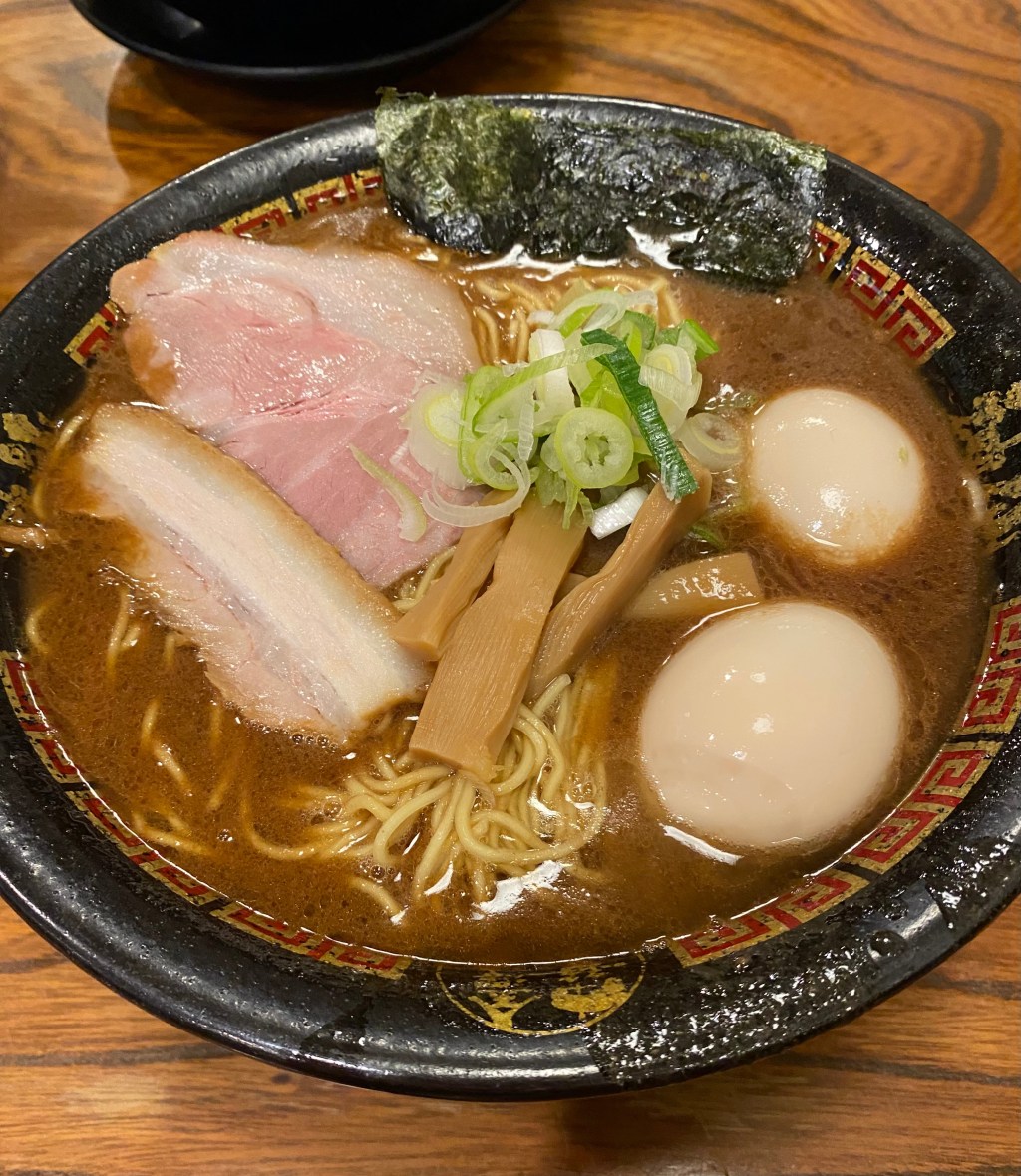
But what really sets them apart from other shops is their 中華そば (Chuuka Soba) which is essentially just the Japanese traditional name for ramen, but Shinsen keeps the tonkotsu base heavy, with an addition of soy sauce which actually makes the soup super dark.
As the visual of the ramen suggests, the soup is also super rich. But also super addictive.
There is another form of ramen called “iekei” (my personal favourite) that also uses pork and soy sauce, but they also have a few things they add in so the soup looks (and tastes) a lot different.
From what I am aware, Shinsen was the first shop to make this variation of ramen, and they have about 5 variations of it as well. If you want to go for the flavor of the soup, then I suggest the normal one, but if you want to go all in then their 特性 (tokusei) or special ramen has the addition of really high quality seaweed which takes the umami to another level as it balances out the strong soup with almost a hint of sweetness.
Regardless of what ramen you order, I think that rice is a must not just to balance out the flavour and give your taste buds a break, but there is something about the simple pleasure of great quality Japanese rice soaking up a good quality soup – I long for this everyday… for better or for worse.
Also, they have really good side dishes which a lot of ramen shops don’t usually have (but I think that this is because a lot of them are small and don’t have the time/cooking space to make them in a timely manner).
The obvious ones being Gyoza and Karaage, but the variations of rice were great, and the one I have pictured above is buta-meshi which is well-sauced and seasoned pork slices with a raw egg yolk. It is simple but so good.
Regardless of what you eat here it will be good, though you may need to rehydrate with a 2 litre water bottle from the convenience store afterwards (this is also why I think walking is a good idea, because it will force you to walk back to where you want to go and digest).
Also, when I went (last year) a staff member told me when I was paying that he was just about to go to Toronto for a work-holiday so I thought that was cool too! I am unsure if he is back at the restaurant now though lol…
Thanks for reading – if you’d like to support and follow along:
Different types of ordering systems in Japan explained
Purchasing an onigiri to keep me fuelled throughout my journey 🍙
 Local Eats Japan
Leave a comment